TwoBoat Charter Operations Guide
The Complete Yacht Charter Operations Guide
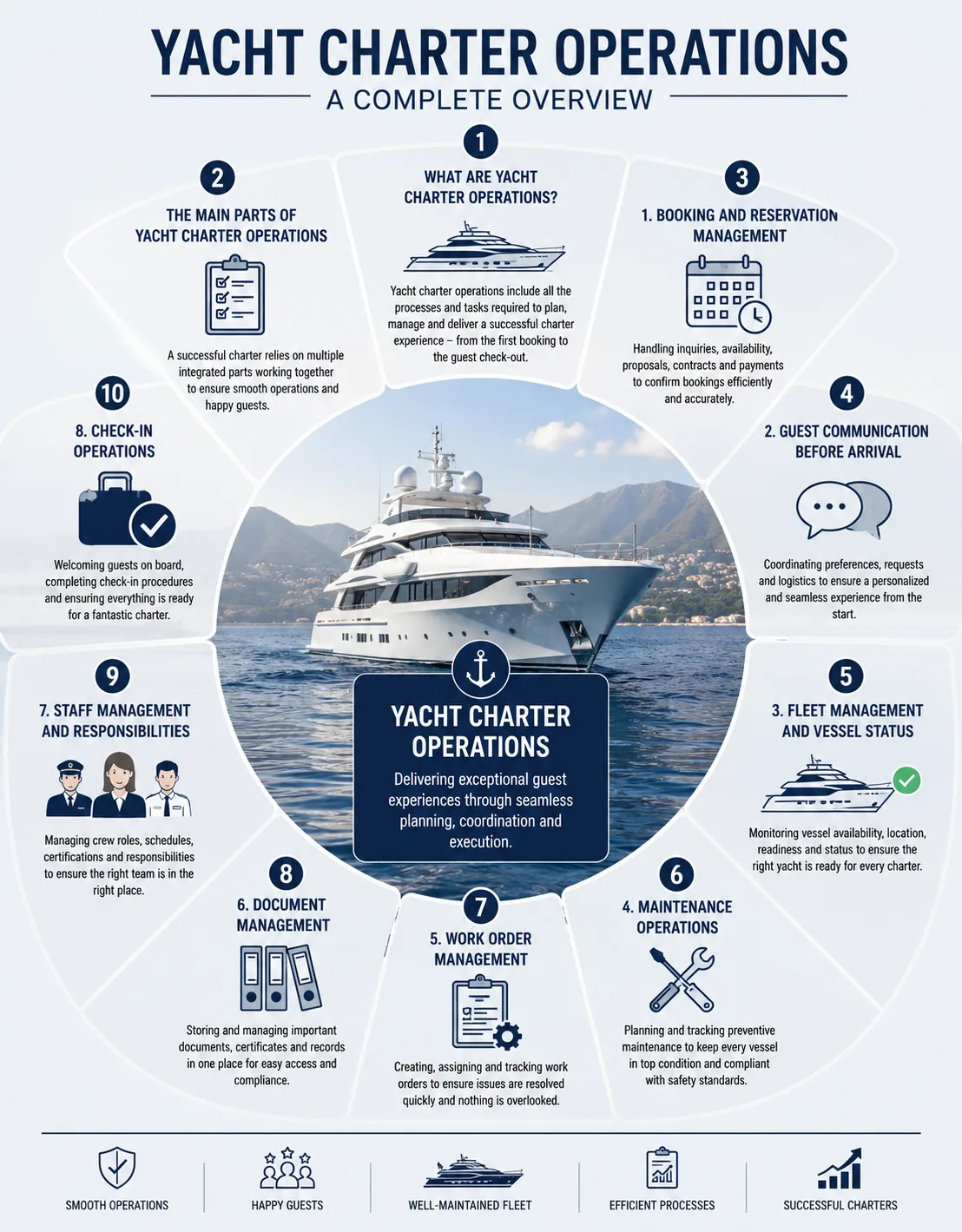
Yacht charter operations are much more than taking bookings and handing over keys. A successful charter company must coordinate vessels, guests, documents, staff, maintenance, check-in, check-out, marina logistics, invoices, owners and unexpected problems every single week. This complete guide explains how professional yacht charter operations work and how TwoBoat helps connect the full workflow.
What Are Yacht Charter Operations?
Yacht charter operations are the daily systems, people, tasks and processes required to run a yacht charter company. They include everything that happens before, during and after a booking: guest communication, vessel preparation, fleet maintenance, documentation, staff coordination, marina logistics, check-in, check-out, damage reports, work orders, invoicing and follow-up.
From the outside, a charter business may look like a simple rental business. A guest books a boat, arrives at the marina, receives the vessel and starts sailing. But inside the company, that one booking triggers dozens of operational steps. The office must confirm the reservation, collect guest information, prepare documents, coordinate payments, update the calendar, inform the base, check vessel readiness, prepare inventory, assign staff, verify maintenance, handle check-in and keep records for the next booking.
This is why charter operations need structure. Without a connected system, teams often rely on spreadsheets, WhatsApp, email, paper documents and memory. That can work for a small fleet for a while, but as the number of boats grows, the business becomes harder to control.
TwoBoat was built for this exact operational reality. It combines yacht charter marketplace visibility, charter management software, fleet management, work orders, documents, staff workflows and useful guides for charter guests and operators.
The Main Parts of Yacht Charter Operations
A professional yacht charter operation usually includes several connected departments and workflows:
- Booking and reservation management
- Guest communication
- Fleet and vessel status tracking
- Maintenance and technical operations
- Work order management
- Document management
- Check-in and check-out
- Inventory and equipment control
- Staff and contractor coordination
- Marina and berth logistics
- Financial records and invoicing
- Owner communication
- Guest support during charter
- Post-charter reporting and improvement
The important point is that these areas are not separate. A booking affects vessel preparation. Vessel preparation affects maintenance. Maintenance affects check-in. Check-in affects guest satisfaction. Guest satisfaction affects reviews and future bookings. If one part of the operation is disconnected, the whole workflow becomes weaker.
1. Booking and Reservation Management
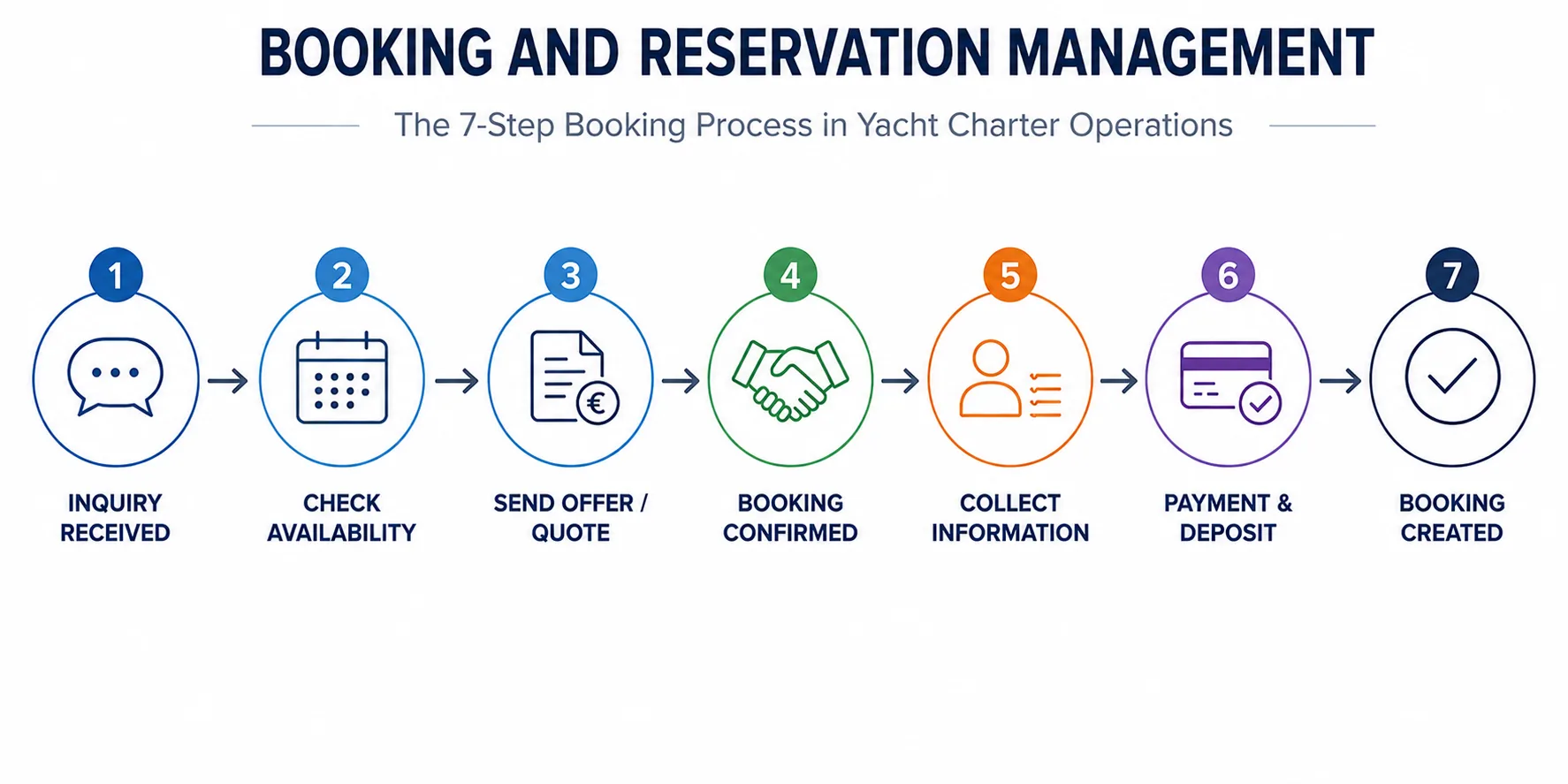
Booking management is the starting point of most charter operations. Every confirmed booking creates a time period, guest record, vessel assignment, payment status, document checklist and operational deadline.
A reservation is not just a date in a calendar. It must answer important operational questions:
- Which vessel is booked?
- Who is the guest?
- Which agency or sales channel created the booking?
- What is the booking status?
- Which documents are required?
- Has the guest submitted crew information?
- Are extras required?
- Is the vessel technically ready?
- Who is responsible for preparation?
- What must happen before check-in?
Many charter companies lose time because booking information is spread across multiple tools. The booking may be in one calendar, guest details in email, documents in a folder, notes in WhatsApp and maintenance status in someone’s memory.
The TwoBoat charter management software helps connect bookings with vessels, guests, documents, staff tasks and operational workflows so the reservation becomes part of the full charter process.
2. Guest Communication Before Arrival
Guest communication starts long before the guest arrives at the marina. Guests need confirmation details, payment information, crew list instructions, arrival location, boarding time, required documents, route advice, weather information, safety instructions and answers to practical questions.
If the charter company does not organize guest communication properly, the office spends hours answering the same questions every week. This becomes especially difficult during peak season when multiple check-ins happen on the same day.
Good guest communication should include:
- Clear booking confirmation
- Required documents
- Payment and deposit details
- Check-in location and time
- Marina parking information
- Crew list instructions
- Safety rules
- Weather and route planning links
- Emergency contacts
- Boat-specific instructions
TwoBoat supports this with useful public content such as Croatia sailing routes, the sailing weather Croatia tool, safe boating best practices and emergency procedures for Croatia yacht charter.
3. Fleet Management and Vessel Status
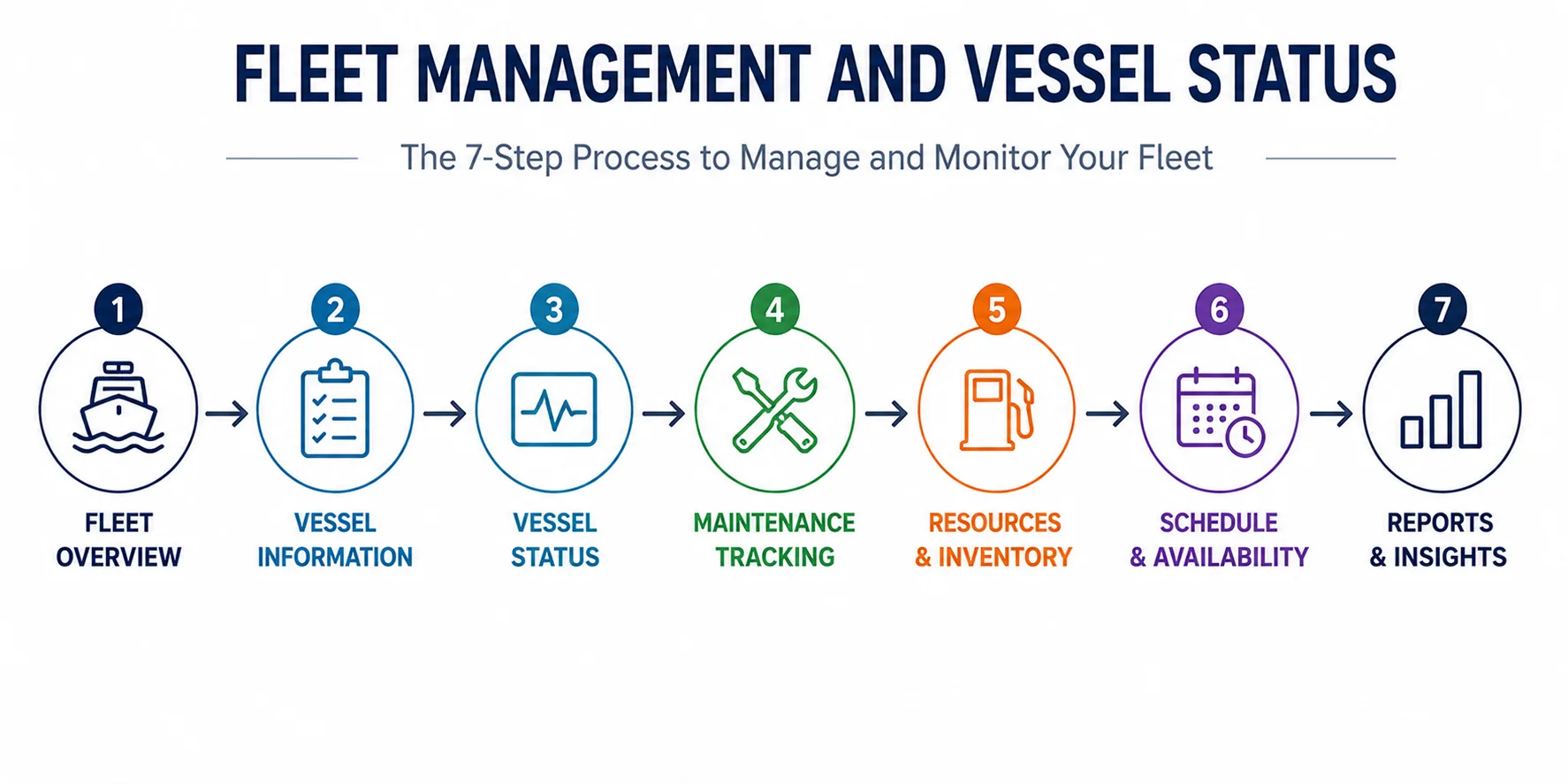
Fleet management is one of the most important parts of yacht charter operations. A charter company must know the real status of every vessel, not only whether it is booked or available.
Vessel status should include:
- Booking status
- Technical readiness
- Cleaning status
- Inventory status
- Fuel and water status
- Battery and electrical status
- Open issues
- Maintenance tasks
- Damage reports
- Missing documents
- Check-in readiness
- Check-out results
A common mistake is to treat fleet management as a simple boat list. In reality, every vessel is a live operational asset. It changes status every day, and during turnover days it may change status several times in a few hours.
TwoBoat fleet management software is designed to help charter teams follow vessel readiness, maintenance status and operational priorities across the full fleet.
4. Maintenance Operations
Maintenance is where many charter companies either protect profit or lose it. Poor maintenance creates breakdowns, unhappy guests, refunds, delays, emergency interventions and long-term vessel damage.
Charter maintenance includes preventive maintenance, reactive repairs, seasonal preparation, emergency service, spare parts management, external contractor coordination and technical documentation.
Common maintenance areas include:
- Engines
- Generators
- Batteries
- Bilge pumps
- Toilets and plumbing
- Fresh water systems
- Shore power
- Navigation electronics
- Anchoring systems
- Winches
- Sails and rigging
- Safety equipment
- Air conditioning and refrigeration
The biggest issue is not always the repair itself. The biggest issue is often that the repair is not properly recorded, not assigned, not connected to the vessel, not connected to the booking and not visible to the people who need to know.
TwoBoat helps operators connect maintenance with vessel status, work orders, staff tasks, photos, materials and service history.
5. Work Order Management
Work orders are the bridge between a problem and a completed solution. In a professional charter company, every technical issue should become a structured work order with a responsible person, vessel, description, priority, photos, materials, time record and completion status.
Without work order management, the company depends on informal communication. Someone calls a technician. Someone sends a message. Someone takes a photo. Someone says the job is finished. But later nobody knows what was done, who did it, what it cost or whether the issue is connected to a specific booking.
A good work order should include:
- Vessel name
- Booking reference if relevant
- Issue description
- Priority
- Assigned technician or contractor
- Photos before and after repair
- Materials used
- Working hours
- Status
- Digital signature if needed
- Invoice connection if needed
The TwoBoat work order management module helps structure technical work, service jobs, external contractor communication and operational documentation.
6. Document Management
Charter companies handle a large number of documents. These documents are not optional. They are part of legal compliance, guest service, vessel management, owner communication and internal control.
Important charter documents include:
- Charter contracts
- Crew lists
- Guest identity documents
- Check-in forms
- Check-out forms
- Inventory lists
- Damage reports
- Briefing documents
- Vessel registration documents
- Insurance documents
- Safety equipment certificates
- Invoices
- Owner documents
- Maintenance records
If documents are stored in different folders, inboxes, devices and paper binders, staff waste time searching and risk using outdated information. During check-in, this creates stress. During audits, disputes or damage claims, it creates risk.
TwoBoat connects digital documents with bookings, guests, vessels and operational workflows. This helps the company keep records more organized and easier to access.
7. Staff Management and Responsibilities
A charter company is a team operation. Even a small fleet depends on office staff, base managers, technicians, cleaners, skippers, sales people, accountants, external contractors and sometimes marina staff.
Each team member needs the right information at the right time. The office needs booking and guest status. The base needs vessel readiness. The technical team needs open issues. Cleaners need turnover schedules. Skippers need briefing and guest details. Managers need overview and control.
Poor staff coordination causes:
- Duplicated tasks
- Missed tasks
- Unclear responsibility
- Repeated phone calls
- Slow reaction time
- Late check-ins
- Team stress
- Guest complaints
TwoBoat helps connect staff tasks to vessels, bookings, maintenance and documents, so teams can work from shared operational information instead of scattered conversations.
8. Check-In Operations
Check-in is one of the most important moments in the charter process. It is where the guest experience begins and where the company must transfer control of the vessel in a clear, documented and professional way.
A proper check-in usually includes:
- Guest arrival confirmation
- Identity and crew list verification
- Security deposit handling
- Contract confirmation
- Vessel document handover
- Inventory review
- Safety briefing
- Technical briefing
- Navigation and route advice
- Weather information
- Damage pre-check
- Final guest signature
Check-in becomes difficult when the boat is not ready, documents are missing, guest data is incomplete or staff do not know which tasks are still open. The solution is to prepare the check-in long before the guest arrives.
Guests can also be supported with planning content such as how much yacht charter costs in Croatia, catamaran vs sailing yacht Croatia and route ideas from Croatian charter bases.
9. Check-Out Operations
Check-out is just as important as check-in. It is the moment when the company checks the vessel condition, reviews fuel, documents damage, collects guest feedback, closes the booking and prepares the boat for the next charter.
A professional check-out should include:
- Return time confirmation
- Fuel level check
- Inventory check
- Damage inspection
- Guest feedback
- Technical issue reporting
- Photo documentation
- Deposit decision
- Cleaning handover
- Maintenance task creation
- Next booking readiness update
The biggest mistake is treating check-out as the end of the booking. Operationally, check-out is also the beginning of the next booking. Every issue found during check-out must be connected to maintenance, cleaning, documents and vessel readiness.
10. Inventory and Equipment Control
Inventory control is often underestimated until something is missing. Charter vessels carry safety equipment, navigation tools, kitchen equipment, bedding, tools, spare parts, documents and many small items that guests expect to find onboard.
Missing inventory creates guest dissatisfaction and operational cost. It can also create safety risk if required equipment is missing or expired.
Inventory control should include:
- Standard inventory lists by vessel
- Check-in confirmation
- Check-out confirmation
- Photo evidence when needed
- Missing item tracking
- Replacement cost records
- Connection to damage reports
- Connection to guest deposits
11. Marina and Base Operations
Charter operations are closely connected with marina operations. Boats need berths, electricity, water, fuel, parking, waste handling, cleaning access, technical service and guest arrival coordination.
In busy marinas, poor coordination creates delays. A vessel may be ready technically but blocked by berth logistics, fuel dock waiting time, cleaning delays or missing access for service providers.
Marina-related charter operations include:
- Berth planning
- Arrival and departure timing
- Fuel dock coordination
- Water and electricity access
- Waste management
- Parking instructions
- Guest meeting points
- Contractor access
- Emergency response
- Billing and service records
TwoBoat includes workflows relevant for both charter companies and marinas, especially where vessel status, work orders, staff coordination and service documentation are important.
12. Financial Operations and Invoicing
Financial operations in charter businesses include booking payments, agency commissions, guest extras, deposits, owner payouts, maintenance costs, contractor invoices, marina services and tax documentation.
If financial information is disconnected from operations, the company may lose money without noticing. A work order may not be invoiced. A damage cost may not be connected to a guest. A material may be used but not recorded. A contractor may complete a job without clear documentation.
Good financial control requires operational data. Bookings, work orders, maintenance, materials and documents should be connected so the company can understand real costs and profit.
13. Owner Communication
Many charter companies manage boats owned by private owners. In this case, owner communication becomes another important part of operations.
Owners often want to know:
- How often the vessel is booked
- What revenue it generates
- What maintenance was done
- What damage occurred
- What costs were created
- When the boat is available for private use
- What investments are needed
If owner communication is not supported by clear records, the company spends unnecessary time preparing reports manually. Better operational documentation makes owner communication easier and more transparent.
14. Guest Support During the Charter
Operations do not stop after check-in. During the charter, guests may need support for weather, routes, technical issues, marina questions, emergencies or changes in plans.
Common guest support situations include:
- Engine warning alarms
- Battery problems
- Toilet blockages
- Anchor or windlass problems
- Weather changes
- Route changes
- Marina booking questions
- Emergency procedure questions
- Late return requests
The company must respond quickly, but also record what happened. A support issue during charter may become a maintenance task, damage report, work order or insurance case after return.
15. Weather and Route Planning
Weather is a key part of yacht charter operations, especially in Croatia and the Adriatic. Guests often underestimate local wind changes, summer thunderstorms, Bora, Jugo, Maestral, waves and anchorage exposure.
Charter companies can reduce risk by providing better route and weather information before departure. This does not replace skipper judgment, but it helps guests make safer decisions.
Useful TwoBoat resources include:
16. The Saturday Turnaround Problem
In many charter bases, Saturday is the most difficult operational day. Boats return in the morning, guests leave, damage is checked, cleaning starts, maintenance must react, new guests arrive, documents must be prepared and vessels must be ready again within a short time window.
A typical Saturday can include:
- Multiple vessel returns
- Late guests
- Fuel dock congestion
- Damage inspections
- Cleaning schedules
- Laundry logistics
- Maintenance interventions
- Missing equipment
- Guest arrivals
- Document signing
- Technical briefings
- Check-in pressure
This is where disconnected operations become very expensive. If the team does not know vessel status in real time, every delay creates more stress. The solution is to prepare tasks before Saturday and update readiness continuously during the day.
17. Common Operational Mistakes in Charter Companies
Many charter companies repeat the same operational mistakes because they do not have a connected system for tracking them.
- Using too many disconnected tools
- Depending on WhatsApp for critical operations
- Not connecting maintenance with bookings
- Not tracking vessel readiness clearly
- Keeping documents in multiple locations
- Not assigning clear task ownership
- Not recording work order costs
- Not using structured check-in and check-out forms
- Not collecting enough photo evidence
- Not learning from repeated guest complaints
- Not measuring operational KPIs
18. Charter Operations KPIs
What gets measured gets improved. Charter companies should track operational KPIs, not only revenue.
Useful KPIs include:
- Fleet utilization
- Average check-in delay
- Number of open maintenance tasks
- Average time to close work orders
- Number of emergency interventions
- Repeat technical issues per vessel
- Guest complaints per booking
- Damage reports per season
- Cleaning turnaround time
- Document completion rate
- Vessel readiness score
- Maintenance cost per vessel
TwoBoat helps charter teams organize the operational data needed to understand these KPIs more clearly.
19. The TwoBoat Charter Operations Workflow
A connected charter operation follows a clear workflow:
- Guest discovers vessel or charter company.
- Booking inquiry is created.
- Reservation is confirmed.
- Guest information and documents are collected.
- Vessel preparation tasks are created.
- Maintenance and readiness are checked.
- Staff responsibilities are assigned.
- Check-in documents are prepared.
- Guest receives vessel briefing.
- Charter starts.
- Guest support is provided if needed.
- Check-out is completed.
- Damage, issues and feedback are recorded.
- Maintenance and work orders are created.
- Vessel is prepared for the next booking.
This workflow shows why marketplace, software, maintenance, documents and guides belong together. The guest journey and the operational journey are connected.
20. How TwoBoat Helps Charter Companies
TwoBoat is built to support both sides of the charter industry: guests who need better information and operators who need better systems.
TwoBoat Marketplace
The TwoBoat marketplace helps charter companies publish vessels and connect with guests without relying only on commission-heavy channels.
TwoBoat Charter Management Software
The TwoBoat charter management software helps operators organize bookings, guests, vessels, documents, staff and daily charter workflows.
TwoBoat Fleet Management
The TwoBoat fleet management software helps teams track vessel readiness, maintenance needs, service history and operational priorities.
TwoBoat Work Orders
The TwoBoat work order management system helps organize repairs, service tasks, materials, photos, contractors and documentation.
TwoBoat Guides
TwoBoat Guides provide practical content for charter guests, charter companies, marinas, skippers and technical teams.
21. Complete Charter Operations Checklist
Before Booking Confirmation
- Confirm vessel availability.
- Confirm price and booking conditions.
- Check agency or direct booking source.
- Record guest contact details.
- Send offer or confirmation.
After Booking Confirmation
- Create reservation record.
- Connect booking to vessel.
- Collect guest and crew information.
- Prepare contract and documents.
- Assign internal responsibilities.
- Check payment and deposit status.
Before Guest Arrival
- Check vessel technical readiness.
- Complete cleaning schedule.
- Verify inventory.
- Check safety equipment.
- Close open maintenance tasks.
- Prepare check-in documents.
- Send arrival instructions.
During Check-In
- Verify guest identity and crew list.
- Confirm security deposit.
- Complete contract signing.
- Review inventory.
- Provide technical briefing.
- Explain safety procedures.
- Confirm weather and route awareness.
- Record check-in status.
During Charter
- Provide guest support if needed.
- Record technical issues.
- Create urgent work orders if required.
- Support route and weather questions.
- Document incidents.
During Check-Out
- Check return time.
- Inspect vessel condition.
- Check fuel and water.
- Review inventory.
- Record damage.
- Collect guest feedback.
- Create maintenance tasks.
- Update vessel readiness.
After Check-Out
- Close booking records.
- Process damage or deposit decisions.
- Assign maintenance work.
- Prepare next turnover.
- Update owner records if needed.
- Review operational issues for improvement.
22. Why Integrated Software Matters
Charter companies do not need software just because software is modern. They need software because the operation is too connected to be managed with disconnected tools.
When bookings, maintenance, documents, staff and guest communication are separated, the company loses time every week. Mistakes become harder to trace. Staff become overloaded. Guests receive slower answers. Managers lose visibility. Boats may leave the base with unresolved issues.
Integrated software helps create one source of operational truth. It does not replace good people, but it helps good people work with better information.
23. Useful TwoBoat Resources
- About TwoBoat
- TwoBoat Yacht Charter Marketplace
- Charter Management Software
- Fleet Management Software
- Work Order Management
- TwoBoat Guides
- Croatia Sailing Routes
- Sailing Weather Croatia
- Yacht Charter Cost Croatia Guide
- Catamaran vs Sailing Yacht Croatia
- Safe Boating Croatia Best Practices
- Emergency Procedures Croatia Yacht Charter
FAQ: Yacht Charter Operations
What are yacht charter operations?
Yacht charter operations are all processes required to run a charter company, including bookings, guest communication, vessel readiness, maintenance, documents, check-in, check-out, staff coordination, marina logistics and financial records.
Why are charter operations difficult?
Charter operations are difficult because every booking connects many people and tasks. A single reservation affects guests, office staff, technical teams, cleaners, skippers, marina services, documents, maintenance and the next booking.
What is the most important part of charter operations?
Vessel readiness is one of the most important parts. A charter company must know whether every boat is technically ready, clean, documented, equipped and safe before guest arrival.
How does software help yacht charter companies?
Software helps by connecting bookings, vessels, documents, maintenance, work orders, staff and guest communication in one system, reducing manual work and improving operational visibility.
What is TwoBoat?
TwoBoat is a yacht charter marketplace and charter operations platform that includes software for charter management, fleet management, work orders, digital documents and useful guides for guests, charter companies and marinas.
Is TwoBoat only for charter companies?
No. TwoBoat is useful for charter guests, charter companies, fleet operators and marinas. Guests use TwoBoat for planning, routes, weather and charter information, while operators use TwoBoat software for daily operations.
Build a More Organized Charter Operation With TwoBoat
If your charter company wants to connect bookings, vessels, documents, maintenance, work orders, staff and guest communication, explore TwoBoat charter management software, fleet management software and work order management.
Continue reading
Build your Croatia sailing knowledge with related TwoBoat guides, software, guides and planning tools.