
How to Prevent Fire on a Yacht or Sailboat: Causes, Risks and Fire Prevention
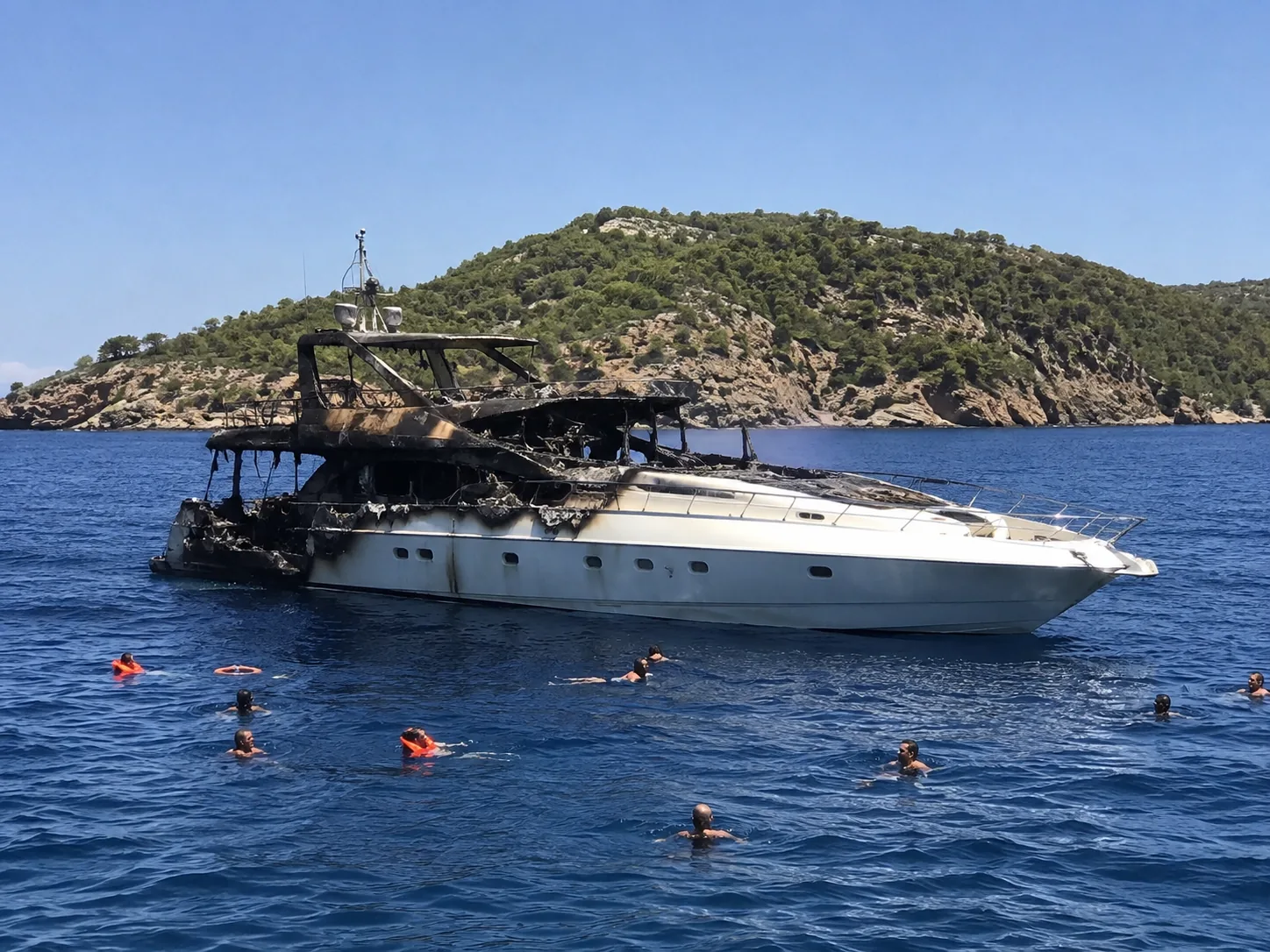
Fire is one of the most dangerous emergencies that can occur on a yacht or sailboat. On land, a small fire may be contained while occupants simply leave the building. At sea, the situation is very different. The vessel itself is your only safe platform, escape routes are limited, professional firefighters may be many nautical miles away, and abandoning the boat can expose everyone on board to an entirely new set of dangers.
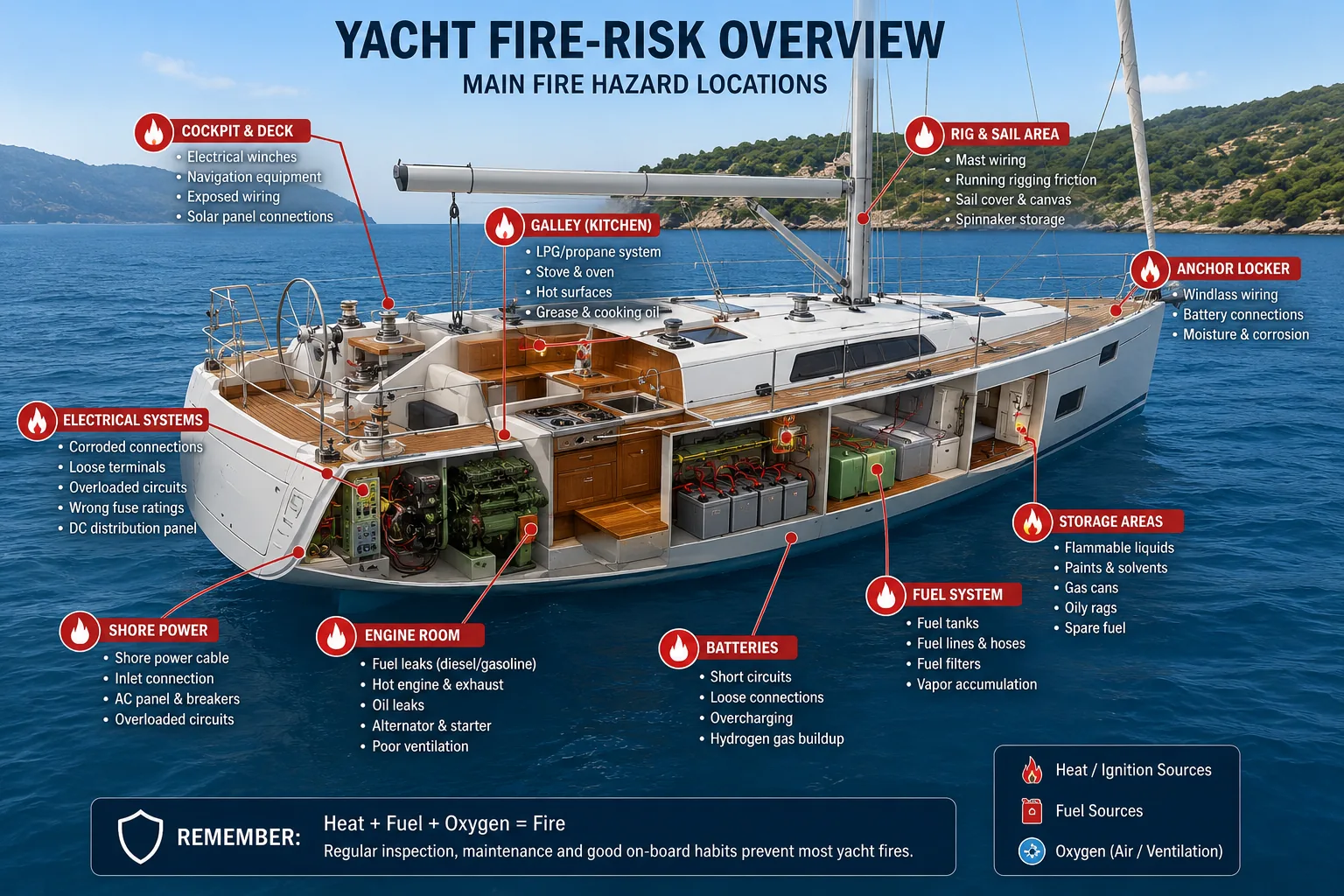
Modern yachts contain many of the ingredients necessary for a serious fire: large battery banks, high-current DC wiring, 230 V or 120 V AC systems, battery chargers, inverters, generators, diesel or gasoline, lubricating oil, hydraulic fluid, LPG cylinders, cooking equipment, plastics, upholstery, cleaning chemicals and increasingly powerful electronic equipment.
The good news is that many onboard fires are preventable. They rarely begin without a reason. A corroded electrical connection, loose battery terminal, incorrectly sized fuse, damaged fuel hose, leaking LPG connection or overheated cooking appliance can often be detected long before it becomes an emergency.
Fire prevention therefore begins with understanding where heat, fuel and ignition sources can meet — and systematically keeping them apart.
Why Fire Is Especially Dangerous on a Boat
A yacht is a compact environment in which electrical systems, fuel, machinery, accommodation and cooking equipment are installed within a relatively small space. A problem developing in one system can quickly affect another.
Smoke can spread through cabins within seconds. Fire can damage electrical wiring and disable navigation equipment, pumps, lighting and communications. A fire in the engine compartment may remove propulsion at exactly the moment when the vessel needs to manoeuvre. Damage to battery cables can eliminate DC power, while damage near fuel lines can transform a relatively small electrical fire into a major emergency.
Many materials commonly found on boats also produce dense and potentially toxic smoke when burning. Consequently, preventing the initial ignition is much more effective than relying only on extinguishers after a fire has already developed.
The Fire Triangle: What a Boat Fire Needs
For a fire to continue burning it generally requires three basic elements:
- Heat — an ignition source such as an overheated wire, electrical arc, hot exhaust component or open flame.
- Fuel — diesel, gasoline, LPG, oil, plastics, wood, upholstery, solvents or other combustible material.
- Oxygen — normally supplied by the surrounding air and ventilation system.
Fire prevention is largely about preventing these three elements from coming together. A leaking fuel hose may not immediately cause a fire. A hot electrical connection may not immediately cause a fire either. Put the two in the same poorly ventilated compartment and the risk changes dramatically.
1. Electrical Systems: One of the Most Important Areas to Inspect
Electrical systems deserve particular attention on yachts because they operate in a harsh environment. Salt, moisture, vibration, temperature changes and mechanical movement all work against reliable electrical connections.
A connection that looked perfect when installed may gradually corrode or loosen over several seasons. The equipment can continue working normally while resistance at the connection slowly increases.
Corrosion Can Turn an Electrical Connection Into a Heater
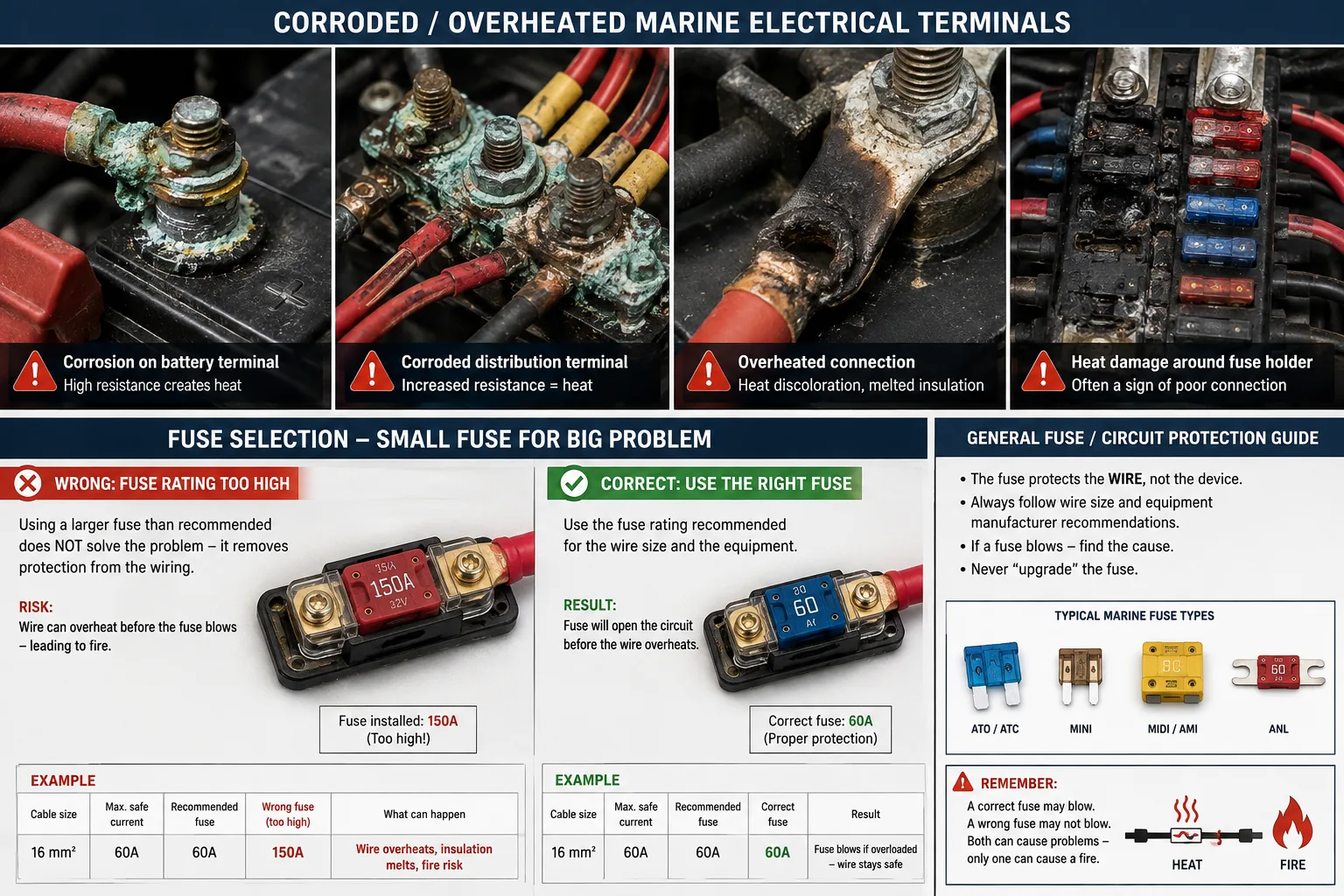
One of the most important concepts in marine electrical fire prevention is that a poor electrical connection can generate substantial heat without immediately causing a short circuit.
When corrosion develops between a terminal and conductor, or when a connection becomes loose, electrical resistance increases. Current passing through that resistance produces heat. High-current equipment such as windlasses, bow thrusters, inverters, battery chargers, starter motors and electric winches can make this especially dangerous.
The circuit may continue operating. The fuse may not blow because the total current has not exceeded the fuse rating. Instead, the resistance is concentrated at one bad connection, which becomes progressively hotter.
Eventually the connection can discolor, melt insulation, damage a terminal block or ignite nearby combustible material.
Inspect Electrical Connections for Corrosion
Electrical inspections should include more than simply checking whether equipment works. Open accessible electrical panels, battery compartments and distribution areas and look for:
- green or white corrosion around copper conductors and terminals,
- rust or oxidation on connectors,
- loose terminals,
- darkened or discolored insulation,
- melted plastic around fuse holders or terminal blocks,
- brittle insulation,
- cracked cable insulation,
- improvised wire joints,
- poorly crimped terminals,
- exposed copper,
- cables rubbing against sharp edges,
- water entering electrical enclosures,
- cables resting against hot engine or exhaust components.
Pay particular attention to connections carrying high current. Battery terminals, battery switches, busbars, alternator cables, starter cables, inverter connections, shore-power connections and windlass circuits deserve regular inspection.
Check for Abnormally Warm Connections
Heat is an important warning sign. After operating a high-current appliance for a reasonable period, accessible connections can be checked for abnormal temperature increases.
For example, if an inverter is supplying a significant load and one terminal becomes much hotter than comparable terminals, there may be excessive resistance at that connection.
A thermal camera can be particularly useful during professional inspections because it can reveal hot spots that are difficult to identify visually. However, temperature testing should be performed safely and without touching exposed energized conductors.
Loose Connections Are Dangerous
Boats vibrate. Engines, generators, waves and normal hull movement can gradually affect electrical connections. A loose terminal increases resistance and can also create intermittent arcing.
Connections should be mechanically secure and appropriate for marine use. Simply twisting wires together and covering them with electrical tape is not an acceptable permanent repair.
When replacing damaged terminals or connectors, use components suitable for the conductor size and marine environment, and follow the equipment manufacturer's installation requirements.
2. Incorrect Fuses and Circuit Breakers Can Defeat the Protection System
A fuse is not installed primarily to protect the appliance. Its critical purpose is to protect the wiring from carrying more current than it can safely handle.
Installing a larger fuse because the correct fuse repeatedly blows can create an extremely dangerous situation.
For example, imagine that a circuit and its cable are designed for a particular maximum current. If someone replaces the specified fuse with one rated significantly higher, the cable may overheat before the fuse opens the circuit.
The insulation can soften or melt, conductors can short against nearby wiring or metal structures, and combustible material around the cable can ignite.
Never Increase Fuse Rating to Solve a Fault
If a fuse repeatedly blows or a circuit breaker repeatedly trips, find the cause.
Possible reasons include:
- a defective appliance,
- damaged wiring,
- a partial short circuit,
- water entering equipment,
- corroded electrical components,
- incorrect cable sizing,
- an overloaded circuit,
- a failing electric motor or pump.
Replacing the fuse with a larger one removes an important layer of protection while leaving the underlying problem unresolved.
Check Previous Owner Modifications
Used boats deserve particular attention because electrical systems may have been modified many times during the vessel's life.
Additional navigation equipment, USB outlets, refrigerators, solar controllers, inverters, pumps, lighting and entertainment systems may have been added after the original installation.
Inspect modifications carefully. Look for circuits connected directly to batteries without adequate protection, undersized cables, household connectors, multiple wires incorrectly installed under one terminal, hidden inline fuses and abandoned wiring that remains connected to power.
3. Batteries and High-Current DC Systems
The battery bank contains a very large amount of stored electrical energy. A short circuit across a battery or heavy battery cable can produce extremely high current almost instantly.
This is why battery wiring must be treated differently from low-power electronics.
Battery Terminals
Inspect battery terminals for corrosion, looseness and signs of overheating. Heavy cables should be mechanically secure and routed so that movement cannot place excessive stress on the terminals.
Metal tools and other conductive objects should never be stored where they can fall across battery terminals.
Battery Cables
Inspect heavy battery cables throughout their accessible length. Pay attention to locations where they pass through bulkheads, under equipment or around sharp structures.
A damaged positive battery cable touching grounded metal can create an extremely serious fault.
Battery Compartments
Battery compartments should remain clean, dry and appropriate for the installed battery technology. Ventilation, mounting and charging requirements depend on battery type and installation.
Never assume that replacing one battery chemistry with another is simply a matter of installing a different battery. Charging equipment, battery management, alternator configuration, cabling and protection may also require changes.
Lithium Battery Installations
Lithium-based house banks are increasingly common because of their high usable capacity and charging performance. They require a correctly engineered installation including appropriate battery management and charging systems.
Use batteries, chargers and components designed for the intended marine application and follow the manufacturer's installation requirements. Improvised modifications to battery-management wiring or charging systems can remove important protection mechanisms.
4. Shore Power and AC Electrical Systems
A yacht connected to shore power can remain electrically energized for days or weeks, often while nobody is aboard. This makes shore-power connections another important inspection point.
Check the shore-power cable, plugs, sockets and onboard inlet for discoloration, melting, corrosion, looseness or heat damage.
A damaged or poorly connected plug can develop resistance and become hot under sustained load.
Avoid Overloading Shore-Power Connections
High-power appliances operating simultaneously can place a significant load on the AC system. Water heaters, air conditioning, battery chargers, cooking appliances and portable heaters can together create substantial demand.
The installation should remain within its designed electrical limits.
Extension Cables and Adapters
Avoid improvised shore-power arrangements using unsuitable household extension cords or poorly protected adapters.
Connections exposed to rain, spray or marina conditions should be designed for the environment in which they are being used.
5. Battery Chargers, Inverters and Power Electronics
Modern yachts often contain several devices that process substantial amounts of electrical power. These include:
- battery chargers,
- inverters,
- inverter/chargers,
- solar charge controllers,
- DC/DC chargers,
- alternator regulators,
- generator electrical systems.
These devices can generate considerable heat during normal operation. They should have adequate ventilation and should not be buried under clothing, towels, sails or stored equipment.
Keep ventilation openings clear and inspect surrounding wiring for heat damage.
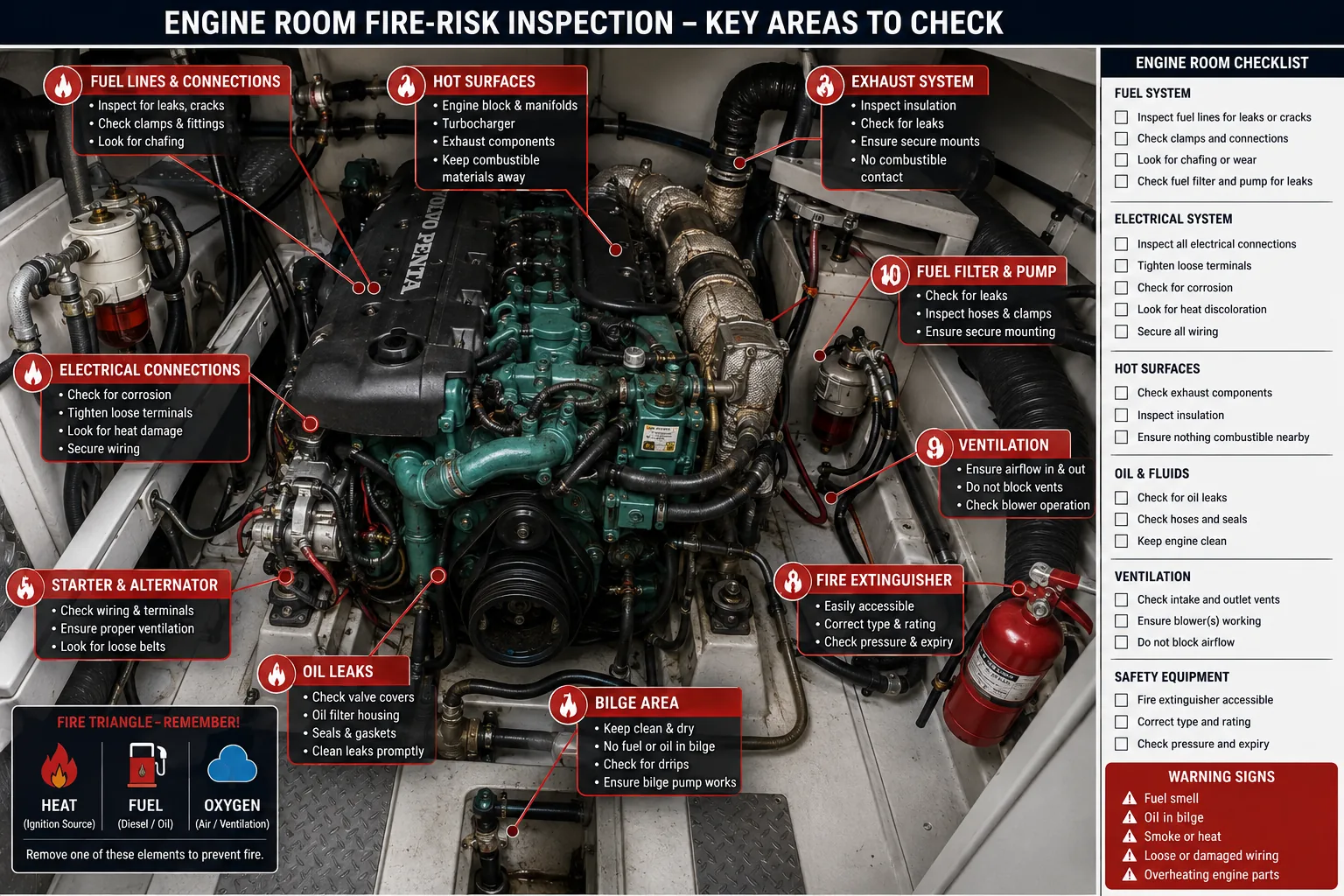
6. Engine Compartment Fire Risks
The engine compartment combines several potential ignition sources with combustible liquids. It should therefore be one of the highest-priority areas in any fire-prevention inspection.
Possible ignition sources include:
- alternators,
- starter motors and solenoids,
- electrical connections,
- hot exhaust components,
- overheated bearings,
- damaged wiring,
- generator components.
Potential fuels include diesel or gasoline, engine oil, transmission oil, hydraulic fluid and contaminated absorbent material.
Fuel Leaks Must Never Be Ignored
A small fuel leak is not merely an inconvenience. Fuel can spread over engine components, collect in the bilge or soak insulation and absorbent material.
Inspect:
- fuel hoses,
- hose clamps,
- fuel filters,
- filter housings,
- injector connections,
- fuel pumps,
- tank connections,
- fuel return lines,
- generator fuel supply lines.
The engine compartment should not smell strongly of fuel. Investigate unexplained fuel odors instead of assuming they are normal for a boat.
Oil Leaks
Engine and hydraulic oils are also combustible. A leaking oil line or filter can spray or drip oil onto hot components.
Keep the engine compartment clean enough that new leaks can be identified quickly.
Exhaust Systems
Exhaust components can become extremely hot. Inspect insulation, protective coverings, hoses, clamps and nearby materials.
Nothing combustible should be allowed to rest against a hot exhaust component.
Keep the Engine Compartment Clean
Do not use the engine compartment as uncontrolled storage for oily rags, cardboard, cleaning products, spare fuel containers or other combustible material.
A clean engine space makes leaks easier to detect and reduces the amount of material available to burn if ignition occurs.
7. Gasoline Requires Additional Caution
Gasoline vapour presents a particularly serious risk because it can form an ignitable mixture with air. Unlike diesel fuel, gasoline produces highly flammable vapours at normal ambient temperatures.
On gasoline-powered vessels, ventilation and vapour management are therefore critical.
Never ignore the smell of gasoline. Before starting an engine, determine why the smell is present and ventilate the affected area appropriately.
8. LPG and Gas Systems in the Galley
LPG or propane makes cooking convenient but introduces another concentrated energy source aboard the vessel.
A gas leak inside an enclosed yacht can be extremely dangerous.
Why LPG Leaks Are Particularly Dangerous
LPG vapour is heavier than air. Instead of simply disappearing upward through a hatch, leaking gas can collect in low areas of the vessel.
An ignition source may then be as simple as an electrical switch, relay, motor or open flame.
Inspect the LPG System
Regularly inspect accessible components including:
- gas cylinders,
- cylinder lockers,
- regulators,
- hoses,
- connections,
- shutoff valves,
- solenoid valves,
- galley appliance connections.
Replace damaged, deteriorated or expired components according to applicable requirements and manufacturer recommendations.
Close the Gas Supply When It Is Not Needed
Do not rely exclusively on the control knob at the stove. Follow the vessel's gas-system procedure and isolate the supply when the system is not being used.
Crew members should know where the main gas shutoff is located before departure.
Gas Detectors
Where installed, LPG detectors add another layer of protection. Test them according to the manufacturer's instructions and never disable an alarm simply because it produces unwanted warnings.
An alarm should be treated as a reason to investigate the system.
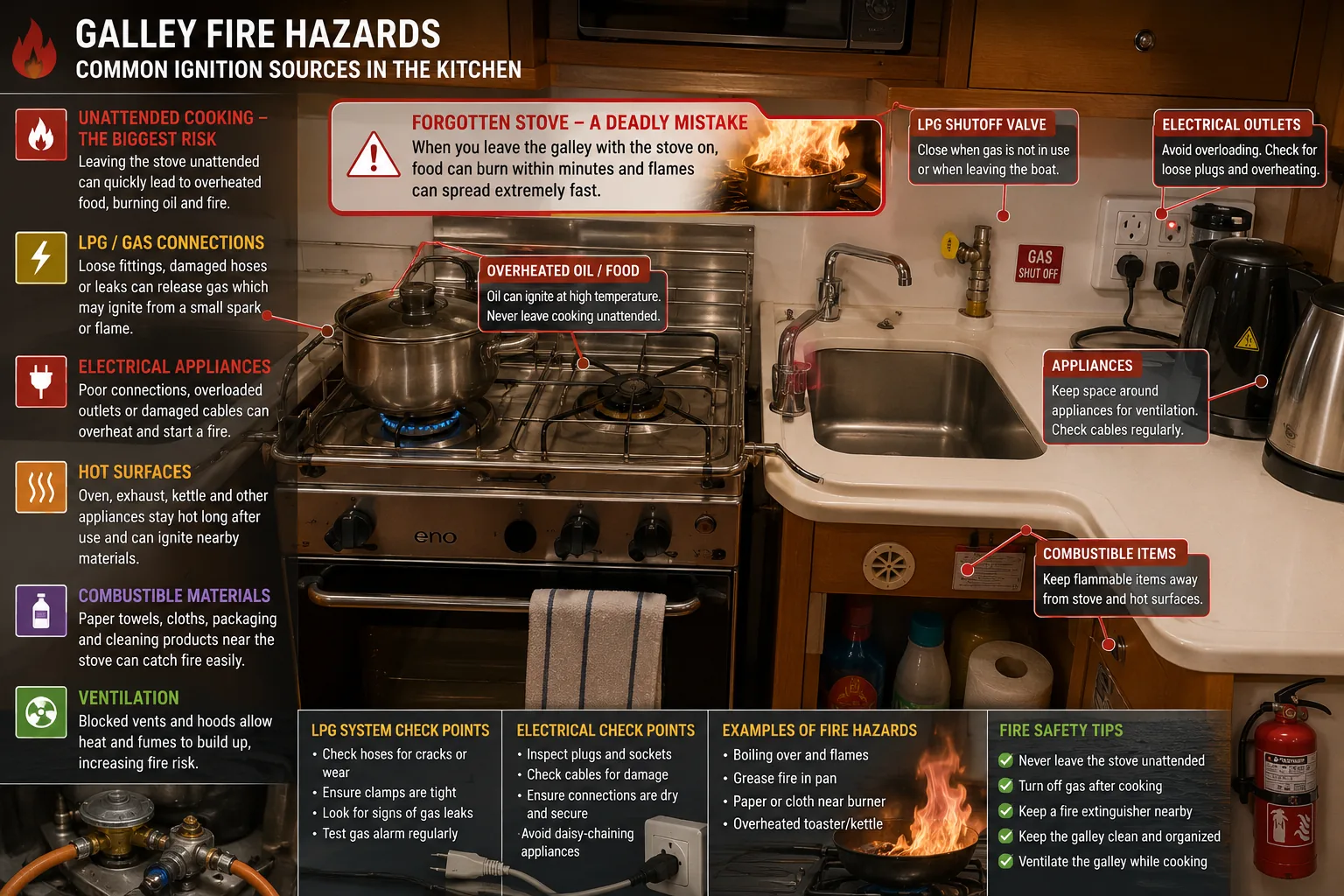
9. The Galley Is a Major Fire-Risk Area
Cooking creates open flames, hot surfaces, hot oil and high electrical loads inside a moving vessel. Even when every appliance is functioning correctly, the galley requires disciplined operation.
Never Leave Cooking Unattended
A pan can overheat quickly. Oil or fat can ignite, especially if cooking is left unattended while crew members are distracted by docking, sailing or activity on deck.
Someone should remain responsible for the galley whenever cooking equipment is operating.
Keep Combustible Material Away From the Stove
Common items such as paper towels, dishcloths, food packaging, plastic bags and curtains can ignite if placed too close to a burner or hot surface.
Maintain a clear area around cooking equipment.
Cooking While Underway
A yacht can heel or move suddenly. Pots and pans should be secured appropriately, and the cook should anticipate vessel movement.
Hot oil or boiling liquids can be thrown from cookware during an unexpected wave or manoeuvre.
Grease and Cooking Oil Fires
Never throw water onto burning cooking oil or fat. Water can rapidly spread burning oil and dramatically increase the size of the fire.
Crew members should understand the appropriate method and equipment for dealing with a galley fire before an emergency occurs.
10. Flammable Chemicals and Cleaning Products
Many products routinely carried aboard a yacht are combustible or flammable.
Examples may include:
- paint and varnish,
- paint thinner,
- solvents,
- degreasers,
- adhesives,
- aerosol products,
- fuel additives,
- some cleaning chemicals,
- lubricants and oils,
- gas cartridges,
- spare fuel.
Do not simply place every chemical into the same locker.
Read the manufacturer's storage and hazard information. Keep products in their original or properly identified containers, ensure caps remain closed and store them away from heat and ignition sources.
Oily Rags and Contaminated Material
Rags soaked with oil, fuel, solvents or other chemicals should not accumulate in machinery spaces or lockers.
Dispose of contaminated materials appropriately rather than leaving them beside engines, batteries or electrical equipment.
11. Portable Electronics and Chargers
Phones, tablets, laptops, power banks, rechargeable tools, cameras and other electronics have become normal equipment aboard modern yachts.
Use good-quality charging equipment and inspect cables for damage. Do not continue charging devices that become unusually hot, swell, smell unusual or show physical battery damage.
Avoid covering chargers and power supplies with bedding, clothing or other material that prevents heat from escaping.
12. Generators
A marine generator combines fuel, electricity and hot machinery in one compact installation.
Inspect generator fuel lines, exhaust components, electrical connections and ventilation in the same way you would inspect the main engine.
Look for:
- fuel or oil leaks,
- damaged wiring,
- loose electrical terminals,
- overheated connections,
- damaged exhaust insulation,
- blocked ventilation,
- materials stored against the generator enclosure.
13. Electric Motors and Pumps
Electric motors can overheat when mechanically blocked or overloaded.
Examples include bilge pumps, freshwater pumps, macerator pumps, ventilation fans, refrigeration equipment, windlasses and electric winches.
If a motor repeatedly trips its breaker or blows a fuse, do not solve the problem by installing a larger protective device. Determine why the motor is drawing excessive current.
14. Windlass and Bow-Thruster Circuits
Windlasses and bow thrusters can draw very high current. Their electrical connections, cables, contactors and protective devices therefore deserve special attention.
Corrosion in the anchor locker is common because the environment can be wet and salty. Inspect accessible windlass wiring and terminals for corrosion and signs of heat.
A windlass that becomes unusually slow or behaves inconsistently may have a mechanical or electrical problem that should be investigated.
15. Solar Panels and Renewable Energy Systems
Solar installations introduce additional wiring that may remain energized whenever sunlight reaches the panels.
Inspect solar cables, connectors, deck penetrations, charge controllers and protective devices. Ensure cables cannot chafe against sharp structures and that connectors remain properly secured.
Aftermarket solar installations should be treated as part of the vessel's electrical system rather than as an isolated accessory.
16. Look for Previous Electrical Damage
Heat damage often leaves evidence before a complete failure occurs.
Warning signs include:
- brown or black discoloration,
- melted plastic,
- distorted fuse holders,
- burned insulation,
- a sharp electrical burning smell,
- cracked terminal blocks,
- repeatedly blown fuses,
- circuit breakers that feel unusually hot.
Do not simply replace the visibly damaged component without determining what caused the damage.
17. Strange Smells Are Warning Signs
Crew members should never ignore an unusual smell aboard a yacht.
Different smells can indicate different problems:
- burning plastic may indicate overheating wiring or electronics,
- fuel smell may indicate a fuel-system leak,
- gas smell may indicate an LPG-system problem,
- hot rubber smell may indicate a slipping belt or overheating machinery,
- strong electrical smell may indicate damaged electrical equipment.
If something smells wrong, investigate it before continuing normal operation.
18. Do Not Ignore Repeated Electrical Problems
An intermittent electrical fault is still a fault.
A breaker that occasionally trips, a fuse that fails every few weeks, lights that flicker when another appliance starts or an electrical panel that sometimes smells hot should not be accepted as normal behaviour.
Intermittent problems can be early symptoms of loose or corroded connections.
19. Fire Extinguishers Are the Last Line of Defence
Fire extinguishers are essential safety equipment, but they should not be considered a substitute for preventive maintenance.
The correct number, type, rating and location depend on the vessel and applicable regulations. Crew should know where extinguishers are located and how they are used before leaving the marina.
An extinguisher buried behind luggage or locked inside an inaccessible compartment may be useless during an emergency.
20. Engine-Compartment Fire Suppression
Some yachts are equipped with fixed fire-suppression systems for machinery spaces. These systems can be extremely valuable because opening an engine hatch during a fire may introduce additional oxygen.
Where a fixed system is installed, inspect and service it according to its specified schedule and applicable requirements.
Crew members should understand whether the system activates automatically, manually or both, and where the manual controls are located.
21. Smoke, Heat and Gas Detection
Early detection can provide valuable time before a small problem becomes a major fire.
Depending on the vessel and installation, safety systems may include smoke alarms, heat detectors, LPG detectors and carbon-monoxide alarms.
Test installed detectors periodically and replace batteries or devices according to manufacturer recommendations.
22. Before Leaving the Yacht Unattended
Many fires begin when nobody is aboard to notice the first warning signs.
Before leaving the vessel for an extended period:
- turn off unnecessary electrical loads,
- verify that cooking appliances are off,
- isolate LPG according to the vessel's procedure,
- check for unusual smells,
- inspect the engine compartment for leaks,
- make sure chargers and shore-power equipment show no signs of overheating,
- remove unnecessary combustible waste,
- do not leave inappropriate portable appliances operating unattended.
Some systems, such as bilge pumps, alarms and monitoring equipment, may need to remain powered. The correct shutdown procedure depends on the vessel.
23. Fire Prevention During Bareboat Charter Check-In
Charter guests should not assume that fire safety begins only after departure. Check-in is an opportunity to learn the vessel's safety systems.
Before leaving the marina, ask or verify:
- Where are the fire extinguishers?
- Is there a fixed engine-room suppression system?
- Where is the LPG shutoff?
- Where are the battery switches?
- Where are the main DC and AC breakers?
- How is shore power disconnected?
- Where are the fuel shutoff valves, if accessible?
- How can the engine be stopped in an emergency?
- Are smoke, gas or carbon-monoxide detectors installed?
Every responsible crew member should know the location of the main safety controls.
24. Recommended Periodic Fire-Risk Inspection
A useful fire-prevention inspection should include the entire vessel rather than only the fire extinguishers.
Electrical System
- Inspect battery terminals.
- Inspect high-current cable connections.
- Look for corrosion.
- Look for melted or discolored insulation.
- Check fuse and circuit-breaker ratings.
- Investigate repeatedly failing fuses.
- Inspect shore-power plugs and sockets.
- Check inverter and charger ventilation.
- Inspect aftermarket electrical modifications.
- Check wiring near wet areas.
Engine and Generator
- Inspect fuel hoses and connections.
- Check for fuel leaks.
- Check for oil leaks.
- Inspect exhaust components.
- Inspect alternator and starter wiring.
- Remove combustible materials from machinery spaces.
- Keep bilges and engine areas clean enough to identify new leaks.
LPG and Galley
- Inspect LPG hoses and connections.
- Know the location of the main shutoff.
- Test installed gas detectors.
- Keep combustible materials away from the stove.
- Never leave cooking unattended.
- Keep suitable fire-safety equipment accessible.
Storage
- Store chemicals according to manufacturer instructions.
- Remove leaking containers.
- Keep flammable products away from heat.
- Do not accumulate oily rags.
- Do not store unnecessary combustible material in machinery spaces.
Fire Equipment
- Check extinguisher locations and condition.
- Confirm that extinguishers remain accessible.
- Inspect fixed suppression systems where installed.
- Test smoke and gas detectors.
- Make sure crew members know where safety equipment is located.
25. Warning Signs That Should Never Be Ignored
Stop and investigate if you notice any of the following:
- burning or melting plastic smell,
- smoke from an electrical panel,
- unusually hot cables or terminals,
- melted fuse holders,
- repeatedly blown fuses,
- repeated breaker trips,
- visible electrical arcing,
- strong fuel smell,
- LPG smell or gas alarm,
- fuel appearing in the bilge,
- oil reaching hot machinery,
- smoke from the engine compartment,
- an overheating battery or charger,
- swollen or physically damaged rechargeable batteries.
26. What to Do If You Discover an Overheated Electrical Connection
Do not assume that a hot connection will cool down and remain safe.
If it can be done safely, stop the affected equipment and isolate the relevant electrical circuit. Do not continue repeatedly resetting breakers or replacing fuses.
The cause should be identified before the circuit is returned to normal operation.
If you are not qualified to inspect or repair marine electrical systems, have the installation examined by a competent marine electrician.
27. What to Do If You Smell Fuel
Treat an unexplained fuel smell as a warning.
Avoid creating unnecessary ignition sources and investigate the fuel system. Check the engine compartment, fuel lines, filters, tanks and bilge for evidence of leakage.
On gasoline-powered vessels, vapour accumulation can present a particularly serious ignition hazard, so follow the vessel manufacturer's ventilation and starting procedures.
28. What to Do If You Suspect an LPG Leak
Do not deliberately operate electrical switches or create flames to investigate a suspected gas leak.
Shut off the gas supply if this can be done safely, extinguish open flames and follow the vessel's emergency and ventilation procedures.
The system should not be returned to service until the source of the leak has been identified and corrected.
29. Prevention Is More Important Than Firefighting
A fire extinguisher can save a vessel, but the safest yacht is one on which the extinguisher never needs to be used.
Most meaningful fire-prevention work is relatively unexciting: tightening and inspecting connections, replacing corroded terminals, using the correct fuse, repairing a small fuel leak, replacing an old LPG hose, keeping an engine compartment clean and refusing to accept improvised electrical modifications.
These small actions remove the conditions from which serious fires develop.
30. Final Yacht Fire-Prevention Checklist
- Inspect electrical wiring for corrosion and heat damage.
- Check high-current terminals and battery connections.
- Use correctly rated fuses and circuit breakers.
- Never install a larger fuse simply because the correct one keeps blowing.
- Investigate hot electrical connections.
- Inspect shore-power plugs and sockets.
- Keep chargers and inverters properly ventilated.
- Inspect batteries and battery cables.
- Check engine and generator fuel systems for leaks.
- Keep fuel and oil away from hot surfaces.
- Keep machinery spaces clean.
- Inspect LPG cylinders, regulators, hoses and shutoffs.
- Never leave cooking unattended.
- Keep combustible material away from cooking equipment.
- Store flammable chemicals safely.
- Remove contaminated and oily rags.
- Inspect portable chargers and rechargeable batteries.
- Keep fire extinguishers accessible.
- Maintain fixed fire-suppression systems where installed.
- Test smoke, LPG and other installed safety detectors.
- Teach the crew where electrical, fuel and gas shutoffs are located.
- Investigate unusual smells immediately.
- Never ignore repeated electrical faults.
Conclusion
Fire prevention aboard a yacht or sailboat is not a single inspection performed once per season. It is an ongoing part of responsible boat ownership and skippering.
Electrical corrosion, loose connections and incorrectly rated fuses can allow wiring to overheat. Fuel and oil leaks can place combustible liquids close to hot machinery. LPG leaks can create an explosive atmosphere inside the vessel. Cooking equipment introduces open flames and hot surfaces, while chemicals, batteries, chargers, generators and increasingly complex electrical installations add additional sources of risk.
The key is to identify these conditions while they are still small maintenance problems.
A slightly corroded terminal is inexpensive to repair. A damaged fuel hose is replaceable. An incorrect fuse can be corrected in minutes. A deteriorated LPG hose can be replaced before it leaks.
Once any of these problems develops into a fire at sea, the situation becomes dramatically more difficult.
Inspect the vessel regularly, investigate heat, smells and repeated electrical faults, keep fuel and ignition sources separated, use correctly designed electrical protection and make sure everyone aboard knows how to isolate the major systems in an emergency.
On a yacht, the best way to fight a fire is to prevent it from starting.
Continue reading
Build your Croatia sailing knowledge with related TwoBoat guides, software, guides and planning tools.