
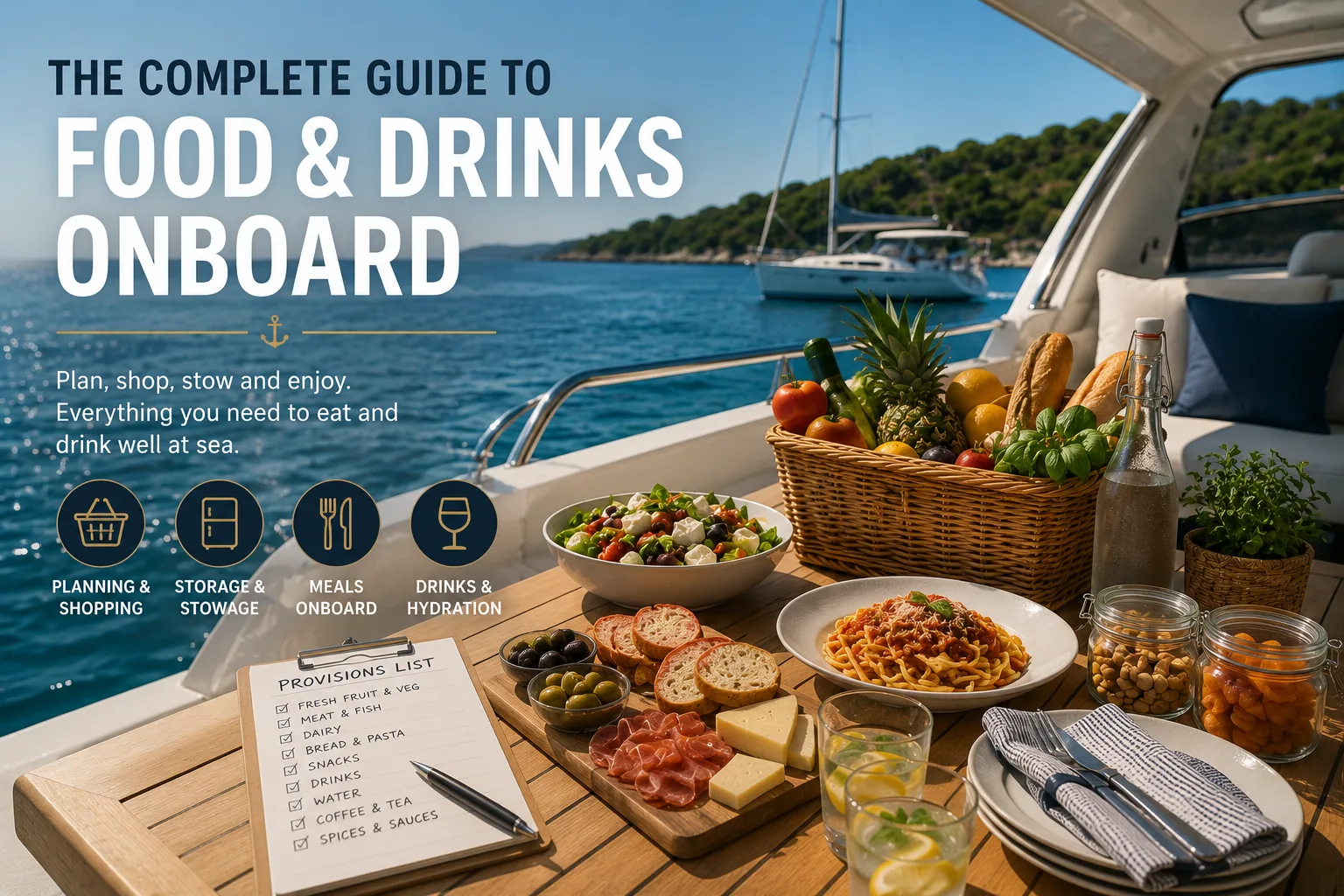
Provisioning a yacht efficiently is one of the most critical logistical steps to master before casting off. Whether you are chartering a 40-foot monohull or a 50-foot luxury catamaran, proper meal planning, accurate drink calculations, and smart storage strategies directly impact your comfort, safety, budget, and overall enjoyment at sea.
Operating a galley (yacht kitchen) is fundamentally different from cooking in a residential kitchen. Refrigeration space is strictly constrained, electrical power is managed via battery banks or generators, galley stoves tilt with the waves on a gimbal, and shore access for replenishment varies greatly across island chains. This comprehensive guide details everything you need to execute a seamless, stress-free boat provisioning plan.
1. The Core Strategy: The "70/30" Meal & Provisioning Blueprint
Over-provisioning leads to overflowing iceboxes, spoiled produce, wasted money, and cramped cabins. Under-provisioning leaves your crew hungry on remote anchorages. To strike the perfect balance, experienced charter skippers use the 70/30 Blueprint for a standard 7-day charter:
- Breakfasts (100% Onboard): Plan for 7 casual breakfasts on board. Opt for items that require minimal cooking while underway or anchored in calm bays (e.g., eggs, oatmeal, Greek yogurt, fresh fruit, muesli, cold cuts, fresh bread, or tortillas).
- Lunches (100% Onboard): Prepare for 7 light lunches served onboard in anchorage spots. Focus on refreshing, quick-assembly dishes such as pasta salads, grain bowls (quinoa, couscous), wraps, charcuterie boards, and caprese salads.
- Dinners (70% Restaurants / 30% Galley): Allocate 4 to 5 dinners to local island tavernas or konobas to sample authentic regional cuisine. Reserve 2 to 3 dinners for cooking onboard—ideal for nights spent at quiet buoys, wild anchorages, or during sunset cruises (e.g., fresh seafood pasta, grilled steaks, or risotto).
2. Drinking Water & Beverage Calculations: The Precision Formula
Dehydration happens rapidly on the water due to constant exposure to sun, wind, and salt spray. Yacht fresh-water tanks are designed primarily for showering, dishwashing, and cooking. Drinking water should always be supplied separately via bottled mineral water.
| Category | Per Person / Day Standard | Total for Crew of 8 (7 Days) | Pro Storage Strategy |
|---|---|---|---|
| Still Bottled Water | 2.0 – 2.5 Liters | 120 – 140 Liters (14–16 six-packs) | Stow half under the salon floorboards (coolest zone) and keep only 2–3 packs accessible. |
| Sparkling Water | 0.5 – 1.0 Liter | 30 – 50 Liters | Great for mixing drinks, digestive aid, and mid-day refreshers. |
| Beer & Canned Soda | 2 – 4 Cans / Bottles | 120 – 180 Cans | Buy aluminum cans! Cans crush flat for easy trash management and cool 3x faster than glass. |
| Wine & Spirits | Based on preference | 10 – 14 Wine Bottles / 3–4 Spirits | Store wine bottles flat in bilge compartments wrapped in towels to avoid clinking. |
3. Categorized Provisioning Guide: What to Buy vs. What to Avoid
A. Non-Perishable Dry Goods (The Galley Backbone)
Dry goods require no refrigeration and form the foundation of quick, hearty sea meals:
- Carbohydrates & Grains: Penne, fusilli, arborio rice, couscous, quinoa, rolled oats, and flour tortillas (tortillas stay fresh for weeks and compress far better than loaves of bread).
- Canned & Jarred Goods: Diced tomatoes, tomato paste, tuna in olive oil, sweet corn, chickpeas, black beans, capers, anchovies, and high-quality olives.
- Oils, Vinegars & Spices: Extra virgin olive oil (generous quantities), sunflower oil for frying, sea salt, cracked black pepper, oregano, garlic powder, chili flakes, soy sauce, and balsamic glaze.
- Snacks & Energy Boosters: Mixed nuts, dried fruits, rice cakes, tortilla chips, salsa, protein bars, and dark chocolate.
B. Refrigerated Goods & Fridge Management Rules
Yacht fridges operate on 12V DC battery power or generator power. They cool by conduction rather than forced air circulation, meaning temperature distribution is uneven.
- Dairy Products: Hard cheeses (Parmesan, Gouda, aged Cheddar, Manchego) last significantly longer than soft cheeses. UHT long-life milk does not require refrigeration until opened.
- Meats & Charcuterie: Cured meats (Prosciutto, jamón, salami, pancetta) keep exceptionally well. Purchase fresh meats (chicken, minced meat, steaks) strictly for the first 48 hours of the trip.
- Eggs: Buy fresh, unwashed eggs if available locally. Eggs do not need refrigeration on a boat if kept in a cool, dark locker—saving massive amounts of precious fridge space.
C. Fresh Produce & Preservation Protocols
Avoid soft fruits that bruise or rot rapidly under humid marine conditions (e.g., ripe peaches, figs, soft berries, soft tomatoes). Focus on hardy produce:
- Resilient Vegetables: Potatoes, onions, garlic, carrots, bell peppers, courgettes (zucchini), cabbage, and cucumbers. Cabbage is superior to lettuce for sea salads as it retains crunch for a week.
- Resilient Fruits: Lemons, limes, oranges, grapefruit, apples, and green bananas (let them ripen onboard).
- Fresh Herbs: Rosemary and thyme endure well; store basil and parsley with stems in a glass with a splash of water, just like flowers.
4. Essential Household, Sanitation & Eco-Supplies
Galley efficiency relies heavily on cleaning and waste management items. Marine plumbing and ecosystems are delicate, requiring specific choices:
- Biodegradable Dish Soap: All greywater from galley sinks pumps directly into the marine environment. Always select marine-safe, eco-friendly dishwashing detergent.
- Microfiber Cloths & Paper Towels: Bring 2–3 packs of microfiber towels (washable and quick-drying) plus 4–6 heavy-duty paper towel rolls for quick spill control.
- Heavy-Duty Trash Bags (40L–60L): Marine waste bins are subjected to movement and heavy glass jars. Double-bagging with drawstring bags prevents leaks in bilge lockers.
- Specialized Toilet Paper: Use rapid-dissolving, 2-ply marine/RV toilet paper. Crucial Note: In most charter destinations (e.g., Greece, Croatia, Turkey), toilet paper must NEVER be flushed down marine heads—always use dedicated sanitation bins provided in each head.
🧮 Interactive Yacht Provisioning Calculator
Calculate your estimated minimum food, water, and supply requirements in seconds:
Estimated Minimum Supplies Needed:
- Still Drinking Water: 140 Liters (16 six-packs of 1.5L)
- Sparkling Water: 42 Liters
- Canned Beers/Sodas: 140 Cans
- Eggs: 56 Fresh Eggs
- Paper Towels: 6 Rolls
- Heavy-Duty Trash Bags: 14 Bags (50L)
5. Online Pre-Delivery vs. Local Marina Supermarket
Modern charter hubs offer specialized yacht provisioning services (e.g., Jam Yacht Supply, Balkan Provisioning, or local supermarket delivery fleets).
| Method | Pros | Cons | Best Suited For |
|---|---|---|---|
| Online Pre-Delivery | Saves 3–4 hours on embarkation day; water boxes delivered directly to deck; stress-free check-in. | Slight markup on retail prices or delivery fee. | Families, large groups, catamaran charters, skippered/crewed charters. |
| Self-Shopping | Full inspection of fresh fruit, meats, and seafood; exact brand choices. | Extremely long lines on Saturday afternoons; hauling heavy water boxes across hot docks. | Budget-conscious crews, bareboat experts, guests arriving with private cars. |
6. Pro-Skipper Galley Lifehacks
- The Hot-Drink Rule: Never pack a hot box of room-temperature beer or soda into the fridge all at once. Warm drinks go in 4–6 cans at a time as cold ones are consumed.
- Hanging Produce Baskets: Install mesh net hammocks or fruit baskets in the salon. Air circulation around oranges, onions, and apples prevents mold growth far better than plastic bags.
- Pre-cooked First-Night Meal: Bring or buy a pre-made meal for the first night. Check-in day is exhausting, and nobody wants to spend 2 hours cooking in a warm harbor.
- Label Your Water Six-Packs: Use a permanent marker to write crew members' names on water bottle caps to prevent half-empty bottles from piling up around the chart table.
7. Provisioning for Crew (Skipper & Hostess Etiquette)
If you are chartering with a professional skipper, hostess, or chef, industry regulations and maritime etiquette dictate that the charterer provides their meals and drinks throughout the charter duration:
- Include them in your head count when calculating water, breakfasts, snacks, and lunches.
- Ask about their dietary restrictions or food allergies during the check-in briefing.
- When dining ashore, you can either invite your skipper/crew to join your table or provide a daily meal allowance (typically €30–€40/day depending on the region) so they can dine independently.