
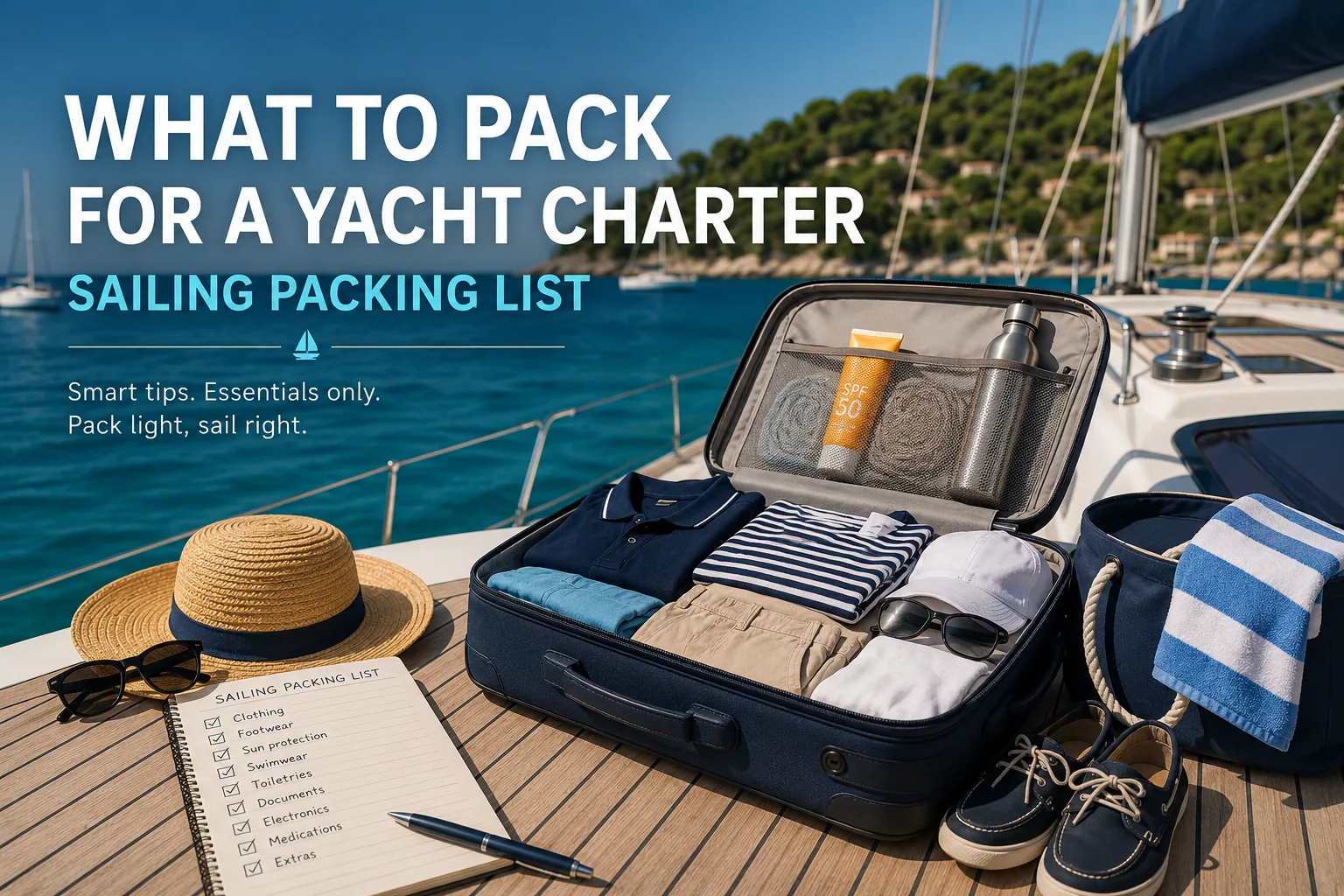
Packing for a yacht charter is fundamentally different from preparing for a traditional hotel resort or cruise ship stay. On a sailboat or catamaran, spatial efficiency, weight distribution, and environmental adaptability dictate your daily comfort. Bringing the wrong luggage, unsuitable footwear, or excessive wardrobe items can severely restrict your cabin space, damage delicate teak decks, and compromise onboard safety.
Whether you are embarking on a 7-day self-skippered bareboat adventure through the Dalmatian islands or relaxing on a crewed luxury catamaran in the Ionian Sea, this comprehensive guide covers every logistical nuance you need to master. From cabin storage architecture to marine-safe eco-toiletries, here is the definitive playbook on what to pack—and what to leave firmly on dry land.
1. The Golden Rule of Marine Luggage: Soft Bags vs. Hard Suitcases
Ask any professional charter captain or fleet technician about their single biggest pet peeve on embarkation day, and the answer is unanimous: rigid, hard-shell suitcases.
⚠️ Why Hard Suitcases RUIN Your Cabin Experience
Once you arrive at your berth and unpack your wardrobe into the cabin's hanging lockers and side shelves, your empty luggage must be stowed away. Unlike hotel rooms, yacht cabins do not have empty under-bed voids designed for 30-inch rigid suitcases. A hard suitcase cannot flex or compress; it will occupy half your floor space or lie on an unused berth for the entire week, forcing you to step over it constantly.
Recommended Marine Luggage Options:
- Foldable Duffel Bags & Holdalls: Soft fabric or canvas duffels collapse completely flat. Once empty, they can be tucked under mattresses, slid into narrow side lockers, or stowed in the bilge compartments without wasting an inch of living space.
- Waterproof Dry Bags (10L to 30L): An absolute necessity for tender and dinghy rides. When traveling from your anchored yacht to a shore restaurant or secluded beach, spray and chop can easily splash into the tender. A roll-top dry bag keeps your phone, passport, camera, and dry clothes 100% safe.
- Packing Cubes: Highly recommended for organizing clothes within narrow marine lockers. Cubes keep your garments neat even when the yacht heals under sail.
2. Deck Footwear Protocols: Non-Marking Soles & Safety
Yacht decks—whether raw teak, synthetic teak (Flexiteek), or gelcoat fiberglass—are delicate and expensive surfaces. Furthermore, decks become extremely slippery when exposed to sea spray, salt crust, or morning dew.
| Footwear Category | Onboard Status | Technical Requirement & Purpose |
|---|---|---|
| Non-Marking Deck Shoes / Boat Sneakers | ESSENTIAL | Must feature white or light-colored soft rubber soles with razor-siping (grooves) to grip wet fiberglass without leaving black scuff marks. |
| Neoprene Water Shoes / Reef Booties | HIGHLY RECOMMENDED | Critical for swimming off rocky shores, stepping on pebble beaches, and avoiding sea urchin spines in the Mediterranean. |
| Flip-Flops / Rubber Slides | SHORE USE ONLY | Excellent for marina shower blocks and beach walks. Avoid wearing them on deck under sail as they lack lateral support and trip deck cleats. |
| High Heels, Stilettos & Hard Boots | STRICTLY FORBIDDEN | Pinpoint pressure permanently gouges teak wood and cracks fiberglass gelcoat. You will be asked to remove them before stepping on board. |
3. The Capsule Sailing Wardrobe: Layering for All Weather
The golden rule of nautical clothing is **function over volume**. Most first-time charterers wear less than half of the clothes they bring. On a yacht, you will spend most of your day in swimwear and casual attire, but marine weather can shift rapidly.
Daytime & Swimming Essentials:
- 3 to 4 Swimsuits / Bikinis: Bring enough so that one set is always dry while another is in use. High humidity at sea can slow drying times overnight.
- UPF 50+ Rashguards / UV Shirts: Essential for long sailing legs or snorkeling sessions. Radiation glare off the water intensifies UV exposure significantly.
- Breathable Linen Shirts & Shorts: Lightweight, loose-fitting cotton or linen apparel keeps you cool while offering protection from the sun during afternoon anchorages.
Evening & Offshore Layering:
- Lightweight Windbreaker / Foul Weather Jacket: Even in mid-summer in the Mediterranean or Caribbean, evening sea breezes or unexpected thermal squalls can feel cold when you are damp.
- Fleece or Mid-Layer Sweater: Essential for night watches, early morning departures, or cool dinners anchored in windy bays.
- Smart Casual Shore Outfits (2 Sets): For dining at waterfront tavernas, marina restaurants, or exploring island towns. Keep it elegant yet casual (e.g., polo shirts, summer dresses, chino shorts).
4. Personal Care, Marine Eco-Protection & Medical Gear
Yacht plumbing drains gray water directly into coastal waters, and holding tanks require specialized care. Furthermore, finding a pharmacy in remote island coves can take hours.
- Reef-Safe Mineral Sunscreen: Standard chemical sunscreens contain Oxybenzone and Octinoxate, which devastate coral reefs and marine ecosystems. Always choose non-nano Zinc Oxide or Titanium Dioxide mineral formulations. Note: Avoid aerosol spray sunscreens on board—spray drift coats fiberglass decks, making them slick as ice and staining cushions yellow.
- Biodegradable Toiletries: Bring eco-friendly shampoos, conditioners, and body washes that break down naturally in saltwater.
- Seasickness Prevention Arsenal: Pack oral antihistamines (e.g., Stugeron, Dramamine), acupressure wristbands, and ginger chewables. Pro Tip: Take seasickness medication at least 1 hour before setting sail; once nausea sets in, oral pills are far less effective.
- First Aid & Personal Pharmacy: Waterproof bandages, antiseptic cream, burn gel (pure Aloe Vera), insect repellent for shore excursions, and rehydration salts for sun exposure.
🎒 Interactive Yacht Packing Checklist Generator
Customize your packing list based on your charter setup and destination climate. Click items to mark them as packed!
Generated Gear List:
0% Packed5. Onboard Electronics, Power Management & Adapters
Electrical power on a yacht operates on two distinct systems: 12V DC Battery Power (when under sail or anchored) and 230V/110V AC Shore Power (when plugged into marina pedestals). Managing your electronics requires specific gear:
- 12V USB Car Charger Plugs: Most yacht cabins feature 12V cigarette-lighter sockets. Bringing a dual USB or USB-C 12V adapter allows you to charge smartphones and cameras directly from cabin batteries without needing shore power or turning on the generator.
- High-Capacity Power Banks (20,000mAh): Essential for powering devices during full days anchored in remote coves or during dinghy excursions.
- Multi-Socket Extension Cable: Cabins usually have only 1 or 2 AC outlets. When docked in a marina, a compact power strip allows your whole cabin crew to charge devices simultaneously.
6. What NOT to Pack: Items to Leave at Home
Eliminating unnecessary items before departing for the airport is crucial for maintaining uncluttered cabins. Leave these items firmly behind:
- High-Wattage Hair Dryers & Straighteners: Marine inverters cannot support 1800W–2000W heating appliances. Attempting to use them at anchor will trip inverter breakers or damage battery banks. (Hair dryers can only be used when connected to shore power in marinas).
- Valuable Jewelry & Expensive Watches: Ropes, winches, swimming, and tender boarding make losing rings, bracelets, and luxury watches in deep water a constant risk.
- Excessive Bath Towels & Bed Linen: All professional charter companies supply clean bath towels and bed linens as part of the charter starter pack. You only need to bring 1 lightweight microfiber beach towel for ocean swimming.
- Rigid Plastic Coolers: Unless specified for a bareboat fishing expedition, yachts are equipped with built-in top-loading or front-loading refrigerators. External hard coolers block deck access.
7. Final Pre-Departure Checklist
Double-check these critical documents 24 hours before your flight:
- ✅ Physical Passport (valid for at least 6 months past return date)
- ✅ Original Skipper License & VHF Operator Certificate (for bareboat charters)
- ✅ Credit Card for Security Deposit Authorization at check-in
- ✅ Crew List uploaded to charter agency portal in advance
- ✅ Travel & Charter Cancellation Insurance Documentation