Every charter director knows the moment when the season starts to feel out of control.
It usually does not happen because of one big disaster. It happens because of hundreds of small interruptions: phone calls, missing information, unclear responsibilities, unsigned documents, delayed work orders, unavailable spare parts and contractors waiting for instructions.
At first, it looks like a communication problem.
In reality, it is an operations problem.
This guide explains why charter companies lose control during the busiest weeks of the season, where the hidden pressure comes from, and how a more organized operational process can reduce calls, uncertainty and daily chaos.
The Real Pain: Losing Control While Everyone Is Working Hard
One of the biggest frustrations in charter operations is that chaos can happen even when the team is doing its best.
The office is answering guests. Technicians are moving between boats. Cleaning teams are trying to finish cabins. Contractors are waiting for instructions. Managers are checking documents, contracts and invoices. The warehouse is trying to find spare parts.
Everyone is busy.
But the director still keeps getting the same questions:
- Is this boat ready?
- Who is responsible for this repair?
- Has the guest signed the contract?
- Do we have this part in stock?
- Did the contractor receive the work order?
- Where is the latest update?
- Who approved this task?
These questions are not signs of lazy employees. They are signs that information is not organized.
For a broader view of how modern charter operations can be structured, see the Complete Yacht Charter Operations Guide.
Every Phone Call Is a Symptom
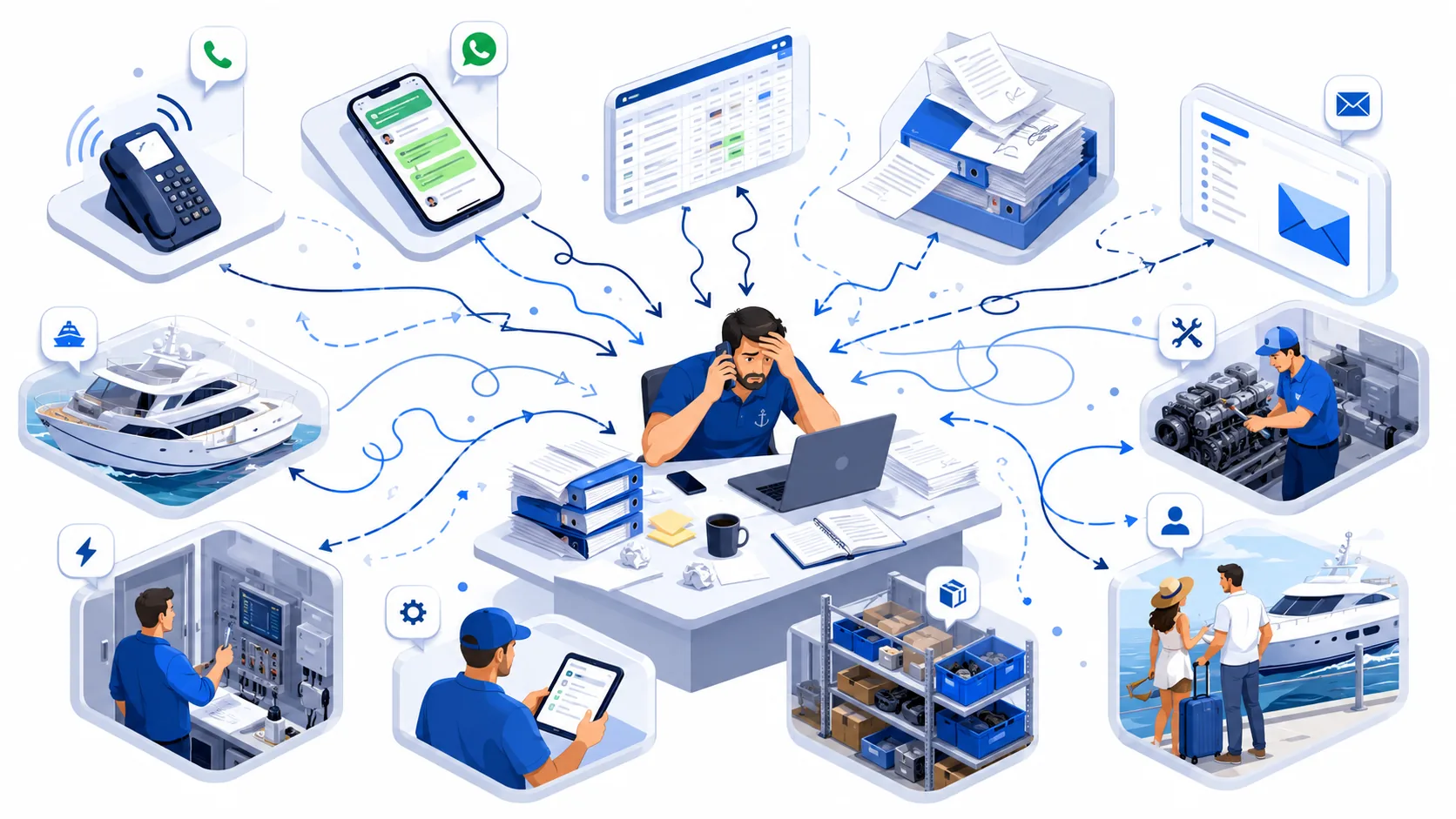
A phone call is sometimes necessary. But in many charter companies, phone calls become the operating system.
When employees need to call the director for every small decision, the business becomes dependent on one person. That person becomes the central database, dispatcher, approval system and troubleshooting desk.
That is dangerous during the season.
| Question | What It Usually Means | Operational Risk |
|---|---|---|
| “Who is working on this boat?” | Task ownership is unclear. | Delay, duplicated work or no work done. |
| “Do we have this part?” | Inventory is not visible to the team. | Repair delay and possible guest dissatisfaction. |
| “Did the guest sign?” | Documents are not connected to the booking or boat. | Check-in delay and administrative risk. |
| “Did the contractor see the task?” | External work is managed outside the system. | No accountability and unclear progress. |
The problem is not the call itself. The problem is that the answer should already be available.
Interactive Calculator: How Much Time Is Lost Across Your Fleet?
Every charter company is different, but the pattern is usually the same: small daily interruptions become a large operational cost over the season. Use this calculator to estimate how much time can be lost when calls, documents, work orders and inventory checks are handled manually.
This is why operational control should not be measured only by how many boats a company manages. It should also be measured by how much time the team loses because information is not available at the moment it is needed.
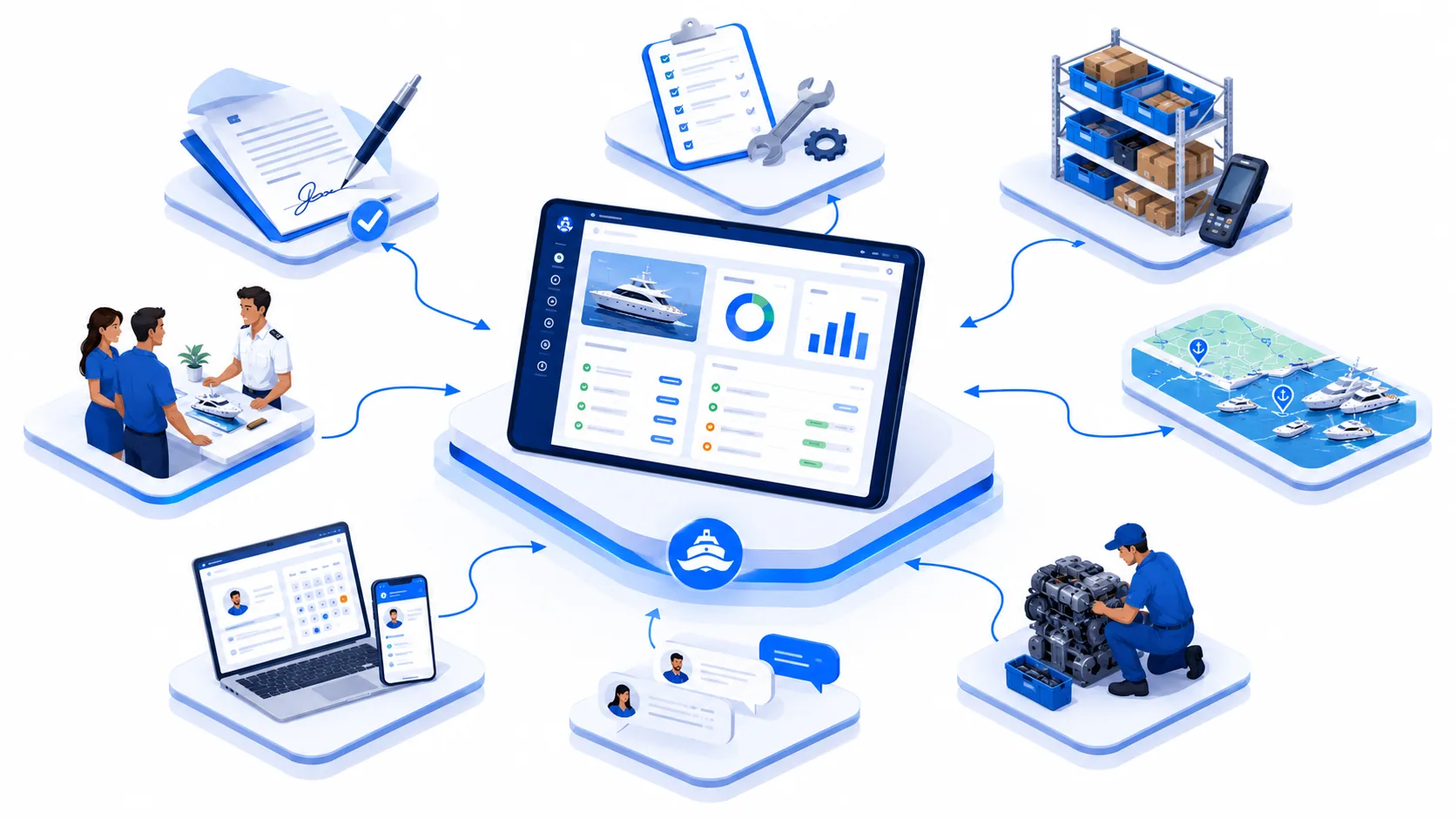
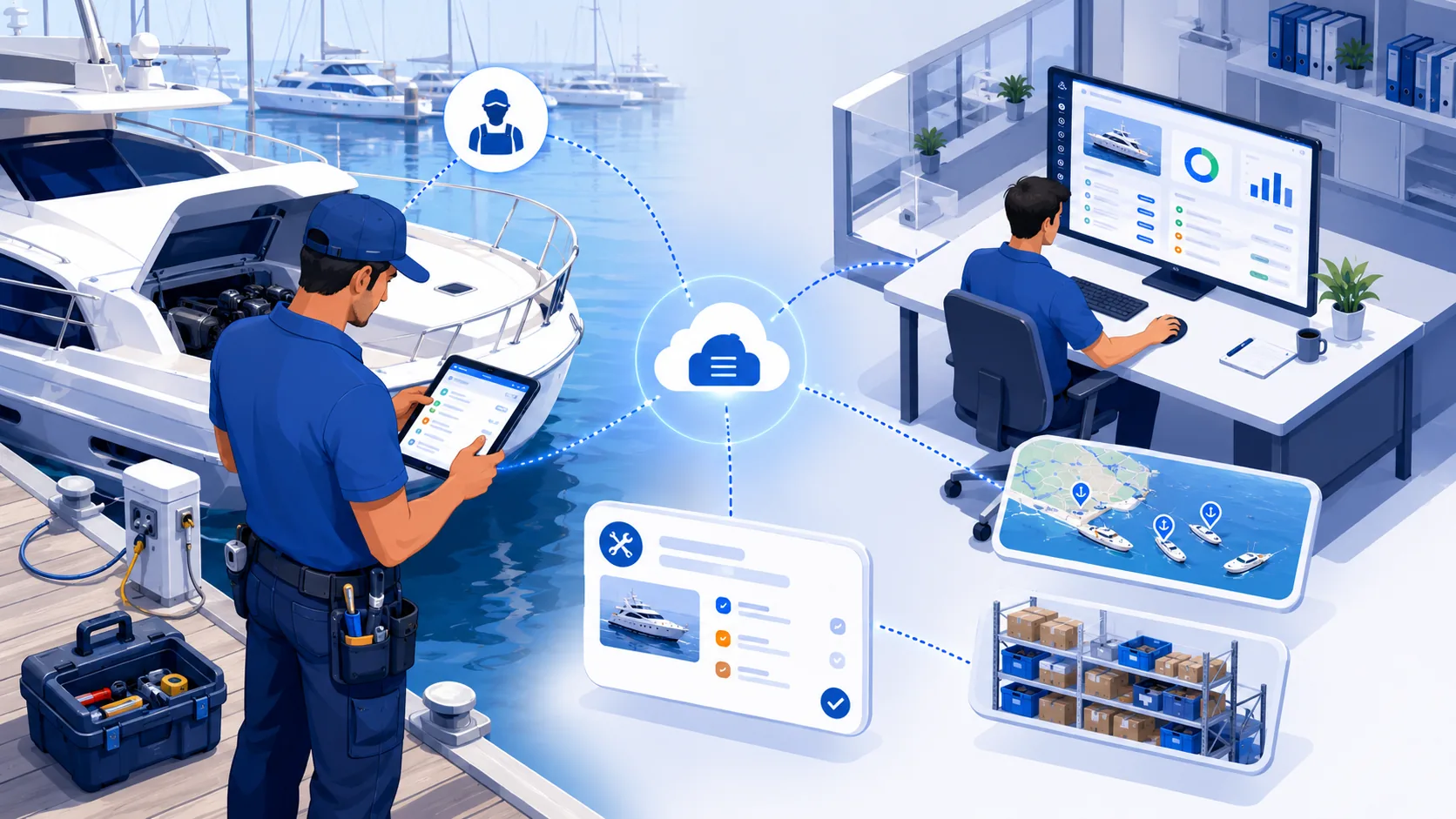
An integrated platform such as TwoBoat Charter Management Software helps reduce this friction by connecting work orders, fleet status, documents, inventory, contractors and internal communication in one place.
WhatsApp Is Useful, But It Is Not Operational Control
WhatsApp, Viber and phone calls are useful for quick communication. But they were not designed to manage a charter company.
Important instructions disappear between casual messages. Photos are hard to connect to the correct boat. New employees cannot see the full history. Contractors receive information outside the company process. Managers cannot easily verify what was done, when it was done and who confirmed it.
That is how control slowly disappears.
This is one of the reasons integrated charter software matters. The goal is not to replace every conversation. The goal is to connect communication with work orders, boats, documents, inventory and responsibilities. You can read more about this in Why Yacht Charter Companies Lose Time Without Integrated Software.
The Moment Control Comes Back
Control returns when every important operational question has a clear place where the answer can be found.
Instead of asking the director, an employee should be able to open the system and see:
- which tasks are assigned today,
- which boats are ready,
- which work orders are open,
- which documents are signed,
- which spare parts are available,
- which contractor is responsible,
- what has already been completed.
This is where a charter management software becomes more than an administration tool. It becomes the daily operating system of the company.
Work Orders: The Difference Between “Someone Will Do It” and “This Person Owns It”
Many operational problems start with unclear responsibility.
A repair is mentioned in a chat. Someone takes a photo. Someone else says they will check it. A technician is informed verbally. A contractor receives a screenshot. Later, nobody is completely sure what happened.
A proper work order removes that uncertainty.
| Without Work Order Structure | With Digital Work Orders |
|---|---|
| Task is discussed in chat. | Task is created and assigned. |
| Responsibility is unclear. | One person or contractor owns the task. |
| Photos are lost in messages. | Photos stay attached to the work order. |
| Manager must call for updates. | Status is visible in real time. |
A structured work order management process helps the team move from verbal coordination to clear accountability.
Inventory: One Missing Part Can Delay the Whole Day
Inventory problems are often underestimated.
A small part can create a big delay. A filter, impeller, fuse, pump, cable, hose clamp or battery component may not be expensive, but if nobody knows whether it is available, the boat can remain blocked.
In many charter companies, spare parts are still managed through memory, phone calls or spreadsheets. That creates unnecessary uncertainty.
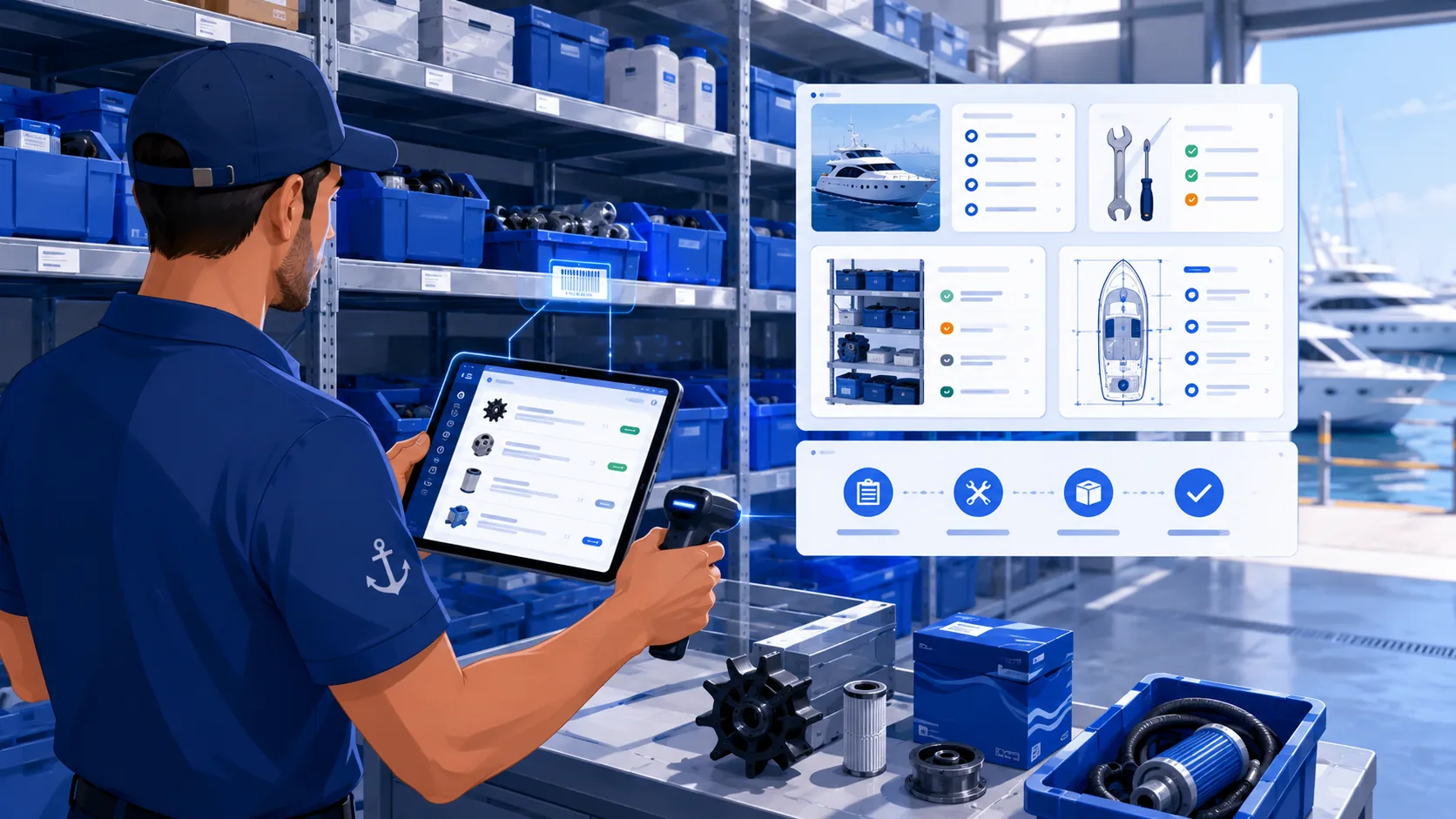
Employees should not need to call the office just to ask if a part exists. They should be able to check stock directly before starting the job.
Contractors Need Access Too
External contractors are part of daily charter operations: mechanics, electricians, divers, cleaners, service partners and other specialists.
But many companies manage contractors outside their main process. Instructions are sent by phone, WhatsApp or email. Photos come back separately. Status updates are unclear. The office has to call again to check progress.
A better process gives each contractor their own account.
The contractor logs in, sees only the work orders and tasks assigned to them, uploads photos, writes comments and marks the job as completed.
This creates a simple but powerful record:
- what was requested,
- who was responsible,
- when the task was assigned,
- which parts were needed,
- what was completed,
- what evidence was attached.
That record protects the company, reduces confusion and gives the director a much clearer overview.
Digital Signatures Reduce Last-Minute Pressure
Paper documents create another layer of stress.
Contracts, check-in confirmations, handover reports, maintenance confirmations and other documents often need to be printed, signed, scanned, stored or manually searched later.
During the busiest days, this creates friction at exactly the wrong time.
Digital signatures help because the document is completed, stored and connected to the correct process. The team does not need to ask where the signed paper is. The answer is already in the system.
Fleet Overview: Directors Need the Big Picture
A director does not only need to know whether one task is finished. They need to understand the state of the whole fleet.
Which boats are ready? Which boats are waiting for maintenance? Which boats have open issues? Which boats have missing documents? Which boats are blocked by spare parts or contractor work?
This is where fleet management software becomes important.
The purpose is not only to store boat information. The purpose is to make operational status visible before problems reach the guest.
What Directors Actually Want
Most directors do not wake up thinking they need another software tool.
They want something more basic:
- fewer calls,
- less uncertainty,
- clearer responsibility,
- faster check-ins,
- better team coordination,
- less dependence on memory,
- more confidence that the day is under control.
That is the real value of an integrated platform like TwoBoat.
It is not only about managing bookings or boats. It is about connecting the daily operational details that usually create stress: tasks, work orders, communication, inventory, contractors, documents and signatures.
If you are new to the platform, start with What Is TwoBoat Yacht Charter Marketplace & Charter Software.
Step-by-Step: How to Reduce Operational Chaos
- List the questions your team asks every day.
Start with the repeated calls and messages. These show where information is missing. - Connect every task to a boat, person and deadline.
A task without an owner will eventually become a phone call. - Move work orders out of chats.
Photos, comments and status updates should stay attached to the actual job. - Make inventory visible to the people doing the work.
If technicians can check parts themselves, they call less and act faster. - Give contractors structured access.
External partners should see their assignments without needing screenshots or repeated calls. - Use digital signatures where paperwork slows the team down.
Signed documents should be easy to find later. - Give directors a live overview.
The director should not need to call five people to understand the state of the fleet.
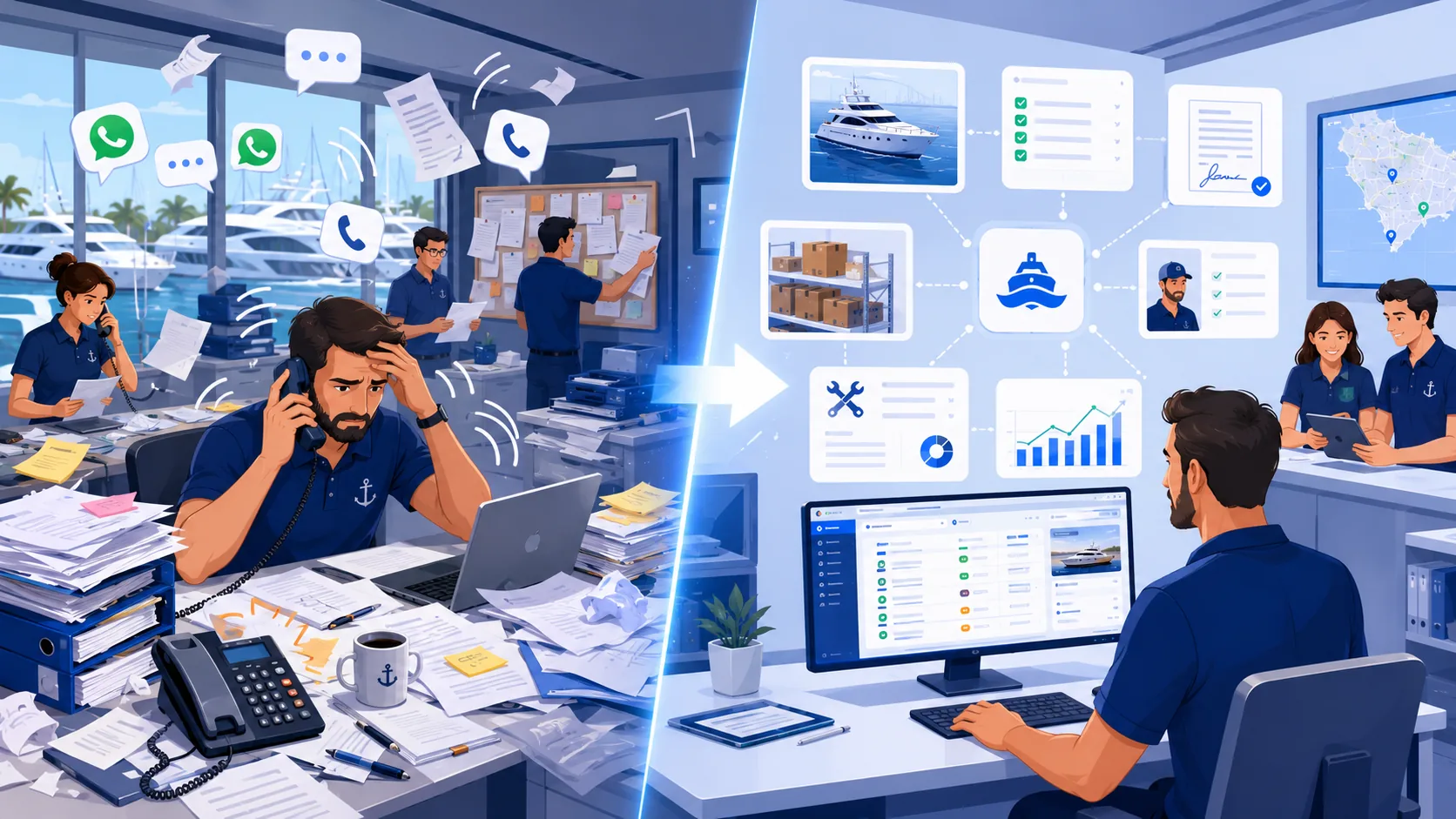
Suggested Visual: Before and After
| Before | After |
|---|---|
| Tasks in WhatsApp | Tasks assigned inside the platform |
| Contractors managed by phone | Contractors log in and see assigned work |
| Inventory checked manually | Spare parts visible to workers |
| Paper contracts | Digital signatures and stored documents |
| Director answers every question | Team finds answers in one place |
Conclusion: Control Is Built Into the Process
A charter company does not lose control because people are careless.
It loses control when information is scattered across too many places.
When tasks are in one chat, documents in another folder, inventory in a spreadsheet, contractor instructions on the phone and decisions inside the manager's head, the company becomes fragile during the season.
Control returns when everyone works from the same operational source of truth.
Employees know what to do. Contractors know what is assigned to them. Technicians know which parts are available. The office knows which documents are signed. Directors can see the status without making another call.
That is the difference between a busy charter company and an organized one.
Continue reading
Build your Croatia sailing knowledge with related TwoBoat guides, software, guides and planning tools.