
Boat Safety Checklist: How to Verify Yacht Maintenance and Safety Records Before Chartering
A boating checklist helps every skipper, charter guest, owner, and fleet manager prepare before leaving the marina. This guide explains what to check before departure, how to verify a yacht's maintenance and safety records before chartering, and how professional charter fleets organize safety inspections, service history, work orders, and crew briefings.
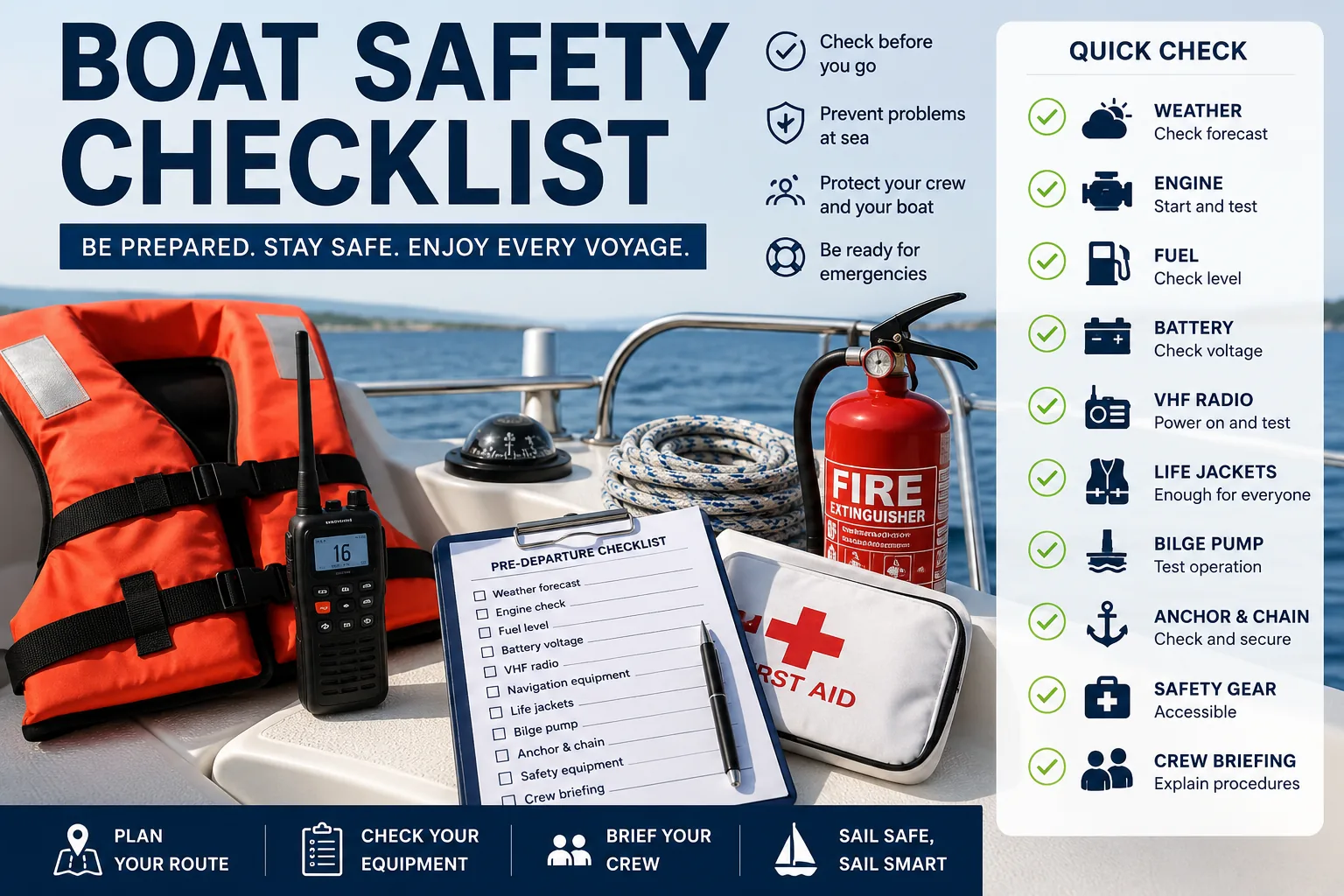
Quick Pre-Departure Boating Checklist
Before leaving the marina, complete these basic checks. This section targets the common search query boating checklist and gives a fast overview for skippers who need a practical departure routine.
| Category | What to check | Why it matters |
|---|---|---|
| Weather | Forecast, gusts, waves, thunderstorms, visibility | Most safe departures start with a realistic weather decision. |
| Engine | Oil, cooling water, belts, alarms, forward and reverse gear | Engine failure near a marina, rocks, or lee shore can become dangerous quickly. |
| Fuel | Fuel level, reserve, fuel stops, expected consumption | Fuel planning prevents avoidable emergency calls and tow requests. |
| Electrical | Batteries, switches, charging, navigation lights, bilge pump power | Weak batteries affect starting, navigation, communication, and pumps. |
| Safety | Life jackets, fire extinguishers, first aid, flares, lifebuoy | Safety equipment must be complete, accessible, and in working condition. |
| Navigation | GPS, charts, compass, route, depth sounder, backup shelter | Navigation checks reduce grounding and route-planning mistakes. |
| Communication | VHF, DSC, MMSI, handheld radio, emergency numbers | Reliable communication is critical during distress, urgency, and safety situations. |
| Deck | Lines, fenders, hatches, loose gear, anchor, shore power | Deck preparation prevents damage and injuries during departure. |
How to Verify a Yacht's Maintenance and Safety Records Before Chartering
Before signing a charter handover or accepting a yacht, you should verify that the boat is not only clean and visually attractive, but also properly maintained, legally documented, and safe to operate. This is especially important for bareboat charters, multi-day trips, family charters, and any route that includes exposed passages or remote anchorages.
Documents to request
- Valid registration or vessel documents
- Insurance confirmation if provided by the operator
- Required safety certificate or inspection record where applicable
- VHF radio licence or radio station documentation where applicable
- Recent engine service record
- Gas system inspection record if available
- Liferaft and fire extinguisher service dates where applicable
Operational records to inspect
- Defect log from previous charters
- Open work orders and unresolved issues
- Engine hours and last service date
- Battery replacement or battery test history
- Standing rigging or sail inspection history for sailing yachts
- Bilge pump, seacock, and steering checks
- Photos or technician notes from recent repairs
Step-by-step record verification before charter
Review engine service date, major repairs, recurring issues, and open defects.
If the record says the bilge pump, batteries, or windlass were recently serviced, test them during handover.
Look at fire extinguisher pressure, flare expiry dates where required, liferaft service labels, and first aid kit condition.
Small cosmetic issues are different from unresolved steering, electrical, engine, gas, or bilge problems.
Take photos, write notes on the handover form, and report missing or damaged equipment before leaving.
For charter operators, the cleanest way to control this process is to connect defects, inspections, parts, and technicians in work order management software. For larger fleets, the same records should also connect to fleet management software so that operational status, service history, and booking availability stay aligned.
Superyacht Charter Safety Checklist
A superyacht charter safety checklist is more detailed than a small boat departure checklist because the vessel has more systems, more crew, more guests, and higher operational complexity. The principle is the same: verify documents, safety equipment, crew readiness, technical systems, emergency procedures, and guest briefing before departure.
| Area | Superyacht safety check | Why it matters |
|---|---|---|
| Guest briefing | Life jackets, muster point, fire alarm, tender rules, deck movement, smoking rules | Guests must know how to behave safely without slowing the crew during an emergency. |
| Fire safety | Fire extinguishers, fire doors, galley safety, engine room alarms, escape routes | Fire is one of the most serious onboard risks. |
| Life-saving appliances | Liferafts, EPIRB, life jackets, lifebuoys, rescue lights, MOB equipment | Emergency equipment must match the vessel type, area, and guest count. |
| Tender operations | Tender fuel, kill cord, radio, life jackets, guest boarding process | Tender transfers are a common source of injuries and operational risk. |
| Engineering | Engines, generators, batteries, bilge systems, pumps, fuel transfer, alarms | Technical failures can affect safety, comfort, and itinerary reliability. |
| Navigation | Passage plan, charts, bridge equipment, watchkeeping, local restrictions | Large vessels require more planning, communication, and clearance. |
| Medical | Medical kit, crew training, emergency contacts, nearest ports, evacuation plan | Medical response time matters, especially in remote cruising areas. |
| Security | Access control, guest privacy, marina security, tender watch, valuables procedure | Superyacht operations include safety, security, and service expectations. |
Core Boat Safety Checks Explained
Weather Check Before Departure
Weather should always be checked before departure, even for short trips. Check wind speed, wind direction, gusts, wave height, visibility, thunderstorm risk, local warnings, and shelter options. Never rely on only one weather source. Compare official forecasts with local observations and visual signs.
Fuel and Engine Inspection
The engine should be checked before every departure, even on a sailing yacht. Confirm fuel reserve, oil level, coolant level if applicable, visible leaks, belts, alarms, cooling water discharge, forward gear, reverse gear, and stable idle.
Battery and Electrical System Check
Battery problems can affect engine starting, navigation instruments, lights, bilge pumps, radios, and onboard electronics. Check battery voltage, main switches, charging status, terminals, corrosion, navigation lights, and essential electrical panels.
VHF Radio and Communication Check
A marine VHF radio allows communication with marinas, nearby vessels, coast guard stations, and rescue services. Check radio power, volume, squelch, antenna connection, emergency channel access, DSC function, MMSI number, and handheld backup if available. Learn more in the Marine VHF Radio Basics guide.
Navigation Equipment Check
Do not depend on a single device. Check GPS or chartplotter, compass, paper charts or offline backup charts, depth sounder, navigation lights, binoculars, horn, updated route plan, nearest shelter, and alternative marina or anchorage.
Anchor and Mooring Equipment
The anchor is also emergency equipment. Check that the anchor is secured correctly, chain is connected, shackle or pin is secured, windlass works, manual handle is available, and enough chain or rope is onboard. For more detail, read How to Anchor a Boat Safely.
Bilge Pump and Water Ingress Check
Check that the bilge is clean, there is no unexplained water, the automatic pump works, the manual pump works, outlets are not blocked, and high-water alarms are functioning if installed.
Crew Safety Briefing
Passengers should know where life jackets are stored, how to move safely, where the fire extinguisher and first aid kit are located, how to call for help on VHF, what to do during man overboard, and who takes action if the skipper is unable to respond.
Interactive Checklist Selector
Use this selector to choose the right checklist for your situation. It stores progress in the browser, so the skipper or base team can work through the checks during handover or before departure.
Choose your boating checklist
Select a checklist type and tick each item as completed.
Professional Charter Company Workflow
For charter companies, safety does not start at guest arrival. It starts when a previous guest reports a defect, when a technician creates a work order, when the base closes the repair, and when the next booking is allowed to depart only after critical checks are complete.
The report should include boat, date, photos, priority, and description.
Use work order management to assign technicians, track parts, and document progress.
The boat should be marked operational, limited, or blocked in fleet management software.
Maintenance windows should not conflict with departures in yacht booking software.
Use charter CRM to keep communication consistent, documented, and searchable.
Add photos, technician notes, parts used, labor hours, and final test result.
Boat Safety and Charter Readiness Quiz
This quiz helps skippers, charter guests, and base staff test whether they understand the most important safety checks before departure.
Common Pre-Departure Mistakes
- Forgetting to disconnect shore power.
- Leaving fenders hanging in the water after departure.
- Not checking the latest weather update.
- Leaving with low fuel or no reserve plan.
- Starting with weak batteries.
- Not testing the VHF radio.
- Not checking cooling water from the engine.
- Leaving hatches open.
- Not securing loose gear below deck.
- Not briefing guests.
- Assuming safety equipment is complete without checking.
- Not reviewing open maintenance defects before a charter.
Printable Boat Safety Checklist
Use this printable boating checklist before every departure. You can copy it into your own checklist system, print it for the boat, or convert it into digital tasks inside your charter operations workflow.
| Category | Item | Status |
|---|---|---|
| Weather | Forecast, wind, gusts, storm risk, and wave height checked | ☐ |
| Route | Route, backup route, and nearest shelter reviewed | ☐ |
| Engine | Oil, cooling water, alarms, forward and reverse tested | ☐ |
| Fuel | Fuel level and reserve confirmed | ☐ |
| Electrical | Battery voltage, main switches, navigation lights checked | ☐ |
| Communication | VHF radio powered on and emergency channel known | ☐ |
| Navigation | GPS, compass, charts, depth sounder, and route checked | ☐ |
| Safety | Life jackets, first aid, fire extinguisher, lifebuoy available | ☐ |
| Bilge | Bilge pump tested and bilge checked for water | ☐ |
| Anchor | Anchor, chain, shackle, windlass, and manual handle checked | ☐ |
| Deck | Lines, fenders, hatches, loose gear, dinghy, and shore power checked | ☐ |
| Crew | Safety briefing and emergency roles explained | ☐ |
| Records | Maintenance records, open defects, and safety expiry dates reviewed | ☐ |
Frequently Asked Questions
What should be included in a boating checklist?
A boating checklist should include weather, route, fuel, engine, batteries, VHF radio, navigation equipment, anchor, bilge pump, life jackets, fire extinguisher, first aid kit, deck preparation, and crew briefing.
How do I verify a yacht's maintenance and safety records before chartering?
Ask for the latest maintenance summary, review open defects, compare service records with the boat condition, check engine hours, inspect safety equipment expiry dates, and document anything unclear during handover.
What is a superyacht charter safety checklist?
A superyacht charter safety checklist covers guest briefing, life-saving appliances, fire safety, tender operations, engineering checks, bridge readiness, medical readiness, security, and crew responsibilities.
How long should a pre-departure safety check take?
A basic pre-departure check can take 10 to 15 minutes. A detailed charter handover or superyacht safety review may take much longer, especially when records and guest briefing are included.
Should I check maintenance records before a bareboat charter?
Yes. Maintenance records help you understand whether critical systems such as engine, batteries, steering, bilge pumps, gas, anchor, and safety equipment are properly maintained before you accept the yacht.
What is the difference between a defect log and a work order?
A defect log records the reported problem. A work order assigns the task, technician, priority, parts, status, labor, photos, and completion evidence.
What is the most commonly forgotten item before departure?
Commonly forgotten items include shore power cables, updated weather checks, fuel reserve, life jacket access, and securing loose gear below deck.
Is a crew briefing necessary for short trips?
Yes. Even on short trips, passengers should know where life jackets are stored, how to move safely, how to call for help, and what to do if the skipper gives emergency instructions.
Final Thoughts
A boat safety checklist is one of the simplest ways to reduce risk before going to sea. For charter guests, it helps confirm that the yacht is ready and properly documented. For charter companies, it creates a repeatable operating standard that connects safety, maintenance, work orders, booking availability, and guest communication.
The best checklist is the one that is actually used. Keep it simple enough for daily operation, detailed enough for safety, and connected enough that unresolved technical issues are never forgotten between one charter and the next.
Continue reading
Build your Croatia sailing knowledge with related TwoBoat guides, software, guides and planning tools.