
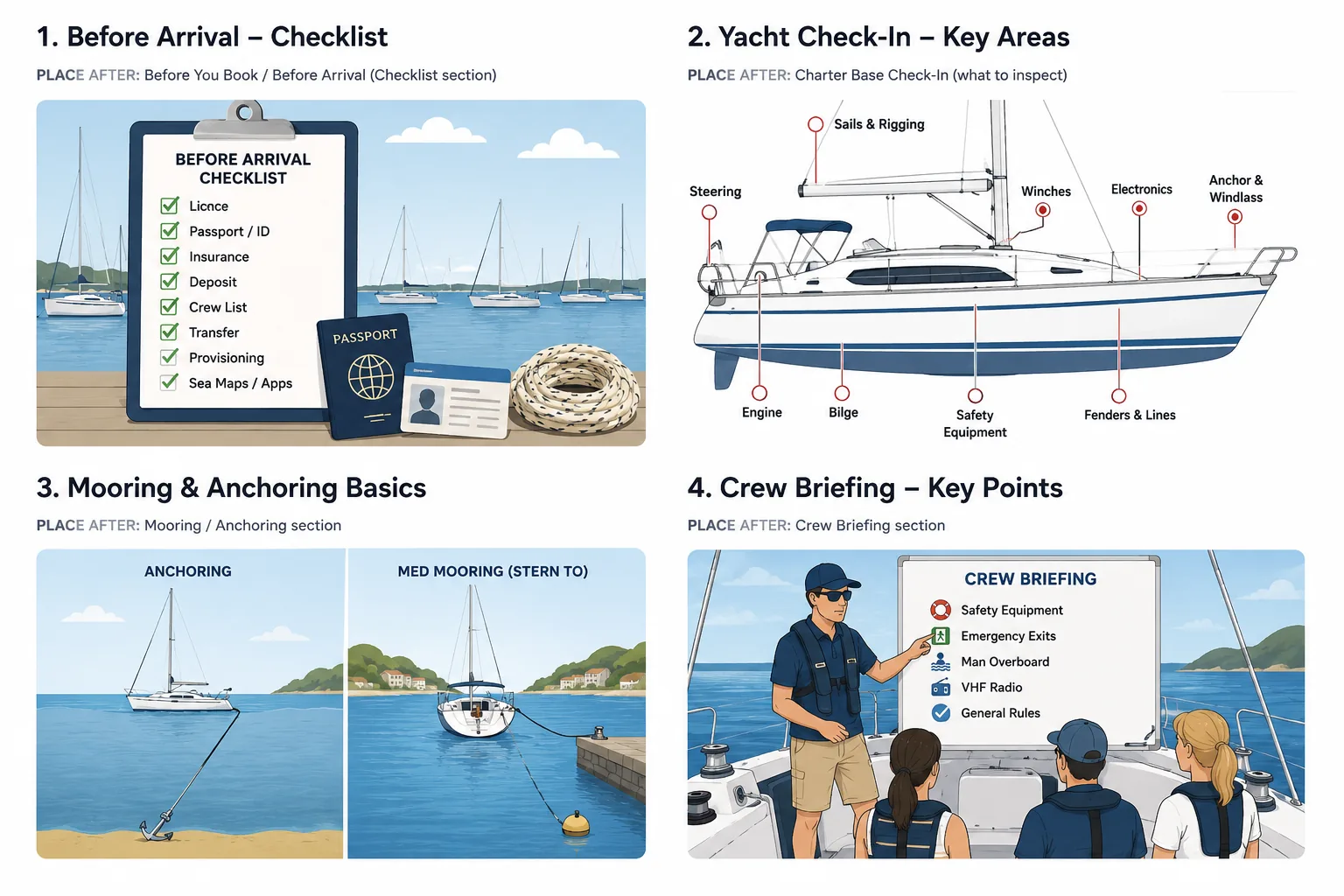
Bareboat skippering is one of the most rewarding ways to explore the sea. You are not just a passenger on a yacht — you are responsible for the boat, the route, the crew, the weather decisions, marina manoeuvres, anchoring, safety, and the overall rhythm of the trip.
For many sailors, the first bareboat charter feels like a big step. You may have the required licence and enough sailing experience, but taking responsibility for a charter yacht with friends or family on board is different from sailing with an instructor, a professional skipper, or a club crew.
This guide is written for people preparing to skipper a bareboat yacht charter. It explains what to do before booking, how to prepare your crew, what to inspect during check-in, how to plan routes, how to handle safety, and what habits make a bareboat trip smoother and safer.
If you are planning a yacht charter in Croatia, this guide also connects naturally with the Twoboat sailing weather Croatia guide, the Boat Safety Checklist, and other Twoboat safety resources.
What Is Bareboat Skippering?
Bareboat skippering means chartering a yacht without a professional skipper provided by the charter company. The charterer or one of the crew acts as skipper and takes responsibility for operating the vessel.
In practice, the bareboat skipper is responsible for safe navigation, weather decisions, marina manoeuvres, anchoring, vessel check-in, crew safety, route planning, fuel, water, electricity, communication with marinas, and responding to emergencies.
A good bareboat skipper does not need to be perfect. But they do need to be calm, organised, realistic, and prepared to make conservative decisions when conditions change.
Is Bareboat Skippering Right for You?
Bareboat chartering is not only about knowing how to sail. It also requires judgement. You need to know when not to leave the marina, when to reef early, when to choose a closer anchorage, and when to abandon a plan because the weather or crew condition has changed.
| You may be ready for bareboat skippering if... | You may need more preparation if... |
|---|---|
| You can confidently handle marina manoeuvres in moderate wind. | You are uncomfortable docking unless conditions are perfect. |
| You understand basic navigation, charts, depth, and hazards. | You rely only on a phone app or plotter without checking surroundings. |
| You can reef, reduce sail, and manage stronger wind calmly. | You tend to wait too long before reducing sail. |
| You can brief inexperienced crew clearly. | You assume guests will know what to do without instruction. |
| You are willing to change plans for safety. | You feel pressure to complete the planned route no matter what. |
If you are uncertain, consider hiring a skipper for the first day, taking a refresher course, or choosing a smaller yacht and an easier sailing area for your first bareboat trip.
Required Qualifications and Documents
Licence requirements vary by country, vessel type, charter company, and cruising area. Always check the requirements before booking. In many charter destinations, the skipper must provide a valid boating licence and sometimes a VHF radio certificate.
Typical documents include:
- Skipper licence accepted in the destination country
- VHF radio certificate if required
- Passport or ID
- Crew list details
- Charter contract
- Security deposit or deposit insurance
- Travel insurance if applicable
Do not assume that a licence accepted in one country will automatically be accepted everywhere. Confirm with the charter company before paying the final balance.
Choosing the Right Yacht for a Bareboat Charter
The right yacht is not always the biggest yacht you can afford. For a bareboat skipper, the best yacht is the one you can handle confidently with your crew.
| Crew Size | Suggested Yacht Size | Notes |
|---|---|---|
| 2 people | 32–38 ft monohull | Easy to handle, but docking requires planning with limited crew. |
| 4 people | 38–42 ft monohull | Good balance between space and handling. |
| 6 people | 42–47 ft monohull or small catamaran | More comfort, but more windage and marina planning. |
| 8 people | 45–52 ft monohull or catamaran | Comfortable for groups, but requires confident boat handling. |
| 10+ people | Large catamaran or crewed option | Consider professional skipper support for safety and comfort. |
Monohull vs Catamaran for Bareboat Skippering
| Factor | Monohull | Catamaran |
|---|---|---|
| Docking | Narrower and easier to fit in tight marina spaces. | Twin engines help manoeuvring, but width requires planning. |
| Comfort | More heeling under sail. | Stable platform with more living space. |
| Anchoring | Usually swings on a smaller radius. | More windage; needs careful anchoring in wind. |
| Cost | Usually cheaper to charter and berth. | Usually more expensive, including marina fees. |
| Beginner handling | Good for sailors used to monohulls. | Very comfortable, but size and windage can surprise new skippers. |
For a first bareboat trip, choose simplicity over luxury. A slightly smaller yacht that you handle well is safer and more enjoyable than a large yacht that creates stress at every marina.
Before You Arrive at the Charter Base
Good bareboat skippering begins before you step on the boat. The most stressful charter problems often come from poor preparation: missing documents, unrealistic routes, late provisioning, unclear crew expectations, or no backup plan.
Pre-Arrival Checklist
| Task | Why It Matters | Status |
|---|---|---|
| Confirm skipper licence | Avoid check-in problems. | ☐ |
| Confirm VHF requirement | Some destinations require proof. | ☐ |
| Send crew list | Required for charter documents. | ☐ |
| Plan first night | Avoid leaving base too late without a plan. | ☐ |
| Check weather pattern | Understand likely wind and route constraints. | ☐ |
| Arrange provisioning | Save time on check-in day. | ☐ |
| Discuss expectations with crew | Prevent unrealistic plans and conflict. | ☐ |
| Prepare safety briefing | Make departure smoother and safer. | ☐ |
How to Plan Your First Bareboat Route
Many first-time bareboat skippers plan too much. They try to visit every famous island, marina, beach, and anchorage in one week. This creates pressure, fatigue, and poor decisions when weather changes.
A better approach is to plan a flexible route with shorter legs, alternative stops, and at least one buffer day.
- Plan shorter distances than you think you can cover.
- Avoid arriving at marinas or anchorages after dark.
- Identify a safe alternative for every day.
- Check whether the route works with the forecast wind direction.
- Do not plan a long upwind leg for inexperienced crew.
- Leave time for swimming, lunch stops, anchoring practice, and unexpected delays.
| Experience Level | Recommended Daily Distance | Comment |
|---|---|---|
| First-time bareboat skipper | 10–20 NM | Comfortable pace with time for manoeuvres and stops. |
| Moderately experienced skipper | 20–35 NM | Good for settled weather and capable crew. |
| Experienced crew | 35+ NM | Requires early starts, clear planning, and weather confidence. |
If you are sailing in Croatia, plan routes around weather, marina availability, and the experience of your crew. Twoboat route guides such as Split–Hvar–Vis, Trogir–Brač–Hvar, and Zadar–Kornati can help you build realistic itineraries.
Charter Base Check-In: What to Inspect
The check-in is one of the most important parts of a bareboat charter. This is when you confirm the condition of the yacht, learn how the systems work, and document existing issues before departure.
Do not rush the check-in. Take photos and videos of visible damage, scratches, gelcoat marks, sails, dinghy, outboard, anchor setup, and electronics. If something looks wrong, ask the base staff to note it on the check-in form.
Bareboat Yacht Check-In Table
| Area | What to Check | Notes |
|---|---|---|
| Hull and deck | Scratches, dents, stanchions, rails, deck fittings | Photograph existing damage. |
| Sails | Tears, stitching, reefing lines, furling system | Ask staff to demonstrate reefing if unsure. |
| Engine | Start, cooling water, oil, alarms, gear shift | Confirm emergency stop and fuel shutoff. |
| Fuel | Fuel level and tank location | Confirm return fuel policy. |
| Water | Tank levels, filler caps, pump switch | Ask which deck filler is water vs fuel. |
| Batteries | Battery switches, voltage, charging system | Understand house vs engine batteries. |
| Bilge | Manual and electric pump operation | Know pump switch locations. |
| Anchor | Windlass, chain, shackle, remote, manual handle | Check chain markers if present. |
| VHF | Power, channel selection, DSC if installed | Read the Marine VHF Radio Basics guide. |
| Navigation | Plotter, charts, compass, depth, autopilot | Do not rely on one device only. |
| Safety gear | Life jackets, fire extinguishers, flares, first aid | Use the Boat Safety Checklist. |
| Dinghy | Condition, oars, pump, outboard, fuel | Test outboard if possible. |
| Toilets | Manual/electric operation, seacocks, holding tank | Explain carefully to crew. |
Safety Briefing Before Departure
A bareboat skipper should never leave the marina without a crew safety briefing. Even experienced passengers may not know the specific yacht, where safety equipment is stored, or what the skipper expects during a manoeuvre.
Your briefing should be short, clear, and practical. Do it before people are tired, distracted, or already in rough weather.
| Topic | What to Explain |
|---|---|
| Life jackets | Where they are, when to wear them, how to fit them. |
| Movement on deck | One hand for yourself, avoid standing during manoeuvres. |
| VHF radio | How to call for help if skipper is unable to. |
| Fire extinguisher | Location and basic use. |
| First aid kit | Location and who knows basic first aid. |
| Man overboard | Point continuously, shout, throw flotation, alert skipper. |
| Toilets | Correct use to avoid blockages. |
| Gas system | Who may use it and when to shut it off. |
| Marina manoeuvres | Assigned roles for lines and fenders. |
For a deeper safety routine, link this briefing to your Boat Safety Checklist and Emergency Procedures Croatia Yacht Charter guide.
Leaving the Marina
Marina departure is often the first stressful moment of a bareboat trip. A calm skipper prepares before starting the manoeuvre.
- Check wind direction and strength inside the marina.
- Plan the exit route.
- Assign crew to lines and fenders.
- Remove unnecessary lines only when ready.
- Keep the engine running and tested in gear.
- Use short, clear commands.
- Do not allow crew to push off dangerously with hands or feet.
If conditions are stronger than expected, ask marina staff for help. A good skipper uses available help instead of trying to prove a point.
Daily Bareboat Skipper Routine
A bareboat trip becomes much easier when the skipper follows a daily routine. This prevents small issues from becoming major problems.
| Time | Skipper Tasks |
|---|---|
| Morning | Check weather, route, fuel, water, batteries, bilge, and crew condition. |
| Before departure | Brief crew, prepare lines/fenders, check engine, confirm destination and backup. |
| Underway | Monitor weather, position, depth, traffic, crew fatigue, and sail plan. |
| Before arrival | Call marina if needed, prepare lines/fenders, assign roles, discuss plan. |
| Evening | Check mooring, weather overnight, batteries, anchor if used, and next day plan. |
Weather Decisions for Bareboat Skippers
Weather is one of the biggest differences between a good bareboat skipper and a risky one. A good skipper does not just look at wind speed. They think about gusts, direction, fetch, waves, shelter, crew experience, and the route.
Before departure, check:
- Wind speed and gusts
- Wind direction
- Wave height and period
- Thunderstorm risk
- Visibility
- Local effects around islands and channels
- Safe harbours and anchorages along the route
Use the Sailing Weather Croatia guide and the Understanding the Beaufort Wind Scale guide to connect forecast numbers with real sea conditions.
Simple Weather Decision Table
| Condition | Decision for Bareboat Charter |
|---|---|
| Light wind, good visibility | Good for normal route planning. |
| Moderate wind, manageable waves | Sail conservatively and monitor crew comfort. |
| Strong wind forecast | Reduce route distance, reef early, consider staying sheltered. |
| Thunderstorm risk | Avoid exposed passages and plan a safe harbour option. |
| Gale or severe warning | Do not depart unless required by safety circumstances. |
If a thunderstorm catches you at sea, read the Twoboat guide on what to do if a thunderstorm catches you at sea.
Reefing and Sail Management
One of the most common mistakes among new bareboat skippers is carrying too much sail for too long. Charter yachts are often loaded with luggage, water, provisions, and guests. They may not behave like a light training boat.
Reef early. It is easier to shake out a reef later than to reef too late when the boat is overpowered and the crew is stressed.
| Wind Situation | Typical Action | Skipper Mindset |
|---|---|---|
| Comfortable breeze | Full sail may be fine. | Monitor gusts and crew comfort. |
| Increasing wind | First reef or reduced headsail. | Reef before control becomes difficult. |
| Strong gusts | Further reduce sail. | Protect crew and equipment. |
| Storm approaching | Prepare engine, reduce or drop sails. | Control is more important than speed. |
Anchoring as a Bareboat Skipper
Anchoring is one of the most important bareboat skills. A peaceful anchorage can quickly become stressful if the anchor drags, the wind shifts, or there is not enough swinging room.
Before anchoring, check depth, seabed type, wind direction, forecast changes, swinging room, distance from other boats, shore hazards, and whether anchoring is allowed.
Always reverse gently to set the anchor and confirm that the boat is holding. Use visual bearings, plotter position, or an anchor alarm to monitor movement.
For a detailed anchoring process, read How to Anchor a Boat Safely.
Mooring and Marina Manoeuvres
Marina manoeuvres are where many bareboat skippers feel the most pressure. The best way to reduce stress is to slow everything down.
- Prepare fenders on both sides if unsure.
- Prepare bow and stern lines.
- Assign one job per crew member.
- Explain the plan before the manoeuvre.
- Check wind direction.
- Call the marina if required.
- Abort and try again if the approach is wrong.
Never shout unless there is immediate danger. Clear, calm communication makes the crew more effective.
Fuel, Water, and Electricity Management
A bareboat skipper is also responsible for managing resources. Running out of water, draining batteries, or misjudging fuel can create unnecessary stress.
| Resource | What to Monitor | Good Habit |
|---|---|---|
| Fuel | Tank level, engine hours, fuel stops | Keep a reserve and do not plan on exact minimums. |
| Water | Tank levels, showers, dishwashing | Brief crew on water conservation early. |
| Batteries | Voltage, fridge use, charging | Charge daily and avoid deep discharge. |
| Gas | Cooking use, shutoff valve | Turn off gas at the bottle when not in use. |
Emergency Situations Bareboat Skippers Should Prepare For
You do not need to be afraid of emergencies, but you should prepare for them. Preparation gives you time and clarity when something goes wrong.
| Emergency | Immediate Priorities | Related Guide |
|---|---|---|
| Man overboard | Shout, point, throw flotation, stop/turn boat, recover person. | Emergency procedures |
| Engine failure | Maintain control, assess drift, anchor if needed, call for help. | VHF radio basics |
| Thunderstorm | Reduce sail, protect crew, control boat, avoid metal contact during lightning. | Thunderstorm at sea |
| Anchor dragging | Start engine, recover or reset anchor, avoid collision. | Anchoring guide |
| Water ingress | Find source, use bilge pumps, prepare assistance call. | Boat safety checklist |
| Fire on board | Protect crew, isolate fuel/gas/electricity, use extinguisher if safe. | Safe boating practices |
Common First-Time Bareboat Skipper Mistakes
Most bareboat mistakes are not dramatic. They are small decisions that combine into stress: leaving too late, sailing too far, ignoring wind direction, arriving tired, or failing to brief the crew.
- Planning too much distance for one week.
- Leaving the marina too late on the first day.
- Choosing a yacht that is too large for the skipper’s confidence.
- Not documenting check-in damage.
- Not reefing early enough.
- Ignoring gusts and focusing only on average wind.
- Arriving at anchorages after dark.
- Letting inexperienced crew handle lines without explanation.
- Using hands or feet to fend off during docking.
- Not checking fuel and water daily.
- Assuming the anchor is set without testing it.
- Not having a backup destination.
- Trying to keep the holiday schedule instead of adapting to weather.
Bareboat Skipper Packing List
The skipper should pack slightly differently from regular crew. You need personal gear, documents, navigation backup, and practical tools that make the week easier.
| Category | Items |
|---|---|
| Documents | Licence, VHF certificate, passport, charter contract, insurance details. |
| Navigation | Offline charts, phone charger, power bank, notebook, pencil, backup route notes. |
| Safety | Personal life jacket if preferred, headlamp, waterproof bag, gloves. |
| Clothing | Non-marking shoes, waterproof jacket, warm layer, hat, sunglasses. |
| Practical | Multi-tool, tape, spare charging cables, dry bag, reusable water bottle. |
Printable Bareboat Skipper Checklist
Use this checklist before and during your bareboat charter.
| Stage | Checklist Item | Status |
|---|---|---|
| Before booking | Confirm skipper licence accepted | ☐ |
| Before booking | Choose a realistic yacht size | ☐ |
| Before arrival | Prepare crew list and documents | ☐ |
| Before arrival | Plan route with alternatives | ☐ |
| Check-in | Inspect hull, sails, engine, anchor, dinghy | ☐ |
| Check-in | Photograph existing damage | ☐ |
| Check-in | Locate safety equipment | ☐ |
| Departure | Complete crew briefing | ☐ |
| Departure | Check weather and first destination | ☐ |
| Daily | Monitor fuel, water, batteries, bilge | ☐ |
| Daily | Review weather and backup plan | ☐ |
| Return | Refuel if required | ☐ |
| Return | Check boat condition before handover | ☐ |
Frequently Asked Questions About Bareboat Skippering
What does bareboat skippering mean?
Bareboat skippering means operating a charter yacht without a professional skipper supplied by the charter company. The charterer or designated skipper is responsible for the boat, crew, navigation, safety, and route decisions.
Is bareboat chartering suitable for beginners?
It depends on the skipper’s practical experience. A beginner with only limited boat handling experience should consider a skippered charter, a flotilla, or a refresher course before taking full responsibility for a bareboat yacht.
What licence do I need for bareboat charter?
Licence requirements depend on the country, yacht, and charter company. Many destinations require a recognised skipper licence, and some also require a VHF radio certificate. Always confirm before booking.
How much experience should a bareboat skipper have?
A bareboat skipper should be comfortable with marina manoeuvres, basic navigation, anchoring, reefing, weather decisions, and crew management. Experience in similar waters is very helpful.
Should I choose a monohull or catamaran for my first bareboat charter?
A monohull is usually simpler and cheaper for first-time skippers who are used to sailing monohulls. A catamaran offers more comfort and stability but is wider, has more windage, and may require more planning in marinas.
How far should I sail each day on a bareboat charter?
For a first bareboat trip, 10–20 nautical miles per day is often enough. Shorter legs leave time for weather changes, swimming, anchoring, marina arrival, and crew comfort.
What is the most important safety habit for a bareboat skipper?
The most important habit is conservative decision-making. Reef early, check weather often, brief the crew, avoid arriving after dark, and always keep a backup plan.
What should I inspect during yacht check-in?
Inspect the hull, deck, sails, engine, batteries, bilge pumps, anchor, windlass, navigation equipment, VHF radio, safety equipment, dinghy, outboard, toilets, water system, and existing damage.
What should I do if weather worsens during a bareboat charter?
Reduce sail early, protect the crew, choose a safer route or shelter, monitor VHF and forecasts, and avoid continuing toward an exposed destination if conditions are deteriorating.
Can I skipper a bareboat yacht with inexperienced crew?
Yes, but you should choose a manageable yacht, simple route, settled weather, and give a clear crew briefing. Assign simple roles and avoid relying on inexperienced crew for critical manoeuvres without practice.
Bareboat Skipper Readiness Quiz
This quiz is designed as a practical self-check before taking responsibility for a bareboat yacht charter. It is not a legal licence test and it does not replace formal training, local regulations, or charter company requirements. Its purpose is to help you identify weak areas before you skipper a boat with crew on board.
Answer all questions and click Check My Result. You will see your score, the questions you missed, and the correct explanations.
Final Thoughts
Bareboat skippering is not about showing how much you can handle. It is about making the trip safe, calm, and enjoyable for the people on board.
The best bareboat skippers are prepared but flexible. They inspect the yacht carefully, brief the crew, watch the weather, reef early, choose realistic routes, and are never afraid to change plans.
Before your next charter, use the Boat Safety Checklist, review Marine VHF Radio Basics, understand the Beaufort Wind Scale, and check Sailing Weather Croatia. Together, these resources will help you become a more confident and responsible bareboat skipper.
Continue reading
Build your Croatia sailing knowledge with related TwoBoat guides, software, guides and planning tools.