
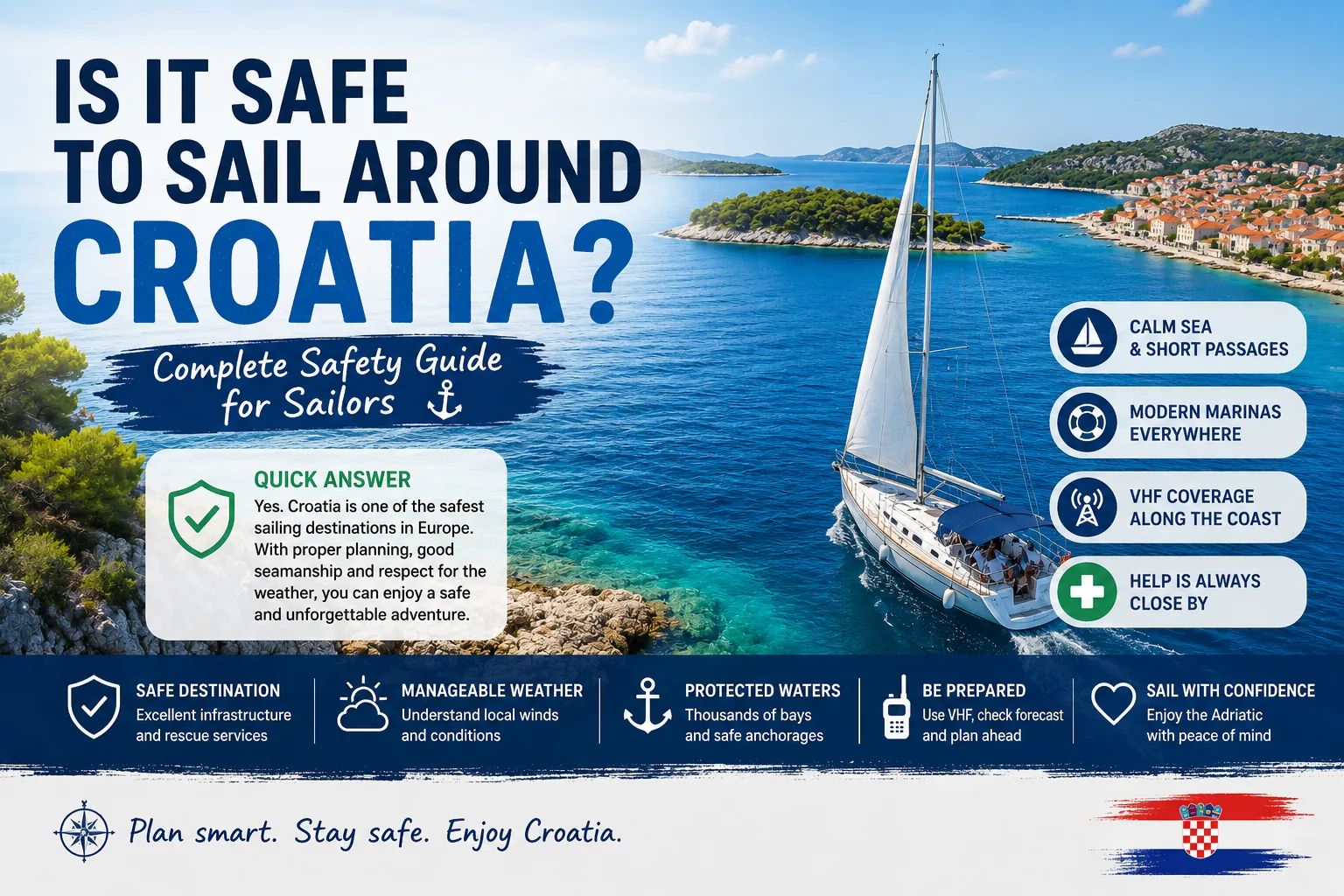
Is It Safe to Sail Around Croatia? Complete Guide for Sailors
Yes, Croatia is generally one of the safest and most comfortable sailing destinations in Europe. The Adriatic coast has modern marinas, short passages between islands, many protected bays, strong charter infrastructure and reliable maritime rescue support. But safe sailing in Croatia is never automatic. It depends on weather planning, respecting Bura and Jugo winds, anchoring correctly, keeping a proper lookout, using VHF correctly and making conservative skipper decisions.
This guide explains the real safety picture for sailing around Croatia: weather, storms, winds, rocks, navigation, anchoring, VHF, emergency numbers, sharks, jellyfish, family safety, beginner routes and practical risk reduction before and during your yacht charter. If you are still comparing destinations, start with the Croatian island sailing guides and then build a realistic itinerary with the Twoboat interactive route planner, where you can explore distances between islands before you leave the marina.
Why Croatia Is Considered Safe for Sailing
Croatia is easier to sail than many open-sea destinations because its island geography creates many route options. A skipper can usually choose a short hop, a protected channel, a marina, a town quay, a buoy field or a sheltered bay instead of committing to a long exposed passage. This flexibility is one of the reasons Croatia works so well for bareboat charter. Before choosing the final route, it is smart to compare nearby islands in the Twoboat Croatian islands section, because every island has different shelter, fuel access, anchorages, restaurants and navigation details.
The country also has a dense network of nautical services. Along the main charter areas there are marinas, fuel docks, repair services, harbourmaster offices, weather forecasts, VHF coverage, rescue coordination and many charter bases. For ordinary yacht charter crews, the most important safety advantage is simple: if the weather becomes questionable, you usually have options.
| Safety factor | Why it helps sailors | Practical meaning |
|---|---|---|
| Short island passages | Many routes can be planned as 10–25 nautical mile legs. | You can sail early, arrive before afternoon wind and avoid fatigue. |
| Protected bays | There are many natural anchorages and buoy fields. | You can find shelter when the forecast changes. |
| Modern marinas | Large charter regions have strong marina infrastructure. | Safer check-in, repairs, electricity, water and secure berths. |
| Good rescue system | Help can be requested by phone or VHF. | VHF Channel 16 and emergency numbers matter in real situations. |
| Popular sailing area | Many yachts are nearby in high season. | There is usually traffic, visibility and help nearby, but also a need for lookout. |
What Are the Real Risks When Sailing in Croatia?
The real risks in Croatia are practical nautical risks: sudden wind changes, poor anchoring, crowded approaches, rocks close to shore, shallow patches, afternoon thunderstorms, tired crew, overambitious routes and late arrivals. These are normal sailing risks, not reasons to avoid Croatia. They simply require discipline.
| Risk | Level | Why it matters | How to reduce it |
|---|---|---|---|
| Bura wind | High when forecast | Cold, gusty NE wind can arrive strongly, especially near the Velebit Channel and exposed gaps. | Do not depart into a Bura warning. Choose protected harbours and wait. |
| Jugo wind | Medium to high | SE wind can build swell, poor visibility and uncomfortable sea over time. | Plan leeward routes and avoid exposed anchorages open to SE. |
| Summer thunderstorms | Medium | Can bring short, violent gusts, lightning and poor visibility. | Sail early, watch radar and cloud build-up, reach shelter before squalls. |
| Rocks and shallows | Medium | Many beautiful coves have rocky approaches and isolated dangers. | Use updated charts, plotter, pilot book and visual navigation. |
| Dragging anchor | Medium | Common when skippers use too little chain or do not test holding. | Use enough scope, reverse gently, set anchor alarm and check swing room. |
| Crowded marinas | Low to medium | High season arrivals can be stressful in crosswind. | Arrive early, prepare lines, call marina by VHF and brief the crew. |
| Night navigation | Medium | Fishing boats, unlit hazards and fatigue increase risk. | Avoid night passages unless experienced and properly equipped. |
Croatia Sailing Weather: The Main Safety Factor
Weather is the biggest safety factor in Croatian sailing. A normal summer week can feel easy: calm mornings, sea breeze in the afternoon, warm water and short distances. But the Adriatic can change quickly. The skipper should check the marine forecast every morning and again before any exposed passage. For storm preparation, also read what to do during a thunderstorm at sea, because the right decision is usually made before the first gust arrives.
For official weather planning, use the Croatian Meteorological and Hydrological Service marine forecast for small craft and local marina or harbourmaster updates. Also use a second weather model app, but never rely on only one source.
Bura
Bura is a cold, dry north-easterly wind that can be very gusty. It is the wind most likely to surprise inexperienced visitors because it can accelerate down mountains and through gaps. It is especially important in the Kvarner and Velebit Channel areas.
Jugo
Jugo is a warm, humid south-easterly wind. It often builds more gradually than Bura, but it can create long uncomfortable swell and poor conditions in anchorages open to the south or south-east.
Maestral
Maestral is the typical summer north-westerly sea breeze. It often starts late morning or early afternoon and is usually pleasant for sailing, but it can still make afternoon docking harder.
Thunderstorms
Summer thunderstorms are usually short but can be powerful. Dark clouds, rapid pressure change, lightning, sudden gusts and a fast wind shift are signs to reduce sail or seek shelter early.
Is Croatia Safe for Beginner Sailors?
Croatia can be safe for beginner skippers, but the route must match the skipper’s ability. A beginner should not start with long exposed passages, late arrivals, night sailing or an aggressive island-hopping schedule. The safest first charter is usually a conservative 7-day route from Split, Trogir, Kaštela, Šibenik, Zadar, Biograd, Pula or Dubrovnik with short legs and backup ports. If this is your first independent charter, read the Bareboat Skippering Guide before arrival, and use the interactive bareboat skipper quiz to check whether you understand the most important safety, navigation and boat-handling situations.
- Choose a boat size you have already handled before.
- Plan short daily legs, especially in the first two days.
- Leave in the morning and arrive before late afternoon.
- Book marinas or buoy fields when the forecast is uncertain.
- Avoid night sailing unless you are trained and rested.
- Take a professional skipper for the first day if you are unsure.
Is the Adriatic Sea Dangerous?
The Adriatic is not considered a dangerous sea for normal leisure sailing, but it is still the sea. It can be calm and transparent in the morning, then windy and choppy in the afternoon. Tides are small compared with Atlantic areas, but wind, waves and local effects matter much more than tide for most charter sailors.
The safest mindset is to treat the Adriatic as friendly but not harmless. Clear water does not mean deep water. A beautiful bay does not mean good holding. A short passage does not mean the forecast can be ignored. When learning or refreshing the basics, the Twoboat Sailing School is a useful place to review anchoring, sail handling, COLREGs, VHF, docking and skipper decision-making.
Emergency Numbers and VHF Safety in Croatia
Every skipper should know how to request help before leaving the marina. In Croatia, maritime help can be requested by calling 195, by using VHF Channel 16, or through the European emergency number 112. A DSC-equipped VHF also uses Channel 70 for digital distress alerting. Before charter check-in, foreign skippers should also verify their paperwork using the guide to accepted foreign boat licences in Croatia, because the skipper licence and VHF certificate should be checked before arrival, not during check-in.
| Emergency contact | Use for | Skipper note |
|---|---|---|
| 195 | Maritime Search and Rescue Service in Croatia. | Use for serious assistance at sea. |
| 112 | General European emergency number. | Use for police, ambulance, fire or when unsure who to call. |
| VHF Channel 16 | Distress, urgency and safety voice communication. | Keep watch and use correct Mayday, Pan-Pan or Sécurité procedure. |
| VHF DSC Channel 70 | Digital selective calling distress alert on equipped radios. | Know how the red distress button works before departure. |
| nIS app | Croatian nautical information and safety contacts. | Install before the trip and learn its basic functions. |
Is Anchoring Safe in Croatia?
Anchoring in Croatia is safe when done correctly, but it is one of the most common places where inexperienced crews make mistakes. The seabed can change quickly from sand to weed to rock. Some bays are deep close to shore. Some popular bays are crowded. Some areas are protected, restricted, concession-operated or not suitable for anchoring.
Good anchoring means choosing shelter from the forecast wind, checking depth, using enough chain, setting the anchor properly, allowing swing room, keeping clear of swimmers and other yachts, and using an anchor alarm overnight.
| Anchoring mistake | Why it is dangerous | Safe habit |
|---|---|---|
| Too little chain | The anchor pulls upward and may not hold. | Use proper scope for depth, wind and swing room. |
| No reverse test | The crew assumes the anchor is set when it is only lying on the seabed. | Reverse gently and check alignment with shore references. |
| Anchoring on weed | The anchor may skate or damage sensitive seabed. | Look for sand patches and follow local restrictions. |
| Ignoring wind shift | A safe bay can become exposed overnight. | Check the full overnight forecast, not only current wind. |
| No anchor watch | Dragging may not be noticed until the yacht is too close to danger. | Use anchor alarm and visual checks. |
Are Croatian Marinas Safe?
Yes, Croatian marinas are generally safe, organized and suitable for charter crews. The main risk is not personal security; it is boat handling in wind or crowding. High-season marina manoeuvres can be stressful because many boats arrive at the same time, crews are tired and crosswinds can build in the afternoon.
Call the marina or base before entering, prepare fenders and lines early, brief the crew and do not be embarrassed to ask marina staff for help. A slow, controlled approach is always safer than rushing.
Is Crime a Problem for Sailors in Croatia?
Croatia is generally safe for travelers, and violent crime is low compared with many destinations. For yacht crews, the normal precautions are enough: lock the boat when leaving, do not leave phones or wallets visible in the cockpit, keep passports and cash secure, and watch bags in busy tourist towns, bus stations and ferry ports.
Boat theft from charter marinas is rare, but dinghies, outboards and loose equipment should still be secured. In crowded nightlife areas, use the same caution you would use in any tourist destination.
Are There Sharks in Croatia?
This is one of the most common questions from first-time visitors. The practical answer is simple: shark danger is extremely low for swimmers and sailors in Croatia. Sharks exist in the Adriatic, as they do in many seas, but encounters near charter routes and swimming bays are very rare. The animals you are more likely to notice are sea urchins, jellyfish, small fish and occasionally harmless dolphins.
Do not build safety planning around sharks. Build it around weather, anchoring, navigation and crew behaviour. Those are the real risks.
| Wildlife / sea life | Realistic risk | Advice |
|---|---|---|
| Sharks | Extremely low for normal sailors and swimmers. | No special action needed beyond normal swimming awareness. |
| Sea urchins | Common in rocky areas. | Wear water shoes when entering from rocks. |
| Jellyfish | Occasional seasonal nuisance. | Avoid touching them and rinse stings with seawater. |
| Scorpionfish / weever fish | Possible if stepped on or handled. | Do not touch unknown fish; wear shoes in shallow rocky areas. |
| Mosquitoes | Possible in calm bays and near shore. | Use repellent and screens in the evening. |
Is Croatia Safe for Families With Children?
Yes, Croatia is one of the best Mediterranean sailing areas for families because passages can be short, swimming is excellent, towns are close, and many bays are protected. The key is choosing the right boat and itinerary. Families should avoid overloading the route, sailing in strong wind for “fun”, or arriving late when children are tired and hungry. A good family crew should complete a practical boat safety checklist before every departure, especially when children, non-swimmers or first-time guests are on board.
Children should wear lifejackets on deck, especially while manoeuvring, in rougher weather, at night, in the dinghy and whenever the skipper requires it. Explain basic boat rules on day one: one hand for the boat, no running, no swimming without permission, no sitting on guardrails, and no jumping before the engine is off and the skipper allows it.
Is Croatia Safe for Solo Sailors?
Croatia can be safe for experienced solo sailors, but solo sailing is not the same as a normal bareboat family charter. Docking, anchoring, reefing, navigation and emergencies are harder alone. Solo sailors should avoid aggressive routes, reef early, keep lifejacket and tether habits, and choose marinas or easy anchorages when tired.
Safest Sailing Areas in Croatia
No area is completely risk-free, but some Croatian sailing regions are easier for ordinary charter crews because they offer short distances, many shelters and flexible routing. To compare these areas visually and build a realistic daily plan, use the interactive Croatia route planner together with the island destination guides.
| Area | Why it is good | Safety note |
|---|---|---|
| Split, Šolta, Brač, Hvar | Classic charter area with many route choices and good infrastructure. | Can be crowded in July and August; book berths early. |
| Šibenik and Kornati | Beautiful protected island sailing and many marinas nearby. | Kornati requires careful navigation and respect for national park rules. |
| Zadar and Dugi Otok | Flexible island hopping and excellent scenery. | Outer coast of Dugi Otok can be exposed. |
| Dubrovnik and Elaphiti Islands | Short island legs and dramatic scenery. | Plan carefully if continuing to Mljet, Korčula or Lastovo. |
| Istria | Good marina network and shorter coastal routes. | Watch for Bora and northern Adriatic changes. |
More Challenging Areas
Some parts of Croatia deserve extra caution, especially for first-time skippers. The Velebit Channel and Kvarner can be affected by strong Bura. Exposed outer-island coasts can become uncomfortable when wind and swell align. Cape areas and channels can accelerate wind. Kornati is stunning but requires good chart work because rocks and islands are everywhere.
Interactive Croatia Sailing Safety Risk Calculator
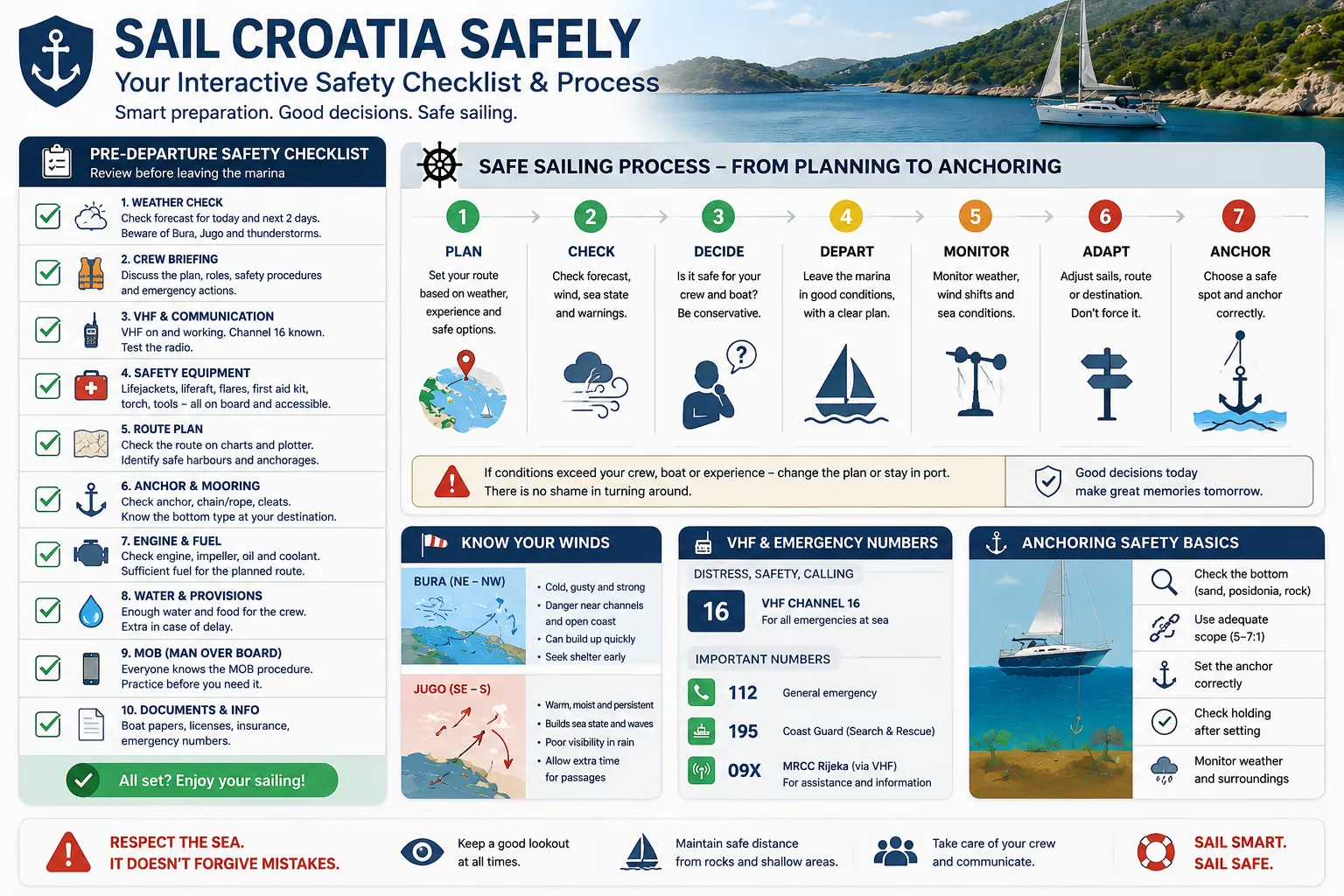
This simple calculator helps charter guests think like skippers. It is not a forecast and does not replace seamanship. It simply combines common risk factors and gives a conservative recommendation. After checking the risk level, continue by planning the actual passage in the Twoboat route planner and cross-checking the chosen islands in the Croatian island guides.
Croatia sailing risk pre-check
Interactive Croatia Sailing Safety Checklist
Before departure safety checklist
Plan Safer With Twoboat Tools and Guides
Safe sailing in Croatia is much easier when the skipper prepares before the charter instead of solving everything at the marina. Use the Twoboat interactive route planner to estimate daily distances, compare island-to-island passages and avoid unrealistic itineraries. Then continue with the Croatian island sailing guides to check local anchorages, towns, fuel options, bays, restaurants and shelter notes.
For practical preparation, start with the Boat Safety Checklist, review the Bareboat Skippering Guide, and test your knowledge with the Bareboat Sailing Skipper Quiz. If the forecast is unstable, do not depart before reading what to do during a thunderstorm at sea. Foreign guests should also confirm their documents in advance with the guide to accepted foreign boat licences in Croatia.
If you want to continue learning beyond this article, the Twoboat Sailing School covers seamanship, navigation, sail trim, anchoring, VHF communication, COLREGs and skipper decision-making in simple practical lessons.
Official Resources to Mention or Link
- DHMZ Marine Forecast for Small Crafts: https://meteo.hr/prognoze_e.php?param=jadran§ion=prognoze_specp
- Croatian Maritime Search and Rescue Service 195: https://gov.hr/en/195-maritime-search-and-rescue-service/1188
- Ministry Nautical Information Service nIS: https://mmpi.gov.hr/sea/nautics/nautical-information-service-nis/18290
- Plovput maritime radio service: https://www.plovput.hr/en/radio-service/maritime-radio-service
Continue Learning in the Twoboat Knowledge Center
Croatia is safe to sail when the skipper combines good preparation, conservative routing and daily weather decisions. Everything you need for better preparation is collected in the Twoboat Knowledge Center, including island guides, route planning tools, skipper lessons, safety checklists, weather guides, anchoring advice, licensing information and practical bareboat charter tips.
Recommended next steps before your Croatia charter
- Explore destinations in the Croatian Island Sailing Guides.
- Build a realistic itinerary with the Interactive Croatia Route Planner.
- Prepare the boat and crew with the Boat Safety Checklist.
- Improve skipper routines with the Bareboat Skippering Guide.
- Learn storm procedures in What to Do During a Thunderstorm at Sea.
- Check your readiness with the Bareboat Skipper Quiz.
- Refresh core sailing skills in the Twoboat Sailing School.
- Verify documents with Accepted Foreign Boat Licences in Croatia.
Frequently Asked Questions
Is it safe to sail around Croatia?
Yes. Croatia is generally safe for sailing, especially when the skipper checks the weather daily, avoids strong wind warnings, anchors correctly and plans conservative routes.
Is Croatia good for beginner sailors?
Yes, but beginners should choose short island routes, avoid exposed passages, arrive early and consider hiring a skipper for the first charter or first day.
What is the biggest sailing danger in Croatia?
The biggest danger is sudden or underestimated weather, especially Bura, Jugo and summer thunderstorms. Poor anchoring is another common risk.
Is Bura dangerous?
Bura can be dangerous because it is gusty and can accelerate quickly from the mountains. Do not depart into a Bura warning and choose protected shelter early.
Is Jugo dangerous?
Jugo can become dangerous when it builds long swell, poor visibility and uncomfortable sea conditions. Avoid anchorages open to the south-east during Jugo.
Are thunderstorms common in Croatia?
They can happen in summer, especially after hot, unstable days. They are usually short but can bring strong gusts and lightning. Leave early and seek shelter before storms arrive.
Is night sailing safe in Croatia?
Night sailing is safe only for experienced and rested crews with good navigation skills. Beginners should avoid it because rocks, fishing boats, fatigue and reduced visibility increase risk.
Are there sharks in Croatia?
Sharks exist in the Adriatic, but the practical risk for swimmers and sailors is extremely low. Weather and anchoring are much more important safety concerns.
Are Croatian marinas safe?
Yes. Croatian marinas are generally safe and well organized. The main challenge is boat handling in wind and crowds, not personal security.
Is crime a problem for yacht crews?
Violent crime is low, but petty theft can happen in busy tourist areas. Lock the boat, secure valuables and use normal travel precautions.
Can families sail safely in Croatia?
Yes. Croatia is excellent for family sailing when routes are short, lifejackets are used, swimming rules are clear and weather decisions are conservative.
What emergency number should I call at sea in Croatia?
Call 195 for maritime search and rescue, use VHF Channel 16 for distress or urgency, or call 112 for general emergency help.
Is VHF required for sailing in Croatia?
Most charter yachts have VHF radio and at least one person on board usually needs an appropriate radio certificate. Skippers should know Channel 16, DSC and basic emergency calls.
Is anchoring overnight safe?
Yes, if the bay is protected from the forecast wind, the anchor is set properly, enough chain is used and an anchor alarm is active.
Are buoy fields safer than anchoring?
Often yes for inexperienced crews, but always check the buoy condition, operator and forecast. A buoy does not replace skipper judgment.
Is Croatia safer than Greece for sailing?
Both can be safe, but Croatia often has shorter island passages and denser marina infrastructure. Greece may involve stronger regional winds and longer legs depending on the area.
Can I sail Croatia without a skipper?
Yes, if you hold accepted skipper and VHF documentation and have enough practical experience for the boat and route. Otherwise, hire a professional skipper.
What should I do if the weather looks bad?
Stay in port, change route, reduce the day’s distance or choose a protected marina. Never continue only because the itinerary says so.
Is the sea rough in Croatia?
It is often calm in summer mornings, but it can become rough with Bura, Jugo, thunderstorms or exposed channels. Always check the marine forecast.
Are there dangerous animals in Croatian waters?
Serious danger is rare. Sea urchins, jellyfish and venomous fish are more realistic minor hazards than sharks. Wear water shoes in rocky areas and avoid touching marine life.
Is it safe to swim from the boat?
Yes, when the engine is off, the boat is secure, conditions are calm and the skipper allows it. Never swim near running engines, ferry routes or strong wind/current.
Is Croatia safe for solo sailing?
It can be safe for experienced solo sailors, but it requires conservative planning, early reefing, good docking skills and strict fatigue management.
What is the safest month to sail Croatia?
June and September are often ideal because the weather is warm, marinas are less crowded than August and conditions are usually manageable. July and August are popular but busier.
Do I need travel insurance for sailing in Croatia?
Yes. Use insurance that covers sailing, medical care, evacuation and your planned activities. Charter deposit insurance is separate from travel health insurance.
Can I rely only on phone apps for navigation?
No. Use the yacht’s plotter, official charts, pilot information and visual navigation. Phone apps are useful backup tools, not the only navigation system.
What should I check before leaving the marina?
Check weather, route, fuel, engine, water, VHF, lifejackets, anchor, crew roles, emergency numbers and backup shelter.
Are ferries dangerous for yachts?
Ferries are not dangerous if you keep a proper lookout, avoid crossing close ahead and respect their limited manoeuvrability in channels and ports.
Is it safe to sail in the Kornati Islands?
Yes for prepared skippers, but Kornati requires careful navigation because of many islands, rocks, national park rules and limited services.
What should I do if my anchor drags?
Start the engine, alert the crew, recover or reset the anchor if safe, move to deeper or clearer water, and choose a more protected location if necessary.
Is Croatia safe for a first bareboat charter?
Yes, if the skipper is qualified, chooses a conservative route, avoids bad weather and does not treat the itinerary as fixed. Croatia is one of the better places for a first bareboat charter.
Continue reading
Build your Croatia sailing knowledge with related TwoBoat guides, software, guides and planning tools.