
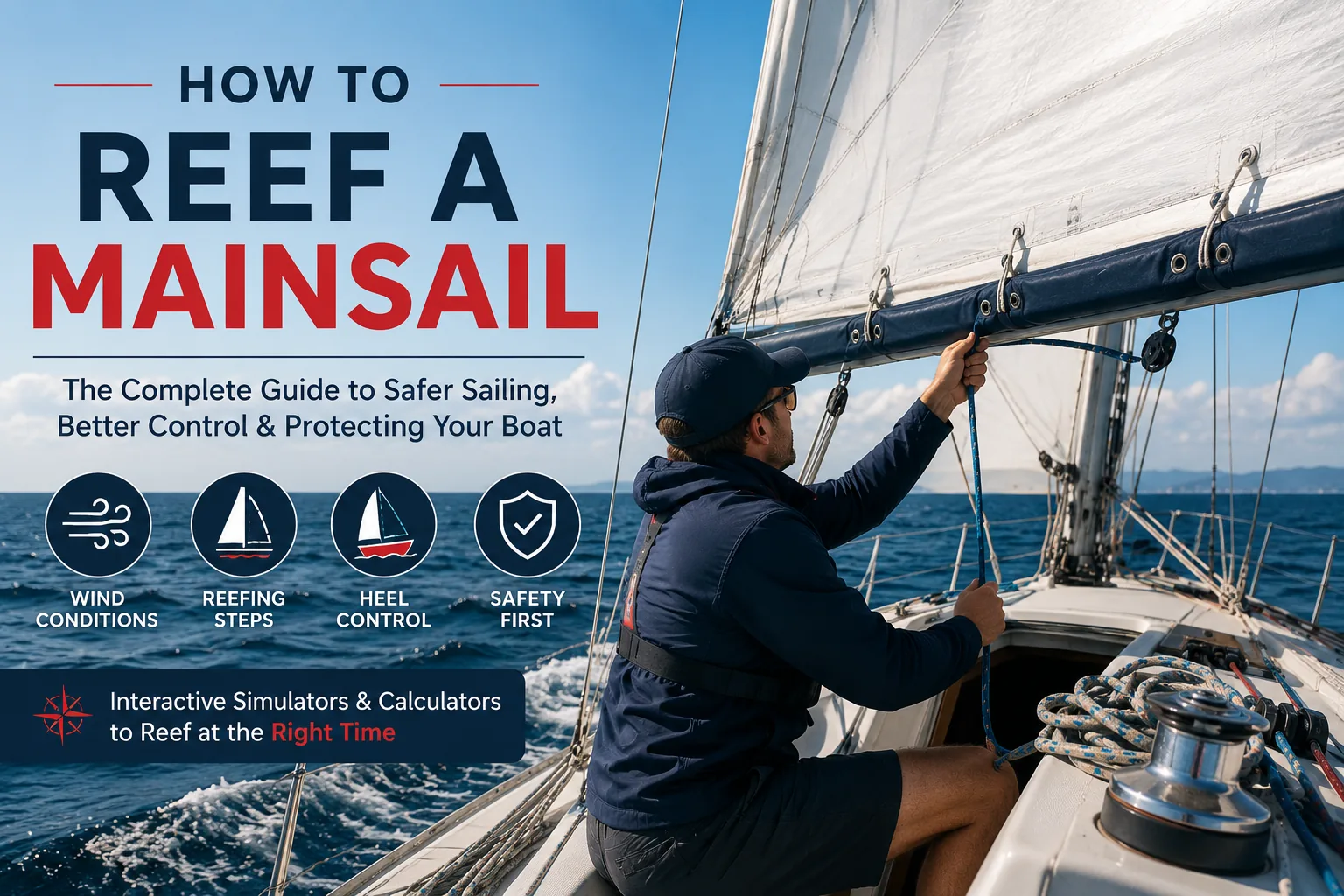
How to Reef a Mainsail
Reefing a mainsail means reducing the exposed sail area so the boat remains balanced, controlled and safe as the wind increases. Many beginner skippers wait too long before reefing because they worry the boat will become slower. In reality, a properly reefed cruising sailboat is often faster, flatter and easier to steer than an overpowered boat carrying too much sail.
This guide explains when to reef, how to reef a mainsail step by step, how to read heel angle and weather helm, and how to avoid the most common reefing mistakes. It also includes interactive calculators and simulators to help you decide whether to carry full sail, take the first reef, or prepare for stronger wind.
If you are still learning sail control, start with our How to Trim Sails Properly guide, then continue with How to Sail Upwind. Reefing is not separate from sail trim: it is one of the most important trim decisions a skipper makes.
Important Safety Note
Reef early. If you are thinking about reefing, it is usually already time to reef. It is much easier to put in a reef while the boat is still under control than to fight an overpowered mainsail in heavy wind, waves or poor visibility.
- Reef before the boat becomes difficult to steer.
- Reduce sail before night sailing, squalls or thunderstorms.
- Keep crew clipped in and away from the boom in rough conditions.
- Do not send crew forward unless it is necessary and safe.
- Use engine assistance if needed to maintain control while reefing.
- Check the forecast and wind trend before departure.
For broader safety preparation, read the Boat Safety Checklist, What to Do During a Thunderstorm at Sea and Marine VHF Radio Basics.
What Is Reefing?
Reefing is the process of reducing sail area by lowering part of the mainsail and securing a lower section of the sail to the boom. Most cruising mainsails have one, two or three reef points. Each reef makes the sail smaller and flatter, reducing heeling force and weather helm.
A reefed mainsail helps the boat sail more upright. This improves rudder control, reduces side slip, lowers load on the rig and makes life onboard safer for the crew. On charter yachts, reefing is especially important because the crew may be inexperienced and the boat may be carrying holiday equipment, full tanks and extra weight.
When Should You Reef?
There is no single wind speed that applies to every boat. Reefing depends on sail area, boat design, sea state, point of sail, crew experience and whether the wind is steady or gusty. However, most cruising yachts benefit from reefing earlier than many new skippers expect.
| Condition | Typical Recommendation | Why It Matters |
|---|---|---|
| 10–15 knots | Full sail usually fine | Good learning and cruising conditions. |
| 15–20 knots | Prepare first reef | Watch heel angle, gusts and crew comfort. |
| 20–25 knots | First reef recommended | Reduces heel and weather helm. |
| 25–30 knots | Second reef often needed | Keeps boat controllable in gusts and waves. |
| 30+ knots | Deep reef / heavy weather setup | Prioritize safety, sea room and control. |
Use this table together with the Understanding Beaufort Wind Scale guide, because the same wind speed feels very different in flat water, steep waves, offshore conditions or a narrow channel.
Interactive Reefing Decision Simulator
Move the sliders to estimate whether your boat should carry full sail, prepare a reef, or reduce sail immediately. This tool is educational and should not replace seamanship, weather forecasts or the skipper’s judgment.
Reefing Decision Simulator
Equipment Required
- Mainsail with reef points
- Reefing lines
- Main halyard
- Topping lift or vang support
- Mainsheet
- Winch handle
- Clutches or rope jammers
- Sail ties, if appropriate
- Harness and life jacket in stronger conditions
Step 1: Decide Early
The best time to reef is before the boat is overpowered. Warning signs include excessive heel, heavy rudder load, rounded-up steering, frequent luffing in gusts, nervous crew and difficulty maintaining course.
- If the rail is constantly near the water, reef.
- If the helm feels heavy, reef.
- If crew movement becomes unsafe, reef.
- If dark clouds or squalls are approaching, reef before they arrive.
Step 2: Prepare the Boat
Before reefing, put the boat on a safe course with enough sea room. Many cruising yachts reef most comfortably on a close reach or close-hauled course with the mainsail slightly eased. The goal is to reduce load on the sail without losing steerage.
- Brief the crew.
- Check for other vessels and hazards.
- Ease the mainsheet slightly.
- Support the boom if necessary.
- Prepare the correct reefing line.
- Keep the boat moving under control.
Step 3: Lower the Halyard
Ease the main halyard only enough to bring the reef tack down to the gooseneck or reefing hook. Do not drop the sail too far, as this creates loose sailcloth and makes the reef harder to secure.
Step 4: Secure the Reef Tack
The reef tack is the forward reef point near the luff of the sail. Secure it firmly before tensioning the reef line at the leech. A loose reef tack causes poor sail shape and extra load on the reefing system.
Step 5: Tension the Reef Line
Pull in the reefing line until the reef clew is close to the boom and the sail foot is controlled. The new foot of the sail should be firm, but not distorted. The mainsail should look smaller and flatter.
Step 6: Re-Tension the Halyard
Once the reef tack and clew are secure, re-tension the halyard. The luff should be smooth with enough tension to prevent deep horizontal wrinkles. In stronger wind, a slightly flatter sail is usually better.
Interactive Reef Size Simulator
This simulator shows how each reef reduces sail area and changes the boat’s behavior. The numbers are simplified for education, but the pattern is accurate: less sail area usually means less heel, less weather helm and better control.
Reef Size Simulator
Step 7: Tidy the Sail
Loose sailcloth should be controlled so it does not flog, block visibility or catch lines. Use reef ties only to gather loose cloth, not to carry structural load. The reef tack and reef clew must carry the load.
Step 8: Re-Trim the Boat
After reefing, trim the mainsail and headsail again. Reefing changes sail balance. You may need to reduce the headsail, move the traveler, adjust mainsheet tension or change course slightly to rebuild speed.
For detailed trim principles, use the How to Trim Sails Properly article together with this reefing guide.
Interactive Heel Angle Calculator
Heel angle is one of the clearest signs that it may be time to reef. Some heel is normal, but excessive heel increases rudder drag, side slip and crew fatigue.
Heel Angle Calculator
Common Reefing Mistakes
- Reefing too late: The most common mistake. Reef while the boat is still manageable.
- Dropping the halyard too far: This creates loose sailcloth and confusion.
- Not securing the reef tack: The sail shape becomes poor and loads increase.
- Overloading reef ties: Reef ties should not carry structural load.
- Forgetting to re-trim: Reefing changes balance and requires new trim.
- Ignoring the headsail: A reefed main with too much genoa can still overpower the boat.
- Not practicing: The first reef should not be learned in strong wind.
Reefing and Weather Helm
Weather helm is the tendency of the boat to turn into the wind. A small amount is normal. Too much weather helm is inefficient and tiring because the rudder acts like a brake. Reefing the mainsail often reduces weather helm and improves steering.
If the helm feels heavy, try these actions:
- Ease the mainsheet slightly.
- Drop the traveler to leeward.
- Flatten the mainsail.
- Reef the mainsail.
- Reduce headsail area if needed.
Interactive Weather Helm and Balance Simulator
This simplified simulator shows how wind speed and mainsail power affect helm balance.
Weather Helm Balance Simulator
Reefing Before Leaving the Marina
Experienced skippers often reef before departure if the forecast suggests stronger wind outside the harbor. This is especially smart for bareboat crews, family crews and charter guests who may not want to handle reefing under pressure.
Before departure, review the Yacht Systems Functional Checklist and confirm that halyards, reefing lines, clutches, winches and sail controls work correctly.
Reefing on a Bareboat Charter
On a bareboat charter, always inspect the reefing system during check-in. Different yachts use different reefing systems, and some charter boats have single-line reefing while others require work at the mast.
Before you leave, make sure you know:
- How many reef points the mainsail has.
- Which line controls each reef.
- Whether reefing can be done from the cockpit.
- How to secure the reef tack.
- How to release and re-tension the halyard safely.
- Whether the boat has in-mast furling or slab reefing.
If you are preparing for your first independent charter, read the Bareboat Skippering Guide.
Reefing vs Anchoring or Waiting
Sometimes the best heavy-weather decision is not to continue sailing. If the wind is increasing, the crew is tired, visibility is poor or the destination requires a difficult approach, consider waiting, shortening the route or anchoring in a protected bay.
For anchoring technique and scope decisions, read How to Anchor a Boat Safely.
Maintenance Checklist
- Inspect reefing lines for wear and chafe.
- Check reefing blocks and sheaves.
- Confirm clutches hold under load.
- Inspect reef tack hardware.
- Check sail stitching around reef points.
- Make sure the boom topping lift or vang works.
- Practice each reef in light wind.
- Replace damaged sail ties.
FAQ
When should I reef a mainsail?
Reef when the boat starts heeling excessively, the helm becomes heavy, gusts overpower the sail, or the crew becomes uncomfortable. If you are wondering whether to reef, it is usually time to reef.
Is reefing slower?
Not always. An overpowered boat may be slower because it heels too much and drags the rudder. A reefed boat often sails flatter, faster and more comfortably.
Should I reef before or after reducing the headsail?
It depends on the boat and point of sail. Many cruising yachts benefit from reefing the mainsail first when weather helm and heel are the main problems. If the headsail is overpowering the boat, reduce it too.
Can I reef while sailing downwind?
It is usually harder and more loaded. If possible, turn onto a safer reefing course where the mainsail can be depowered. Avoid accidental gybes and keep crew clear of the boom.
How many reefs do cruising mainsails have?
Most cruising mainsails have two or three reef points. Some charter yachts use in-mast furling instead of slab reefing.
What is the first sign I should reef?
Common early signs include excessive heel, heavy steering, repeated rounding up, nervous crew and difficulty keeping the boat on course.
Related Sailing Guides
- How to Trim Sails Properly
- How to Sail Upwind
- Bareboat Skippering Guide
- Understanding Beaufort Wind Scale
- What to Do During a Thunderstorm at Sea
- Marine VHF Radio Basics
- How to Anchor a Boat Safely
- Boat Safety Checklist
- Yacht Systems Functional Checklist
- More Sailing School Guides
Book a Yacht and Practice Reefing in Real Conditions
The best way to understand reefing is to practice it on a real sailing yacht in moderate conditions before you need it in strong wind. Browse available sailing yachts and catamarans on TwoBoat and prepare your crew with the guides above before departure.
Conclusion
Reefing is not a failure or a sign of fear. It is good seamanship. A skipper who reefs early keeps the boat balanced, protects the crew and often sails faster than someone fighting too much sail. Learn the reefing system before departure, practice in light wind and use heel angle, weather helm and crew comfort as your main decision signals.
Continue reading
Build your Croatia sailing knowledge with related TwoBoat guides, software, guides and planning tools.