
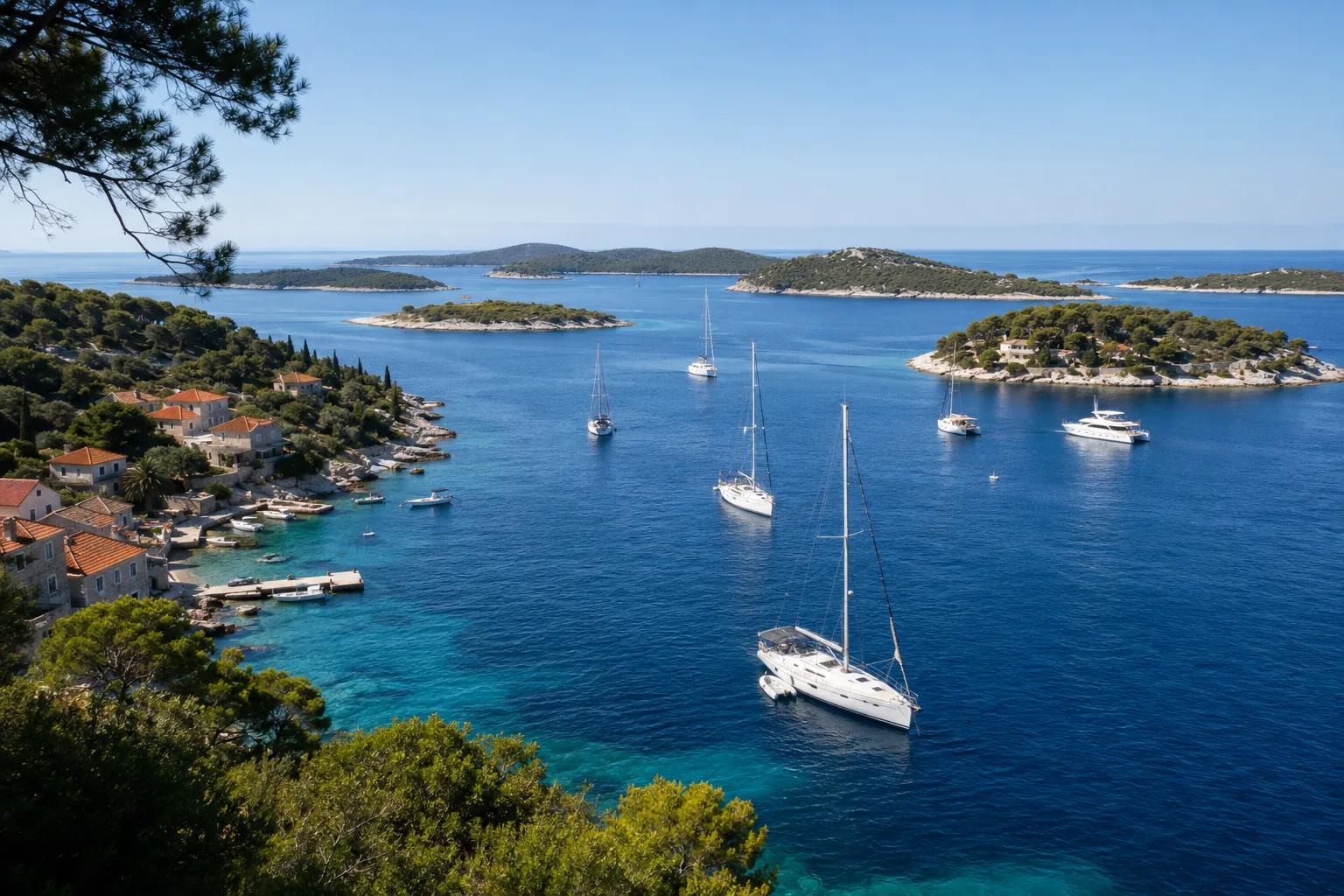
Croatian Islands Sailing Guide: Routes, Marinas, Anchorages & Fuel
Croatia is one of Europe’s most rewarding sailing destinations, but a successful island-hopping trip depends on much more than choosing attractive bays. Skippers and charter guests need reliable information about weather, anchorages, marinas, fuel, provisioning, repairs, navigation, safety, route planning and the practical differences between islands.
This pillar guide connects the most useful TwoBoat island guides, route resources, marina directories, fuel maps, weather tools, sailing-school articles and safety guides into one practical hub for sailing the Croatian coast.
Why sail the Croatian islands?
The Croatian Adriatic combines short inter-island distances, historic towns, protected bays, national parks, large charter bases and a dense marina network. It is suitable for first-time charter crews, families, experienced sailors and longer coastal passages, provided that the route matches the crew, boat and forecast.
Varied islands
Choose between lively towns, quiet fishing villages, national parks, remote nature, family beaches and restaurant bays.
Flexible overnight options
Depending on the route, crews can use marinas, town quays, mooring fields, restaurant buoys or suitable anchorages.
Manageable passages
Many popular routes allow short daily legs, although exposed channels and changing winds still require careful planning.
Strong shore experience
Historic towns, seafood restaurants, beaches, wineries, hiking routes and cultural sites make each stop different.
Fuel and service network
Mainland charter regions offer broad support, while remote islands require more careful fuel and technical planning.
Dynamic weather
Bora, jugo, maestral, thunderstorms and local acceleration zones can quickly change the best route or overnight location.
Main Croatian sailing regions
Kvarner and northern islands
Krk, Cres, Lošinj and Rab offer strong marina infrastructure, varied coastlines and routes suitable for crews starting from Rijeka, Punat or nearby bases.
Zadar and Kornati region
Zadar, Sukošan and Biograd are major charter bases for Dugi Otok, Ugljan, Pašman, Kornati and the surrounding island groups.
Šibenik, Murter and central archipelago
This area combines Kornati access, protected inland waters, historic Šibenik, Prvić, Zlarin, Kaprije and strong technical support on the mainland.
Split, Trogir and Central Dalmatia
One of Croatia’s most popular charter areas, with easy access to Čiovo, Drvenik, Šolta, Brač, Hvar, Vis and the Pakleni Islands.
Korčula, Lastovo and Mljet
Longer passages, protected island towns, nature parks and remote anchorages make this region attractive to crews who want more distance and variety.
Dubrovnik and Elaphiti Islands
Dubrovnik, Cavtat, Lokrum, Koločep, Lopud and Šipan combine city visits, island stops, marinas, anchorages and southern Croatia itineraries.
Croatian island sailing guides
Use the filters to find islands and sailing areas by region or trip style. Each guide focuses on practical information such as anchorages, marinas, fuel, provisioning, restaurants, beaches, weather exposure and skipper notes.
Čiovo
A convenient first or final stop for crews starting from Split, Trogir or Kaštela, with beaches, restaurants, provisioning and access to nearby fuel.
Read the Čiovo Sailing GuideVis
A distinctive offshore island with Vis Town, Komiža, remote bays, strong food culture, beaches and valuable fuel and provisioning options.
Read the Vis Island Sailing GuideLastovo
A remote and peaceful destination with nature-park moorings, limited supplies, attractive bays and a strong need for fuel and weather planning.
Read the Lastovo Sailing GuidePakleni Islands
A popular group of islands near Hvar Town with ACI Palmižana, restaurant bays, beaches, anchorages and fast access to nightlife.
Read the Pakleni Islands Sailing GuideHvar
One of Croatia’s best-known sailing islands, combining Hvar Town, Stari Grad, Vrboska, Jelsa, southern bays, marinas and restaurants.
Read the Hvar Island Sailing GuideBrač
A large Central Dalmatian island with Milna, Bol, Supetar, Pučišća, Povlja and Sumartin, offering marinas, fuel, provisioning, beaches and varied overnight options.
Read the Brač Island Sailing GuideKorčula
A large and varied island with Korčula Town, Vela Luka, Lumbarda, nearby islets, fuel, provisioning, marinas and sheltered options.
Read the Korčula Sailing GuideVeliki Drvenik and Blue Lagoon
A popular short-distance destination from Trogir and Split, known for Krknjaši, clear water, restaurant stops and accessible anchorages.
Read the Veliki Drvenik GuideKornati
A major Croatian sailing destination with dramatic islands, national-park rules, ACI Piškera, restaurant bays and careful fuel planning.
Read the Kornati Sailing GuideKrk
A practical Kvarner base and destination with Marina Punat, fuel, provisioning, bays, restaurants and good mainland access.
Read the Krk Island Sailing GuideDubrovnik and Elaphiti Islands
A combined coastal and island route covering Dubrovnik, ACI Marina, Gruž, Lokrum, Cavtat, Koločep, Lopud and Šipan.
Read the Dubrovnik Sailing GuideSuggested Croatian island-hopping routes
The best route depends on the charter base, wind forecast, crew experience, boat speed and preferred balance between sailing time and shore activities.
Split, Hvar and Vis classic route
Suitable for crews who want iconic islands, historic towns, restaurants, open-water passages and flexible stops.
Zadar, Dugi Otok and Kornati route
Best for nature, island channels, national-park scenery, restaurant bays and varied anchoring or mooring options.
Dubrovnik, Mljet and Korčula route
A strong southern itinerary for historic towns, protected nature, longer passages and island variety.
Charter preparation: booking, costs, documents, packing and provisioning
A good Croatian sailing holiday starts before the crew reaches the marina. Use these guides to understand the contract, total holiday budget, skipper qualifications, what to bring, how to provision the boat and what to check during handover.
Booking, contracts and deposits
Before paying the final balance, understand insurance, security deposits, fuel policy, damage procedures, check-in, check-out and what is included in the charter price.
Real charter cost
Budget beyond the advertised boat price: marina nights, fuel, provisioning, local charges, transfers, optional extras, APA on relevant charters and crew gratuities.
What to pack
Pack for limited cabin storage, sun, spray, shore visits and deck safety. Soft luggage, non-marking shoes and practical layers are usually more useful than large hard suitcases.
Food, drinks and provisioning
Plan water, meals, snacks, fridge capacity and resupply points before leaving the charter base, especially when sailing toward smaller or remote islands.
Skipper and VHF licences
Confirm that the skipper certificate and, where required, radio qualification are accepted for the boat and charter area before travel.
First bareboat charter
Review handover, crew briefing, route planning, anchoring, marina manoeuvres, weather decisions and common first-charter mistakes.
Passage planning resources before sailing between Croatian islands
Weather and route decisions
Weather should determine the route, not merely adjust it. Croatian island sailing is strongly affected by local geography, channels, mountain ranges and thermal winds.
Bora
A strong, gusty northeasterly wind that can accelerate near the mainland and through exposed channels. Avoid relying on average wind speed alone.
Jugo
A southeasterly wind that can build waves and swell over time. Review the exposure of bays and harbours before committing to an overnight stop.
Maestral
A common summer northwesterly thermal wind that often strengthens during the afternoon and affects daily passage timing.
Nevera and thunderstorms
Fast-moving summer storms can bring sudden wind shifts, strong gusts, lightning and poor visibility. Maintain alternative shelter options.
Local acceleration
Wind can be significantly stronger in channels, around headlands and below steep terrain than the regional forecast suggests.
Sea state
An anchorage protected from the wind may still receive uncomfortable swell. Always assess both wind direction and wave direction.
Marinas, fuel, provisioning and technical support
| Need | What to confirm | TwoBoat resource |
|---|---|---|
| Marina or berth | Availability, boat dimensions, depth, VHF procedure, facilities and seasonal pricing | Marinas in Croatia guide |
| Fuel | Location, opening hours, depth, queue risk, payment methods and alternatives | Fuel-station map |
| Provisioning | Supermarkets, water, ice, gas, pharmacy and opening hours on smaller islands | Food & drinks onboard guide + individual island guides |
| Repairs | Nearest marina, chandlery, mobile technician, engine service and spare parts | Marine stores and repair directory |
| Weather shelter | Protection from expected wind and swell, holding, depth and escape route | Sailing Weather Croatia |
Core seamanship guides for charter crews
Anchoring
Anchor choice, seabed, scope, setting, swing room and dragging prevention are essential when island hopping.
Reefing and sail control
Reduce sail early and keep the boat balanced as wind increases.
Sail trim
Improve comfort, control and speed on upwind, reaching and downwind legs.
Tacking
Review crew commands, helm timing and sheet handling before sailing in confined or busy waters.
Points of sail
Understand wind angle, apparent wind and the correct sail configuration for each course.
Upwind sailing
Use trim, balance and tacking strategy efficiently when the destination lies to windward.
Technical troubleshooting while on charter
On a charter boat, the first action after a technical fault is normally to make the boat safe and contact the charter base. These guides help crews describe symptoms, understand likely causes and perform only checks that are safe and authorised.
Safety and emergency preparation for Croatian island sailing
Before departure
- Check weather, route, fuel and alternative shelters.
- Confirm life jackets, VHF, fire extinguishers and first-aid kit.
- Review engine, cooling water, batteries, bilge and anchor system.
- Brief the crew on MOB, fire and emergency communication.
- Confirm navigation lights and emergency numbers.
During the passage
- Maintain a proper lookout and monitor traffic.
- Reduce sail before conditions become difficult.
- Keep enough fuel for diversions and harbour approaches.
- Do not enter unknown bays without checking depth and hazards.
- Report technical problems to the charter base early.
Interactive Croatia island-hopping checklist
0 of 18 completed
Frequently asked questions
What are the best Croatian islands for a first sailing charter?
Central Dalmatia, including Šolta, Brač, Hvar, Čiovo and Drvenik, is popular because of short distances, many charter bases and numerous marinas and bays. The final choice should still match the forecast and crew experience.
Which Croatian islands are best for nature and quiet anchorages?
Lastovo, Kornati, parts of Dugi Otok, Mljet and less-developed bays on Vis and Korčula are strong choices, but remote areas require better fuel, provisioning and weather planning.
Which islands are best for nightlife?
Hvar Town and nearby Pakleni Islands are the best-known options, while Split, Dubrovnik and selected larger island towns also offer active evening scenes.
Do I need to book marinas in advance?
Advance booking is advisable in peak season and at high-demand locations. Always confirm whether a marina accepts reservations and whether the berth is suitable for the vessel’s length, beam and draft.
Where can I find fuel stations for boats in Croatia?
Use the TwoBoat Marine Fuel Stations in Croatia guide and interactive map, then confirm current opening hours and access with the operator.
What weather is most important for sailing in Croatia?
Bora, jugo, maestral and summer thunderstorms are especially important. Local terrain can accelerate wind and make conditions stronger than the regional forecast suggests.
Can beginners sail the Croatian islands?
Yes, provided that the skipper is properly qualified, the route is conservative and the crew understands weather, anchoring, mooring, navigation and emergency procedures. Hiring a professional skipper is a sensible option for inexperienced crews.
How far should a charter crew sail each day?
Daily distance depends on the boat, crew, weather and planned activities. A good holiday route leaves time for swimming, lunch, berth selection and weather-related changes rather than maximizing miles.
Are restaurant buoys safe for overnight use?
They can be useful, but quality, maintenance, exposure and terms vary. Inspect the setup, ask the operator about conditions and keep an alternative plan.
What should I do if the boat breaks down near an island?
Make the situation safe, contact the charter base, send the exact location and symptoms, and follow their instructions. Do not order unauthorised repairs unless immediate action is necessary for safety.
Where can I find marine stores and repair services?
Use the TwoBoat Marine Stores and Boat Repair Services in Dalmatia directory for chandlers, engine technicians, outboard service, generators, refrigeration and general yacht repair.
How should I plan the final day of a charter?
Allow time for weather delays, fuel queues, return-to-base requirements, check-out and disembarkation. Do not plan a long exposed passage immediately before the contractual return time.
Which documents should I verify before a bareboat charter in Croatia?
Confirm passports or IDs, the charter contract, crew information, skipper certificate, VHF qualification where required, payment status and any documents specifically requested by the charter company. See the accepted foreign boat licences guide and booking guide.
What costs should I budget for beyond the yacht rental price?
Common additional costs can include fuel, marina or mooring fees, provisioning, transfers, optional equipment and other charter-specific charges. Crewed charters can also use APA and gratuities. See the true charter cost guide.
What should I pack for a sailing holiday in Croatia?
Prioritise soft luggage, non-marking deck shoes, sun protection, lightweight layers, swimwear, personal medication and practical clothing that dries quickly. Use the complete yacht charter packing list.
How should I plan food and drinking water onboard?
Plan by crew size, charter duration, fridge and storage capacity, dietary needs and expected resupply stops. Carry sufficient drinking water and avoid overloading the galley with food that is difficult to store. See the food and drinks onboard guide.
Plan your Croatian yacht charter from booking to return
Use TwoBoat as a practical guest and skipper hub: understand the charter before paying, prepare documents and luggage, plan provisions and route, check weather and safety, then keep marina, fuel and technical resources available while sailing.
Booking Guide · Charter Costs · Packing List · Provisioning · Licences · Route Planner · Weather · Marinas · Fuel Stations · Repairs · Safety · Sailing School
Continue reading
Build your Croatia sailing knowledge with related TwoBoat guides, software, guides and planning tools.